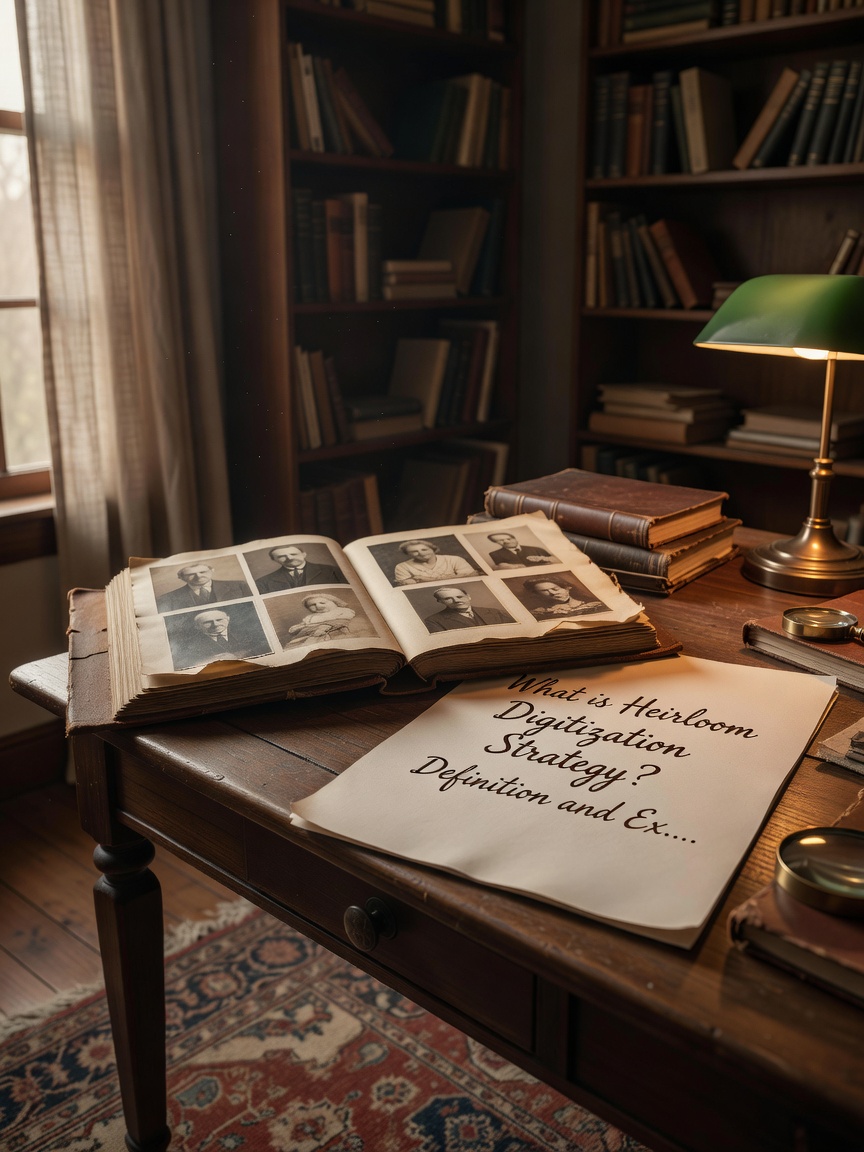
An Heirloom Digitization Strategy is a structured approach for converting tangible family heirlooms—such as photographs, letters, journals, and home videos—into digital formats. The primary goals are to preserve these items from physical degradation, loss, or damage, and to make them accessible for current and future generations.
Key Components
- Assessment and Inventory: Cataloging physical heirlooms to determine their condition, priority, and digitization requirements.
- Format Selection: Choosing appropriate high-resolution digital formats (e.g., TIFF for photos, PDF/A for documents, MP4 for videos) to ensure long-term viability.
- Digitization Process: The physical scanning or conversion of items using appropriate hardware and software to create a high-fidelity digital replica.
- Metadata Tagging: Adding descriptive information (e.g., dates, names, places, stories) to digital files, making them searchable and contextually rich.
- Storage and Backup: Implementing a robust storage solution, often following the 3-2-1 rule (three copies, two different media, one off-site), to protect against data loss.
- Access and Sharing Plan: Defining how and with whom the digital archive will be shared, often using a secure, centralized platform.
Historical Context or Origin: The concept emerged with the proliferation of consumer-grade scanners and digital storage, accelerating in the 21st century as families sought to protect analog media from decay.
Why Heirloom Digitization Strategy Matters
A formal strategy is crucial because it moves beyond ad-hoc scanning to create a comprehensive, lasting digital archive. It mitigates the risk of physical heirlooms being lost to fire, flood, or simple decay, while also democratizing access for geographically dispersed family members. This ensures that the stories and memories associated with these items are not lost to time.
Platforms like Kinnect are designed to help families execute this strategy by providing a secure, collaborative space to store, organize, and enrich their digital heirlooms with context and stories.
Frequently Asked Questions
Q: What is the first step in an heirloom digitization strategy?
A: The first step is to create an inventory of all physical heirlooms, assessing their condition and prioritizing which items to digitize first based on their fragility or importance.
Q: What is the best format for digitizing photos?
A: For archival purposes, the TIFF (Tagged Image File Format) is often recommended as it is a lossless format that preserves maximum image quality. For sharing and general use, a high-quality JPEG is also suitable.
Q: How do you store digital heirlooms safely?
A: Safe storage involves the 3-2-1 backup rule: maintain at least three copies of your data on two different types of storage media, with one copy located off-site, such as in the cloud or at another physical location.

