You're looking for apps like Facebook Groups without Facebook because you want to connect with family, share updates, and keep memories alive, but you don't want a tech giant owning your personal stories. That feeling of unfairness, of giving away pieces of your family's life to a corporation, is completely valid. It's a real tension, wanting the connection without the privacy cost.
Kinnect is now LIVE! Start your private family group today.
👉 Try Kinnect on the Web
👉 Download the iOS App
A lot of us end up using general messaging apps, like WhatsApp or Signal, for family. They're great for quick chats and coordinating, for sure. You can create a group, share photos, and send messages without the public feed of Facebook. But think about what happens to those conversations and photos a year later, or five years later. They get buried under new messages, lost in the scroll. It's not an archive; it's a stream.
Then there are shared photo albums, like Google Photos or iCloud. These are fantastic for centralizing pictures and videos. You can grant access to family members, and it solves the problem of everyone having different versions of the same event. But they aren't built for storytelling. There's no easy way to add context, to share the memory *behind* the photo, or to have a conversation that stays attached to that specific moment for years to come. It's just a collection of media, not a living history.
Some families try private forums or even old-school email chains. Forums can be too complicated for most family members to adopt and maintain consistently. Email, while private, is clunky for sharing media, and threads get messy fast. None of these solutions feel quite right for the unique blend of immediate connection and long-term preservation that family needs.
The core issue with all these workarounds is that they weren't designed with family legacy in mind. They're either built for quick, ephemeral communication or for general content storage. They don't prioritize the unique way families want to connect and remember. And crucially, even with private settings on public platforms, the underlying data ownership often remains with the company. According to Pew Research Center in 2019, 72% of Americans are concerned about the amount of personal information technology companies collect about them. That concern is precisely what drives the search for something better.
Finding a truly private space for your family's stories
Kinnect vs. Facebook Groups
| Feature | Kinnect | Facebook Groups |
|---|---|---|
| Business Model | Subscription (You are the customer) | Ad-supported (You are the product) |
| Privacy | Strictly Invite-Only | Prone to discovery & hacks |
| Content Ownership | You own 100% of your data | Meta owns the rights to your data |
| Algorithm & Ads | Zero ads, chronological timeline | Algorithmic sorting, injected ads |
When you rely on platforms like Facebook, you're not just sharing; you're often giving up control over what you share. Your family's private moments become data points for algorithms, targeted ads, or worse, they're part of a public record you didn't intend. Even if you're careful with privacy settings, the platform's business model is built on gathering your information. It's why so many people feel a need to step away; the Pew Research Center reported in 2021 that 64% of Facebook users have taken a break from the platform for several weeks or more.
The real need isn't just a place to chat, or a place to store photos. It's a dedicated family space that understands the importance of private conversations, shared memories, and the stories that define who you are as a family. You want a platform that respects your data and keeps it safe, not one that mines it for profit. You need a place where every memory, every story, every shared moment, is truly owned by your family, and stays accessible for generations to come.
The hard part is that someone still ends up being the hub — the one texting everyone, chasing updates, managing who knows what. A dedicated solution should take that off a single person's plate, letting everyone contribute easily. What if there was a space built specifically for family connection, where everything you shared was truly yours, and stayed private, forever?
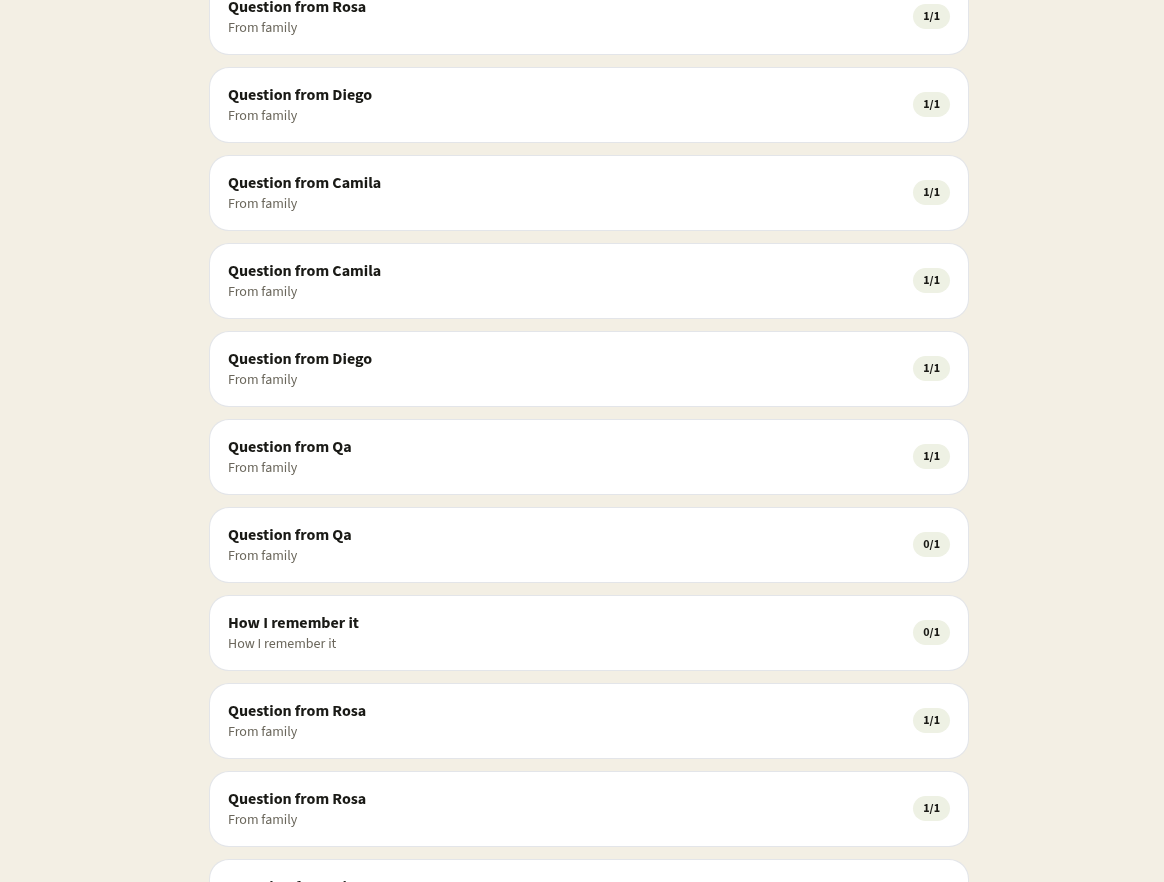
That's what Kinnect is for. It's a private, invite-only platform designed to help families preserve memories, stories, and essential life information across generations. Unlike general social media or messaging apps, Kinnect does everything a family group does, but your data doesn't belong to anyone else. It's a space where every answer, every shared story, builds into a permanent private archive, dated, searchable, and always there for your family. No public profiles, no algorithms, just your family's world, kept safe and sound.
Q: Is my family's data really safe and private on Kinnect?
Kinnect is invite-only, meaning the only way into a Kin Group is a personal invitation from someone already inside. This ensures no strangers or public discovery. Your data isn't used for ads or shared with third parties; it belongs to your family, creating a secure, private space for your most important memories.
Q: How is this different from a private messaging app?
While messaging apps are great for quick chats, Kinnect is built for ongoing capture and preservation. It's not a feed where content disappears; every shared story or memory becomes part of a permanent, searchable archive. This means your family's history builds over time, rather than getting buried under daily messages.
Q: Will my family actually use another app?
Kinnect is designed to be intuitive and engaging, not just another task. It offers gentle nudges and shared missions to foster interaction without feeling like work. The focus on preserving meaningful family stories often motivates family members, especially when they see the value of creating a lasting legacy.
Q: Can I really get my family off Facebook?
Many families find that providing a purpose-built, private alternative makes the transition easier. When family members see the benefits of a secure space where their stories are truly theirs, without ads or data tracking, they're often more willing to make the move. It's about offering a better home for what matters most.
Keep reading
Kinnect is now LIVE!
Experience the private family network on the web or download the iOS app today.