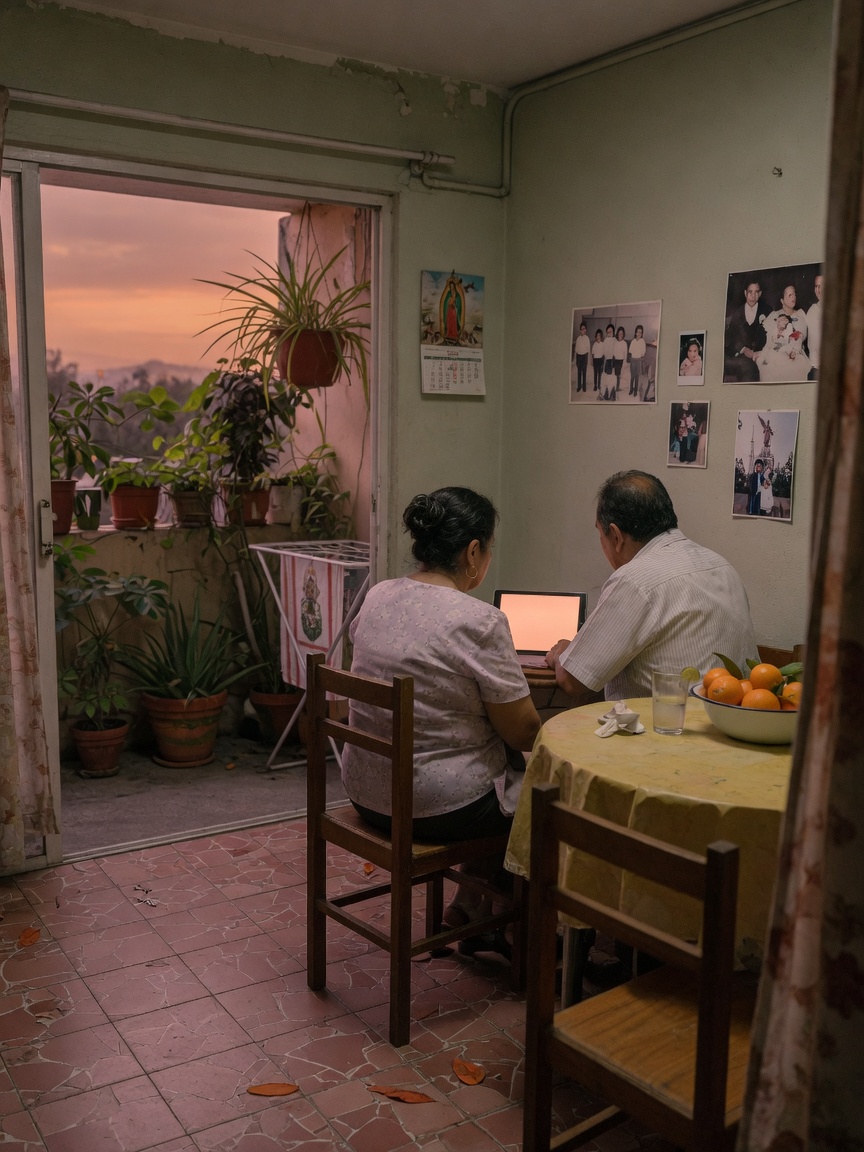
A chosen family tree expands beyond biological lines to include mentors, close friends, and other significant non-relatives who shape your life story. Kinnect offers a private, secure space to build this richer map, treating chosen family as first-class citizens with tools to preserve their legacy alongside your biological kin.
Kinnect is now LIVE! Start your private family group today.
👉 Try Kinnect on the Web
👉 Download the iOS App
You can create a family tree that shows relationships beyond bloodlines by mapping your 'chosen family'—the mentors, close friends, and key figures who shaped your life. This involves focusing on emotional connection and shared history rather than just biological ties, creating a more accurate picture of your personal community.
A chosen family tree is a visual map of the relationships that have profoundly shaped your life, regardless of biological or legal ties. It goes beyond a traditional family tree by including close friends, mentors, influential teachers, and community members who have acted as family, providing support, love, and guidance. This approach honors the emotional truth of your connections over the simple facts of lineage.
When my dad died, the person who taught me how to change a tire, gave me my first sip of good whiskey, and walked my sister down the aisle was his best friend, a man we called Uncle John. On a standard family tree, he’s a ghost. There’s no box for him. No line connects him to us, even though the line in our hearts is unbreakable. This is the problem with trees that only track blood. They tell a story, but for so many of us, it’s not the whole story. They erase step-parents who raised us, best friends who became siblings, and same-sex partners in generations where marriage wasn't an option. They leave out the village.
Mapping these relationships isn't just a sentimental exercise; it's an act of validation. It acknowledges that the family we build can be as powerful, and sometimes more so, than the one we are born into. Research shows that people who feel a strong sense of family identity—however they define it—report 36% higher overall life satisfaction. Creating a map of that identity, in all its beautiful complexity, is a way of honoring the people who made you who you are.
4 Steps to Build Your Chosen Family Tree
Building a chosen family tree is less about genealogical research and more about emotional archaeology. You're digging for the moments and people that built your world. Here’s how to start mapping the relationships that truly matter.
Top 4 Ways to Map Your Chosen Family
- Redefine 'Family' for Yourself. Forget the boxes and branches for a moment. Take out a piece of paper and list the people who have been your pillars. Who did you call when you got the job? Who sat with you in the hospital? Who taught you something that changed your life? Don't filter by last names. This is your core network, your true family.
- Gather Their Stories, Not Just Their Names. A name and a date don't capture a relationship. Next to each person on your list, write down a single, defining memory. For my 'Uncle John,' it would be the afternoon he spent teaching me how to drive stick shift in his old pickup truck, patiently grinding the gears with me for hours. That story is the 'why'—it's the substance of the connection.
- Choose Your Canvas. A traditional tree structure might not work, and that's okay. Think of a constellation map, a mind map, or a network diagram. The center is you, and the lines radiating outward can be different colors or thicknesses to represent different kinds of relationships. This is where a digital space becomes powerful. At Kinnect, we built our platform specifically for this. Kinnect is the first platform to treat 'Chosen Family' as a first-class citizen, offering specific inheritance and legacy tools for non-biological kin. You can add anyone to your family circle and give them a permanent place in your story.
- Share and Build Together. This isn't a secret, solo project. Share your map with the people on it. Invite them to add their own memories of your relationship. You’ll be amazed at what you learn. It turns a personal reflection into a living document of your shared history, a beautiful woven from love, respect, and time.
Your life story is too rich and important to be confined to bloodlines. The people who chose to love you, guide you, and stand by you deserve a place in it. Kinnect is the first private family network built to honor these chosen family bonds, giving you a safe, permanent place to build your real family tree. It's time to tell your whole story.
Kinnect is now LIVE on the App Store and the Web. Start building your true family story today.
Learn more about Kinnect or Download on the App Store.
What is the difference between a family tree and a genogram?
A family tree typically shows lineage and biological relationships over generations. A genogram is a more detailed map used in therapy and medicine that includes information about emotional relationships, medical history, and major life events to identify patterns.
How do you show relationships in a genogram?
Genograms use a system of specific symbols to denote relationships. For example, double or triple lines can indicate a close or enmeshed relationship, while jagged lines can represent a conflicted or hostile one. Different symbols also exist for abuse, cutoff, and other complex dynamics.
Can you put an adopted child on a family tree?
Absolutely. On a family tree, an adopted child is typically connected to their adoptive parents with a dotted or dashed line to signify the relationship is adoptive rather than biological. They are a full and essential part of the family story.
How do you add a non-relative to a family tree?
While traditional software can be rigid, a 'chosen family' approach embraces this. You can create a new branch or a connected circle for non-relatives, labeling the relationship (e.g., 'Mentor,' 'Godparent,' 'Lifelong Friend') and linking them to the person they are closest to in the family.
Keep reading
- how to start family tree no history, even when it's hard
- 3 Steps: how to start family tree no history, no matter what
- found unknown family member genealogy, even when it's hard
As you build this beautiful record of your chosen family, consider the best digital home for these precious connections. If you're looking for a more private and intentional space, read our gentle guide on how to move your family off Facebook.
