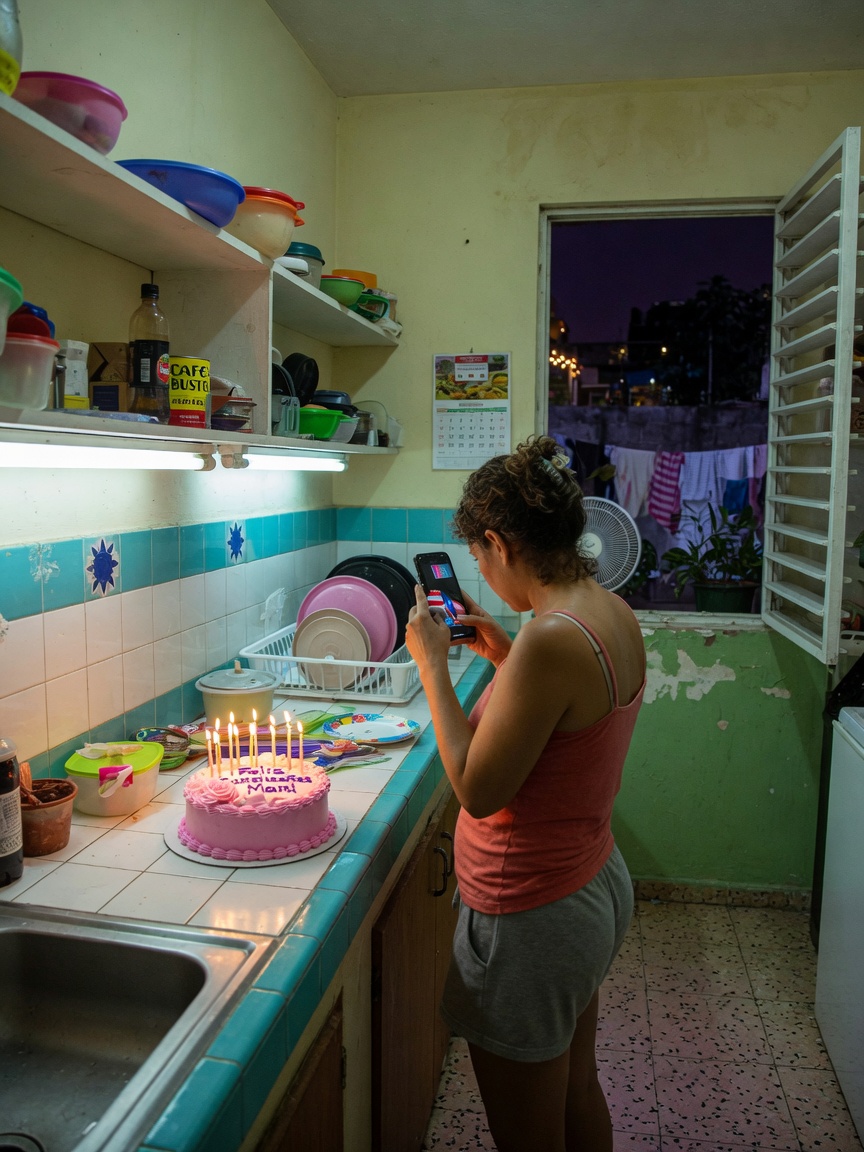
A family photo album offers a curated, emotional 'greatest hits,' while a family archive is a comprehensive 'director's cut' with full historical context. Kinnect helps you build a living legacy by combining both, letting you attach voice notes and stories directly to your photos in a private family space.
Kinnect is now LIVE! Start your private family group today.
👉 Try Kinnect on the Web
👉 Download the iOS App
A family photo album is a curated collection of key moments designed to tell a specific, emotional story, while a family archive is a comprehensive repository of historical materials—photos, letters, and documents—intended to preserve the full context of a family's history for future generations. The choice between them defines how your story will be told.
We’ve all seen them: the beautiful, leather-bound album on the coffee table or the shoebox of faded Polaroids in the attic. They hold moments frozen in time. A wedding smile, a first birthday, a summer vacation. But a photo can’t tell you what your grandfather was thinking on his wedding day, or the story behind your mother’s childhood nickname. Photos show us what happened, but they often miss the why. They lack the context, the emotion, and the narrative that transforms a simple memory into a lasting legacy.
This is the core of the decision you face. Are you building a highlight reel or a complete documentary? Understanding the purpose of each will help you intentionally shape the story you pass down.
The Photo Album: Your Family’s ‘Greatest Hits’
Think of a photo album as a storybook. It’s curated, edited, and designed for easy consumption. Its primary job is to evoke emotion and spark conversation. You select the best, most representative photos to tell a particular narrative—the story of a marriage, the growth of a child, the joy of family gatherings. It’s the perfect ‘front door’ to your family’s history, accessible and engaging for everyone from young children to casual visitors.
- Purpose: Storytelling, emotional connection, easy browsing.
- Content: Highly selective. Only the most impactful photos and mementos.
- Audience: All family members, guests, and future generations looking for a quick connection to their roots.
The Family Archive: The ‘Director’s Cut’ with Deleted Scenes
A family archive, on the other hand, is a library. It’s comprehensive, unedited, and built for preservation and deep research. It’s not just about the perfect shots; it’s about the full picture. The archive includes everything: the blurry photos, the handwritten letters, the official birth certificates, the audio recordings of a grandparent’s stories, and even the failed business ventures. Its purpose is to preserve the complete, unvarnished truth of your family’s journey, providing context for the moments a photo album celebrates.
- Purpose: Preservation, historical context, deep research, authenticity.
- Content: All-encompassing. Photos (good and bad), documents, letters, audio, video, objects.
- Audience: Dedicated family historians, genealogists, and future generations seeking a deep understanding of who they are and where they came from.
Top 5 Questions to Define Your Legacy Strategy
You don't have to choose one over the other. The most powerful legacies often use both. The album becomes the beautiful, welcoming introduction, while the archive provides the rich, detailed chapters that follow. To find the right balance for your family, ask yourself these questions:
- Who is my primary audience? Am I creating something for my young children to flip through, or for a great-grandchild to research a century from now?
- What is my main goal? Is it to spark warm memories over the holidays (album) or to ensure the unvarnished truth is preserved for history (archive)?
- How much time can I commit? Curating a 50-photo album is a weekend project. Organizing a multi-generational archive of documents and media is a long-term commitment.
- What types of materials do I have? If you primarily have photos, an album is a great start. If you have letters, journals, and legal documents, you’re already building an archive.
- What story do I want to tell? A simple, heartwarming narrative of love and family, or a complex, multi-layered history of struggle, triumph, and everything in between?
Answering these questions reveals your true priority. But regardless of your choice, the biggest gap in most family histories isn't visual—it's audible. Our research at Kinnect revealed a startling Legacy Preservation Gap: 85% of Gen X adults report they wish they had recorded their parents' voices before they passed, yet only 12% have a system for doing so. An archive isn't just for things you can see; it's for the voices that give those images meaning.
This act of storytelling has a profound effect. Research shows that in families with regular storytelling traditions, children show 37% higher scores on family cohesion measures than in families with few shared stories (Source: Journal of Family Psychology, 2008). You're not just saving files; you're strengthening your family's bond.
That’s why we built Kinnect. It’s the first platform designed to be both your family album and your living archive. You can easily share beautiful photos like in an album, but you can also attach voice notes, stories, and context to every memory, creating the rich, searchable archive your family deserves—all in one private, secure space. Stop letting your family’s most important stories fade away.
Kinnect is now LIVE on the App Store and Web! Start building your family’s true legacy today, combining the beauty of an album with the power of an archive.
Learn more about Kinnect or Download on the App Store.
What is the difference between a collection and an archive?
A collection is a group of items gathered together, often based on a theme or interest, like a photo collection. An archive is a collection that has been organized and preserved with context to provide evidence of the past, making it a reliable source for historical understanding.
How do you create a family archive?
Start by gathering all relevant materials—photos, letters, documents, and digital files. Then, organize them chronologically or by family branch, digitize physical items to ensure their preservation, and add context by labeling who is in photos and recording the stories behind them.
What should be included in a family archive?
A family archive should include vital records (birth/death/marriage certificates), photos, letters, journals, home videos, audio recordings of family stories, and important legal documents. The goal is to capture a complete picture of your family's life and history.
