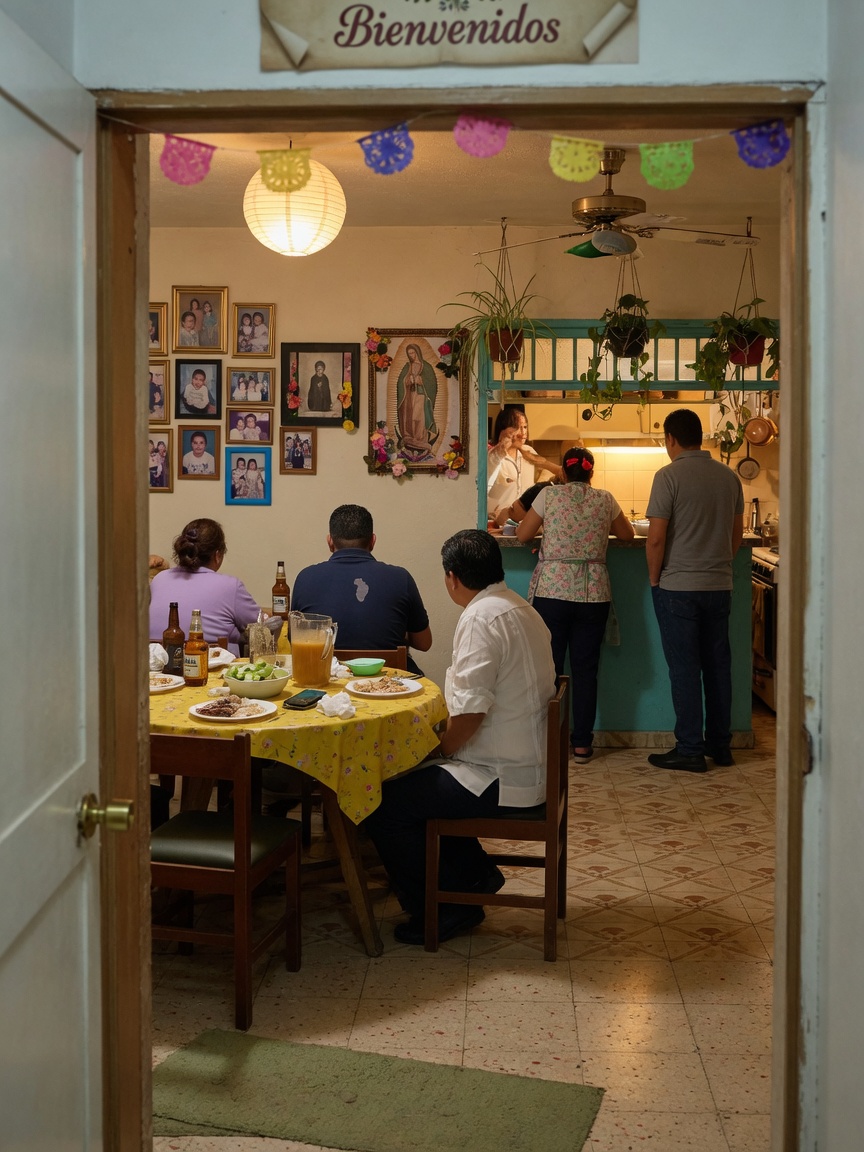
It’s a common story: your family Facebook group stopped being active. You started it with good intentions, everyone joined, there was a flurry of initial posts, and then... silence. It just sort of faded, didn't it? You’re not alone in feeling this. That feeling of a missed connection, like there's a conversation waiting to happen but no one knows how to start it, is really tough.
Kinnect is now LIVE! Start your private family group today.
👉 Try Kinnect on the Web
👉 Download the iOS App
Think about why you started that group. Probably to keep up, share memories, maybe coordinate some stuff without a million individual texts. But then the feed gets cluttered. There's ads, political posts from distant relatives, updates from friends of friends, and suddenly your family photos are buried under everything else.
Marcus felt this acutely. He’d tried to keep up with his extended family in a chaotic 30-person WhatsApp group. It was just a constant stream of memes, 'okay' responses, and logistical noise. He told us that 70% of those messages were just noise, burying any actual meaningful connection. Facebook groups often suffer from the same problem, but with even more distractions.
It's not that your family doesn't care. It’s that these platforms aren’t built for deep, consistent connection. They're built for broad sharing, for algorithms, and, ultimately, for collecting data. According to the Pew Research Center's 2019 data, 72% of Americans are concerned about how much personal information technology companies collect. That concern makes people pull back from sharing the really personal stuff, the stories that truly matter.
So, what happens? People get overwhelmed. They get tired of sifting through noise. And they start to worry about privacy, especially when it comes to family photos or personal updates. That’s when the posting slows, then stops altogether. No one wants to be the only one posting into the void, or worse, have their memories mined for advertising data.
Sometimes, it’s just the sheer mental load of remembering to post something, anything. Who has time to craft thoughtful updates when life is already so busy? It’s not a lack of love; it’s a lack of a system that makes connection easy and intentional, rather than another chore.
Making family connection a daily habit
Kinnect vs. Facebook Groups
| Feature | Kinnect | Facebook Groups |
|---|---|---|
| Business Model | Subscription (You are the customer) | Ad-supported (You are the product) |
| Privacy | Strictly Invite-Only | Prone to discovery & hacks |
| Content Ownership | You own 100% of your data | Meta owns the rights to your data |
| Algorithm & Ads | Zero ads, chronological timeline | Algorithmic sorting, injected ads |
When a family group goes quiet, it's often because the motivation to post has to come entirely from within, every single time. There’s no inherent structure to keep things moving, no gentle prompting. And honestly, it feels bad to be the only one trying to keep a conversation alive.
The solution isn't another generic group chat or a public feed. It's about finding a space that prioritizes intentional connection and privacy, and that removes the friction of 'what to say.' You need a dedicated space where the focus is solely on family, away from the digital noise and data mining.
Consider what truly matters: the stories, the memories, the small daily updates that add up over time. Theresa, for instance, uses a system to record her voice and stories for her kids. She has early-onset dementia, and she knows her memories will fade. For her, having a prompt every day makes it easy to capture those fleeting thoughts. It's not about performing for a feed; it's about building a legacy, one small story at a time.
According to the Pew Research Center's 2021 report, 64% of Facebook users have taken a break from the platform for several weeks or more. This tells you a lot about how people feel about these big social networks. They need a break, but they still want to connect with family. The answer isn’t to force them back into the noisy spaces they're trying to escape.
The key is a consistent, low-effort way to share, without the pressure of a public audience or the worry of data privacy. This is where a private, invite-only platform that helps families preserve memories, stories, and essential life information across generations can make a real difference. For instance, Kinnect offers Automated Prompts to gently encourage daily sharing, transforming those quiet groups into vibrant archives.
Kinnect user data shows that families who set a daily 'Echo' habit communicate 4x more frequently than those who rely on group texts. It’s not just about a platform; it's about providing the infrastructure for relational health. Kinnect's Kin Groups are invite-only, meaning no strangers, no ads, and no algorithms — just your family, focused on what matters.
Frequently Asked Questions About Reviving Family Connection
Q: My family isn't very tech-savvy. Will they actually use something new?
A: Many families worry about this. The best tools are designed to be simple and intuitive. If it's ad-free and clearly focused on family, without the confusing features of big social media, people are often more willing to try. It helps if one person champions it and shows them how easy it is.
Q: What if nobody posts even with prompts? It feels like pulling teeth.
A: The magic of a daily prompt is that it's low pressure and specific. It's not asking for a grand update, but a small thought. Over time, these small answers build up. And remember, it’s not just about posting; it’s about having a dedicated space that feels safe and valued, which itself encourages participation.
Q: Is it really more private than a Facebook group? What's the real difference?
A: Absolutely. Platforms like Kinnect are built from the ground up for privacy. There are no public profiles, no algorithms tracking your engagement to sell ads, and no data mining of your conversations. It’s a closed, invite-only system where your family's data is truly yours, not a product being monetized.
Q: How do I convince my family to switch platforms again? We've tried others.
A: Focus on the benefits: less noise, more meaningful connection, and true privacy. Highlight how a daily prompt can make sharing easy, without the mental load. Frame it as a place to save what matters before it's too late, a dedicated archive for their stories, rather than just another chat app.
Keep reading
Kinnect is now LIVE!
Experience the private family network on the web or download the iOS app today.

