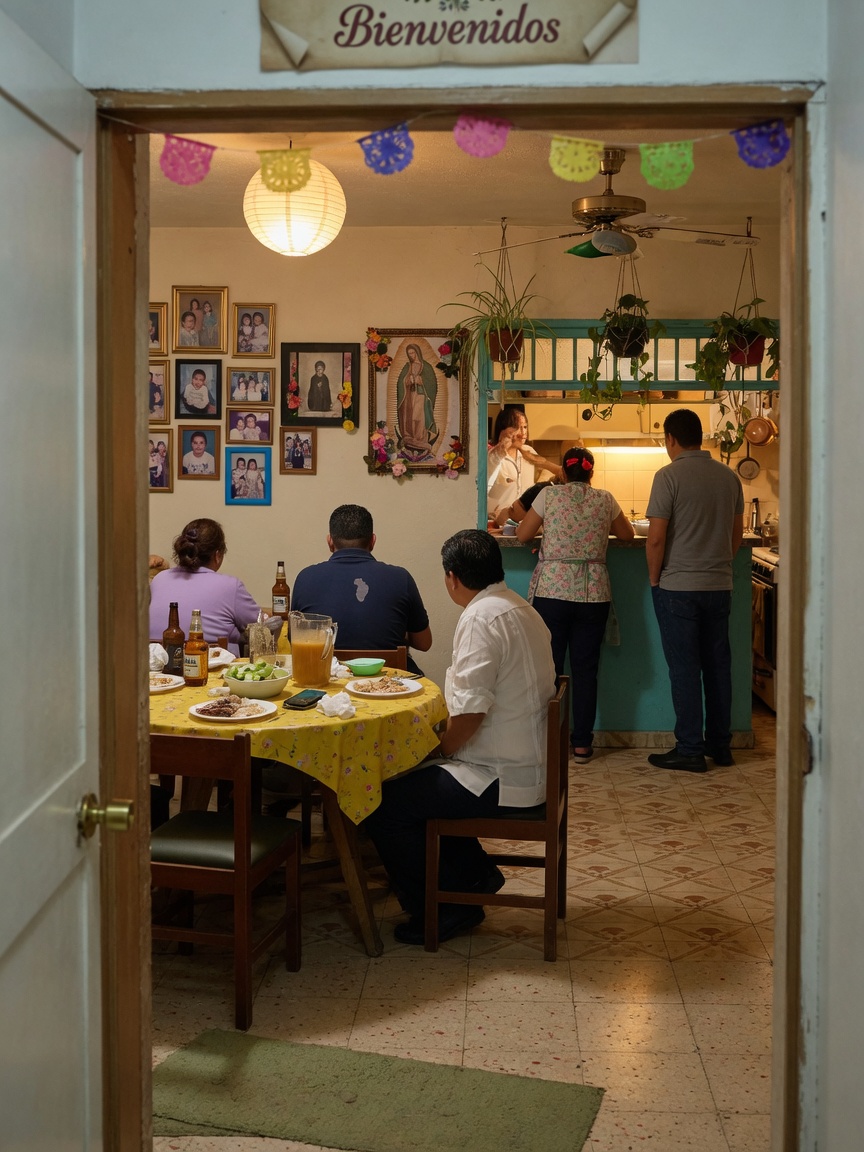
A relationship tree is a modern alternative to a traditional family tree, visually mapping your entire support system, including friends, mentors, and chosen family. Kinnect provides a private digital space to build this tree, treating 'chosen family' as first-class citizens with tools to preserve their legacy and stories.
Kinnect is now LIVE! Start your private family group today.
👉 Try Kinnect on the Web
👉 Download the iOS App
A relationship tree is a visual map of your most important personal connections, going beyond biological or legal ties to include friends, mentors, chosen family, and other key figures in your support system. Unlike a traditional genealogy chart focused on ancestry, it illustrates the emotional bonds and influences that have shaped your life, creating a more accurate picture of who you are.
For centuries, the family tree has been a rigid structure, defined by bloodlines and legal documents. It tells a story of lineage, but it often fails to tell the story of our lives. It has no branches for the godmother who shaped your worldview, the best friend who became your sibling, the step-parent who raised you, or the mentor who opened every door. These vital connections are erased, leaving a family portrait that feels incomplete because it is.
This narrow view of 'family' doesn't just feel wrong; it can be actively harmful. When our most significant relationships are invisible, we lose a powerful tool for understanding our own resilience and identity. Research from the U.S. Surgeon General has shown that social isolation is a profound health risk, associated with a 50% increased risk of dementia in older adults. Mapping your entire support system—your true 'relationship tree'—is an act of recognizing and strengthening the very connections that keep us healthy, grounded, and whole.
5 Steps to Create Your Own Relationship Tree
Building a relationship tree is less about genealogical research and more about emotional reflection. It’s a chance to honor the people who have made you who you are, regardless of last names or shared DNA. Here’s how to start building a map of your true support system.
Top 5 Steps for Mapping Your Support System
- Start with Yourself at the Center: Unlike a traditional tree that starts with ancestors, your relationship tree starts with you. Place your name in the middle of a large piece of paper or a digital canvas. You are the sun around which these influential planets orbit.
- Identify Your Inner Circle: Who are the people you call in a crisis? Who celebrates your wins as their own? Draw the first branches to these individuals—partners, immediate family, best friends, and anyone who forms your core support network.
- Branch Out to Key Influencers: Think about the next layer. This is where you add mentors, beloved teachers, influential bosses, godparents, and close community members. These are the people whose guidance and belief have fundamentally shaped your path.
- Use Symbols and Lines to Show Connection: Get creative. Use a solid line for family (biological or chosen), a dotted line for mentorship, a wavy line for friendship. You can use different colors or symbols to represent different types of emotional support—who brings you joy, who offers wisdom, who provides stability?
- Add Stories and Memories: This is the most important step. Next to each name, write a short note about their impact. It could be a specific memory, a piece of advice they gave you, or simply what they mean to you. This transforms the map from a diagram into a living document of gratitude and connection.
Building this tree is a powerful exercise, but where do you store these precious connections and the stories that give them meaning? Paper gets lost, and social media is too public and noisy. That’s why we built Kinnect. We are the first platform to treat 'Chosen Family' as a first-class citizen, offering specific inheritance and legacy tools for non-biological kin. It’s a private, secure space designed to capture the story of your *entire* family, exactly as you define it.
Stop letting traditional tools erase your most important people. Start building your true family legacy today. Kinnect is now LIVE on the App Store and Web!
Learn more about Kinnect and Download on the App Store.
How do you show non-biological relationships in a family tree?
You can create a 'relationship tree' using flexible lines, colors, or symbols to denote different types of bonds like mentorship, deep friendship, or chosen family. Instead of rigid genealogical software, use mind-mapping tools or a simple journal to visually connect people based on their emotional significance rather than just blood ties.
What is a genogram and how does it differ from a family tree?
A genogram is a detailed map used in therapy and social work that goes beyond a basic family tree. While a family tree shows lineage, a genogram includes information about relationships, emotional dynamics, and significant life events to identify recurring patterns of behavior and health issues across generations.
How do you represent a chosen family?
Represent a chosen family by placing them on your relationship tree with the same prominence as biological relatives. Use a specific symbol, like a star or a unique color, to signify their role. Most importantly, add notes and stories that capture the history and depth of your bond, solidifying their place in your personal legacy.
Is there a way to make a family tree with friends?
Absolutely. The best way is to create a 'relationship tree' or 'support map' that intentionally includes friends. You can draw branches connecting them directly to you, labeling the relationship 'best friend' or 'mentor' and adding anecdotes that define why they are a vital part of your life story.
Keep reading
- 3 Steps to keep family history organized & connected.
- found unknown family member genealogy: Even When It's Hard
- 5 Ways: family tree show relationships not just bloodlines
The deep connections you map are central to our lives, but they can also bring complex emotions during difficult times. For guidance on navigating the emotional journey of supporting a loved one through illness, read our article on Anticipatory grief while caregiving family: When It's Hard.
