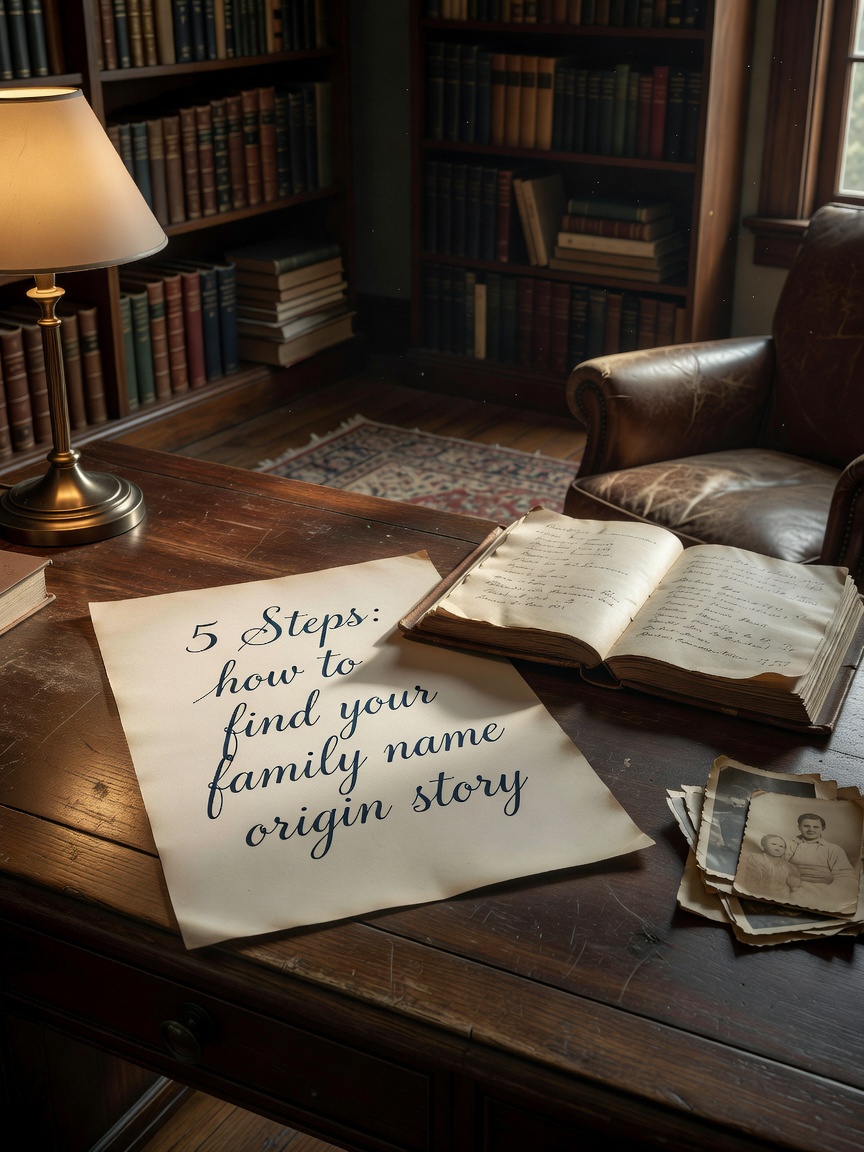
Finding your family name origin story is the process of researching not just the etymology and geographic roots of a surname, but also the historical and social context of the first individuals who carried it. This involves moving beyond basic genealogical data to build a narrative of their lives, motivations, and world.
I remember finding a census record for my great-grandfather. It listed his profession as 'cooper.' For years, that was just a word on a page. A fact. But it wasn't a story. The story began when I asked, what did it actually mean to be a cooper in a small Irish village in 1890? It meant smelling of oak and char, having hands strong enough to bend wood, and knowing your work was essential for everything from shipping goods to aging whiskey. He wasn't just a 'cooper'; he was a vital part of his community's heartbeat.
That's the difference between a family tree and a family story. The facts are the bones, but the story is the soul. We search for our name's origin not just to fill in a chart, but to understand who we are. It's a search for connection, for a sense of belonging that stretches back further than we can remember. In fact, studies show that people who feel a strong sense of family identity report 36% higher overall life satisfaction. You're not just chasing down names and dates; you're uncovering the first chapter of a book that ends with you.
Kinnect is now LIVE! Start your private family group today.
👉 Try Kinnect on the Web
👉 Download the iOS App
From Facts to Feelings: Writing Your Family's First Chapter
Step 1: Gather the Clues (Beyond the Census)
Your journey starts with the basics of genealogy. Collect names, dates, and locations from family members, birth certificates, and census records. But don't stop there. Look for primary sources like letters, diaries, or military records. These documents are where you'll find hints of personality and voice. Did they have elegant handwriting? What did they choose to write about? These are the first threads of your narrative.
Step 2: Rebuild Their World
This is where the real story comes to life. Once you know a time and a place, your job is to become a historical detective. If your ancestor was a farmer in Spain during the 19th century, research the agricultural practices of that region. If they immigrated to the United States in 1920, learn about the political climate in their home country and the conditions on the ships they traveled on. Understanding their social history—the world they lived in—transforms them from a name into a person who made choices, faced struggles, and had dreams.
The Hidden Variable: The Legacy Preservation Gap
The biggest mistake in searching for an origin story is assuming all the answers are in old documents. The most powerful stories are often held in the memories of the living. Yet, we rarely have a system to capture them. Kinnect's research on the Legacy Preservation Gap is staggering: 85% of Gen X adults report they wish they had recorded their parents' voices before they passed, but only 12% have a system for doing so. The true origin story is a blend of historical fact and living memory. The texture, the laughter, the accent—that's the data you can't find in an archive.
Once you've uncovered these stories, where do they live? A public social media feed is like shouting into the wind; it’s designed for fleeting moments, not a permanent legacy. The constant noise and data mining of children's photos is why so many families are seeking a private alternative. Kinnect was built to be your family’s digital home, a single, private archive where these origin stories, photos, and voice recordings can be saved and shared safely, ensuring the first chapter you write is never lost.
Frequently Asked Questions
How can I find the origin of my family last name?
Start with genealogical websites to trace your lineage to its country of origin. Then, research the etymology of the surname, which often relates to a location, a parent's name (patronymic), or an occupation. Combine this with historical research about that specific time and place.
How do I find my family's history for free?
Many free resources are available. Check out FamilySearch.org, the National Archives, and your local library's historical records. The most valuable free resource is interviewing the oldest members of your family to capture their living memories and stories.
Are all people with the same last name related?
Not necessarily. Common last names like 'Smith' (an occupation), 'Johnson' (son of John), or 'Hill' (a location) arose independently in many different places. While you might share a deep ancestral link, you are likely not closely related to everyone with the same surname.
Learn more at Kinnect.

