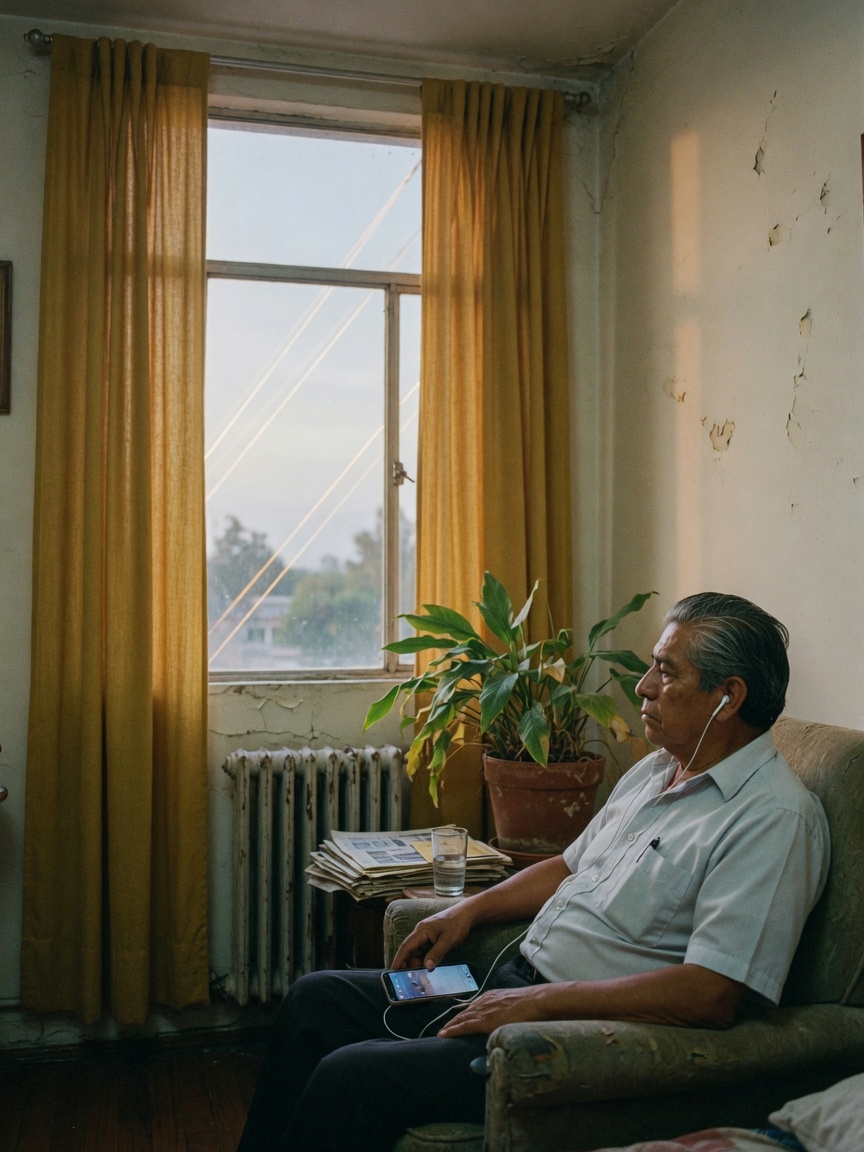
Good daily family questions: How to get real answers
I think we’ve all been there. You want to connect with your family. You want to hear their stories, especially from older relatives. So you ask a question, something like, "Tell me about your childhood." Or, "What was it like growing up?" And you get... crickets. Or a really vague, two-sentence answer that leaves you feeling like you didn't really learn anything new.
Kinnect is now LIVE! Start your private family group today.
👉 Try Kinnect on the Web
👉 Download the iOS App
It’s frustrating, right? You have this genuine desire to know more, to preserve these memories before they're gone. But the questions just don't seem to land. You feel like you're pulling teeth sometimes, and it almost makes you want to stop asking altogether.
Honestly, it's usually not about a lack of willingness to share. It's about the question itself. Generic questions get generic answers. Or, more often, no answer at all. Think about it: "How was your day?" How many times have you answered "Fine" when it was anything but? We're all programmed to give the easy, surface-level reply when a question doesn't really invite us deeper.
And "Tell me about your childhood"? That's a huge question. It’s too big. Where do you even start? It feels like homework, like you have to write an entire essay. Most people don't have that kind of mental energy on the fly. They might have a million memories, but asking them to conjure up the *best* or *most important* one on demand is tough. It just doesn't work for daily family questions.
The problem is, when we don't ask better questions, those stories really do start to disappear. You think you'll remember to ask later, or that someone else will. But time moves fast. And then, one day, you realize you missed your chance. And that's a regret that sticks with you.
So, what makes a bad daily family question? Anything that's too broad, too much like a survey, or too easy to answer with a yes or no. Questions that don't tap into a specific memory or emotion just float away. They don't give the person a hook to hang their story on. They don't spark that little light of recollection.
And it's not just about older family members, either. We do this with our kids, our siblings, our chosen family. We ask questions that are meant to connect, but they just fall flat because they lack that crucial element of specificity. We want to build a shared history, but we're not giving each other the right tools to do it.
But there's a better way, I promise. It's about shifting how we approach these conversations.
Crafting questions that unlock forgotten memories
The secret to good daily family questions, the kind that actually get real answers and rich stories, is all about getting specific. You want to give the person a tiny, specific memory to latch onto. Something sensory, something a little unexpected, something that brings a particular moment to mind.
Instead of "Tell me about your childhood," try something like, "What was the silliest thing you ever did in elementary school when you thought no one was watching?" Or, "What was the best thing your mom cooked that you can still taste in your memory?"
See the difference? These questions aren't asking for a whole autobiography. They're asking for a snapshot. They're asking for a feeling, a smell, a specific moment in time. And those are much easier for our brains to retrieve. They're more fun to answer, too.
Think about questions that evoke strong emotions, both good and bad. "What's a sound from your childhood that immediately makes you feel calm?" Or, "What's one small detail about your first pet that only you would remember?" Sometimes, the smaller the detail, the bigger the story it unlocks.
And don't be afraid to ask about specific challenges or triumphs. "Tell me about a time you really messed up and learned a huge lesson." Or, "What's one thing you accomplished that you were secretly most proud of, even if no one else noticed?" These kinds of questions show you value their full experience, not just the highlights reel.
It’s also important to make them open-ended. Avoid anything that can be answered with a simple 'yes' or 'no.' You want to encourage storytelling, not just information retrieval. And be ready with a follow-up question, not to interrogate, but to show you're listening and genuinely interested. "Oh, really? What happened next?" or "How did that make you feel?"
Honestly, that's why something like Kinnect exists. It's a private, invite-only platform designed to help families preserve memories and stories across generations, before they just fade away. You know, the kind of infrastructure for your family's legacy. One of its best parts, called Echo, sends out these daily questions that are crafted to feel personal, not like some survey. They actually get people talking. And the cool thing is, every answer builds into a permanent private archive, not just a fleeting chat. It's a growing record of your family's real stories over time, all dated, searchable, and safe forever in your group. It’s all about making those meaningful connections stick.
Q: How often should I ask these kinds of questions?
A: It really depends on your family's rhythm, but consistency helps. Daily is great if you can swing it, or maybe a few times a week. The goal isn't to bombard, but to create a gentle, ongoing invitation to share.
Q: What if a family member doesn't want to answer?
A: That's totally okay. The most important thing is to create a space where sharing feels safe and optional. Don't push or make anyone feel guilty. Just keep asking good questions, and they might open up when the right one comes along.
Q: Should I always ask about the past?
A: Not at all! While past memories are gold, also ask about current feelings, hopes, and even funny everyday observations. Connecting in the present is just as important for building shared history.
Q: How can I make sure I remember the answers?
A: Write them down! Seriously, grab a notebook, use a voice recorder, or find a platform specifically designed for this. You think you'll remember, but details blur over time, and you don't want to lose those precious stories.
Q: What if my family lives far away?
A: Distance doesn't have to stop you. These types of questions work great over text, email, or a dedicated family platform. The key is to make it easy for everyone to share their thoughts and stories, no matter where they are.
Keep reading
Kinnect is now LIVE!
Experience the private family network on the web or download the iOS app today.