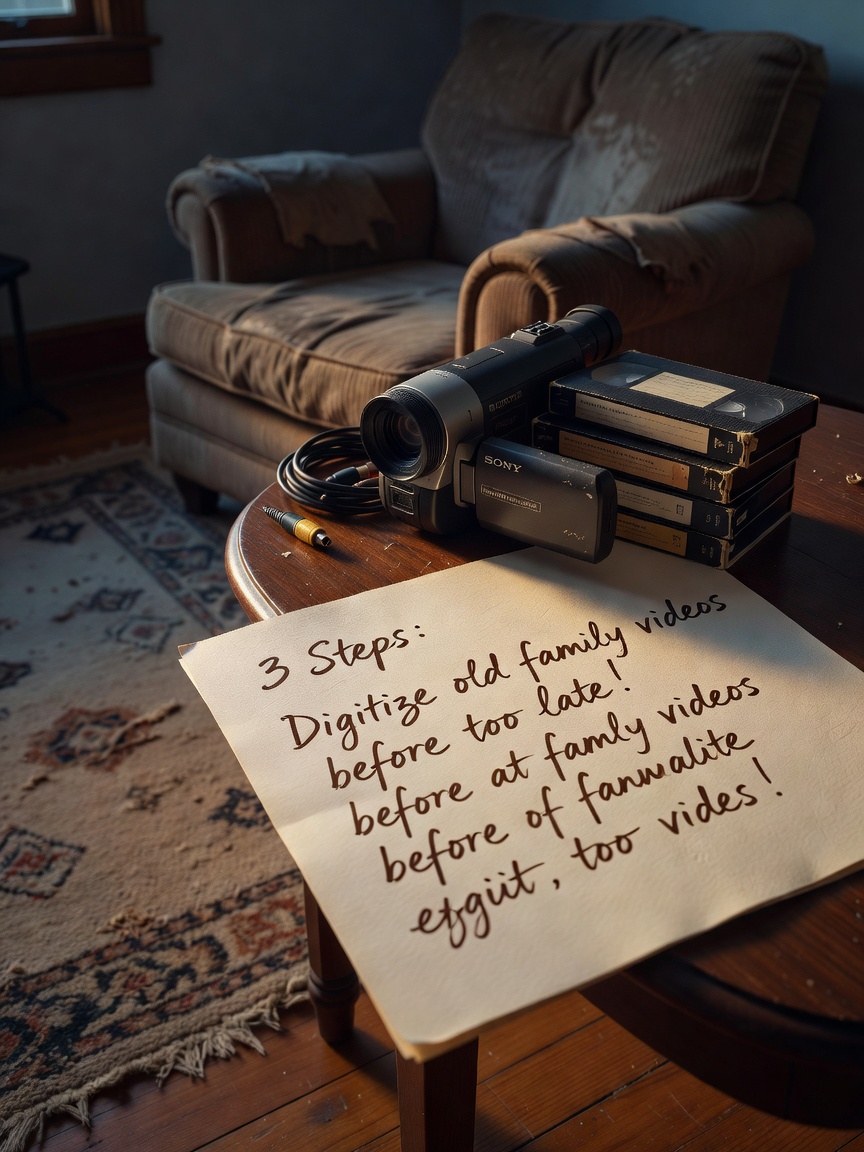
Digitizing old family videos is a project best managed collaboratively, not by one person. This guide outlines how to appoint a family historian, gather tapes, and make collective decisions. A private family network like Kinnect provides a secure, permanent home for the final digital archive.
Digitizing old family videos is the process of converting analog media formats, such as VHS, Hi8, and MiniDV tapes, into modern digital files like MP4s. This conversion preserves the footage from physical degradation and makes it easily viewable, shareable, and editable on current devices like computers and smartphones.
Kinnect is now LIVE! Start your private family group today.
👉 Try Kinnect on the Web
👉 Download the iOS App
I found a box of them after my dad passed. A stack of VHS tapes with his familiar handwriting on the labels: 'Christmas ‘92,' 'Hawaii ‘95,' 'First Steps.' My first instinct was panic. I didn’t even own a VCR anymore. These memories were trapped in plastic coffins, and I could almost feel them fading. The magnetic tape inside every one of those cassettes is slowly degrading, taking with it the sound of his laugh, the way he looked at my mom, the moments that built our family.
The internet is full of technical guides on how to convert these tapes, but they all miss the most important part: this isn't a solo mission for the most tech-savvy person in the family. It's a rescue operation that your whole family can, and should, be a part of. This isn't just about converting files; it's about reconnecting with your shared story. Our data on legacy shows a painful truth: 85% of Gen X adults report they wish they had recorded their parents' voices before they passed, yet only 12% have a system for doing so. Those tapes in your attic hold those voices. Let's get them back.
How to Lead Your Family's Video Legacy Project
Step 1: The 'Legacy Pitch' — Getting Everyone On Board
Before you buy any equipment or call any service, call your family. Don't frame this as a technical chore; frame it as a gift to each other and to future generations. Explain that the tapes are physically degrading and that this is a time-sensitive project. Suggest that everyone chips in to cover the cost, turning it from one person's financial burden into a shared family investment. You're not just asking for money; you're appointing yourself the 'Family Historian' and inviting them to be a part of the preservation committee.
Step 2: The Great Tape Hunt — Creating a Master Inventory
Chances are, the tapes aren't all in one place. Some are in your parents' attic, others are in your aunt's basement, and a few might be with a cousin across the country. Your first task as historian is to create a master inventory. A simple shared spreadsheet will do. Ask each branch of the family to list the tapes they have, what the labels say, and roughly how long they are. This step isn't just logistical; it starts conversations and builds excitement as people remember long-forgotten moments.
The Hidden Variable: The Conversations in Between
Here’s the secret that no technical guide will ever tell you: the most valuable part of this project isn't the final MP4 files. It's the human connection that happens during the process. The real magic is in the phone calls with cousins debating which tapes to prioritize, the shared memories sparked while creating the inventory, and the family viewing party you hold to watch the newly digitized footage together. This collaborative act of remembering is what strengthens family bonds. In fact, research shows that in families with regular storytelling traditions, children show 37% higher scores on family cohesion measures than in families with few shared stories (Source: Journal of Family Psychology, 2008). You're not just saving videos; you're actively building a stronger family.
FAQ: Your Digitization Questions Answered
What is the best way to digitize old home videos?
There are two main paths: DIY (Do-It-Yourself) or using a professional service. DIY requires a working VCR or camcorder and a digital converter, which can be cost-effective for many tapes. Professional services offer higher quality and convenience, handling all the technical work for you. The 'best' way depends on your family's budget, time, and technical comfort level.
How much does it cost to digitize old video tapes?
Professional services typically charge between $15 to $30 per tape, with potential discounts for bulk orders. A DIY setup can cost between $100 and $300 for the necessary hardware. By pooling resources as a family, the cost of a high-quality professional service becomes much more manageable.
Is it better to convert VHS to DVD or digital?
It is always better to convert to a digital file format like MP4. DVDs are also a physical medium that can scratch and degrade over time, making them a temporary solution. Digital files are more permanent, easier to back up to the cloud, simple to share with family anywhere, and can be edited or copied without any loss of quality.
Once your family's video history is reborn in digital form, the final question is: where does it live? A jumble of files on a hard drive or a chaotic cloud link doesn't feel like a home. Public social media like Facebook is built on an advertising model, turning your private moments into data points for advertisers. Kinnect was designed for this exact moment. It's a private, permanent home where your newly digitized videos can live alongside the stories, photos, and people they belong to, safe from data mining and the noise of public networks.
Learn more at Kinnect.
