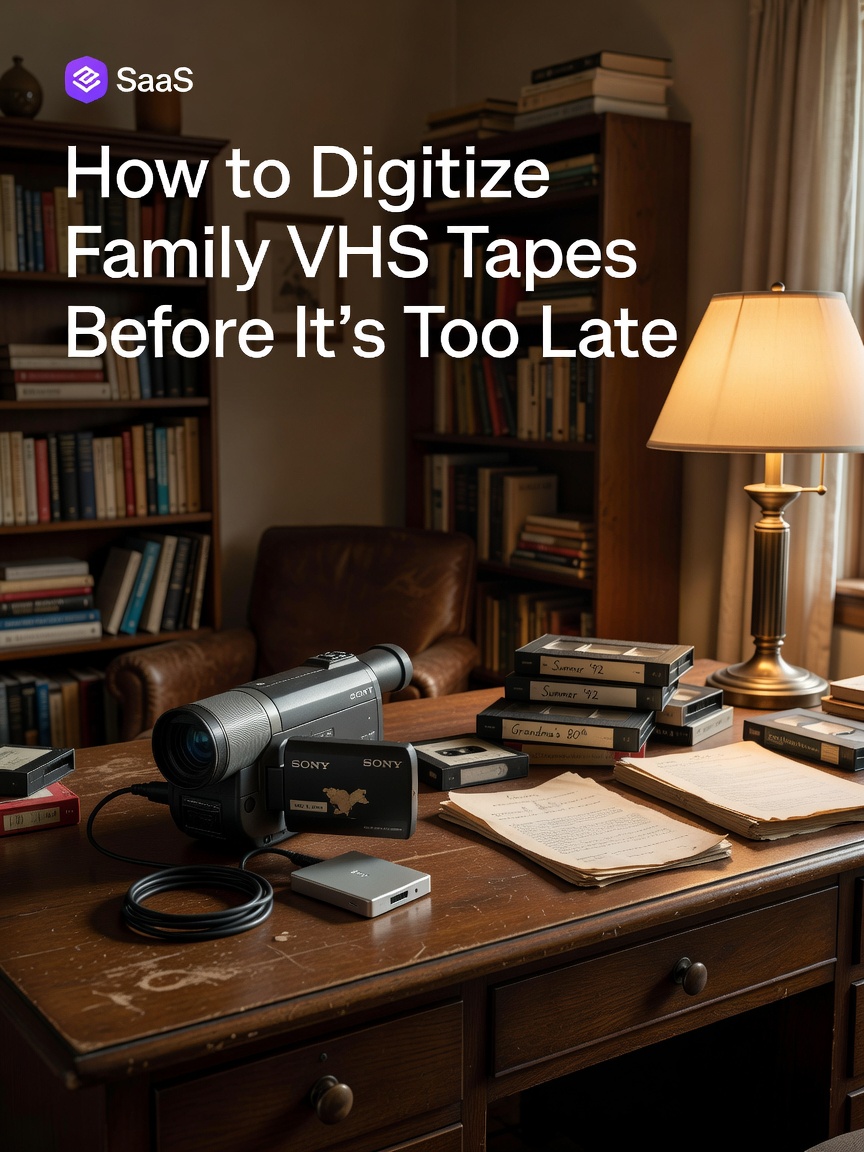
Digitizing VHS tapes involves converting analog video to a digital format like MP4 using a service or a home setup. The crucial next step, often overlooked, is curating these files into a shareable family story archive, which can be securely preserved for future generations in a private family network like Kinnect.
Digitizing VHS tapes is the process of converting analog video recordings from magnetic tape into a modern digital file format, like MP4. This is typically done using a VCR connected to a computer via an analog-to-digital converter, or by using a professional digitization service to ensure preservation and accessibility.
Kinnect is now LIVE! Start your private family group today.
👉 Try Kinnect on the Web
👉 Download the iOS App
I remember the sound of the VCR in my childhood home. That mechanical whir, the clunk of the tape slotting in, and then the fuzzy blue screen before a memory flickered to life. A birthday party from 1992. My grandmother, who we lost too soon, laughing in the kitchen. Those tapes feel like treasure, but they’re trapped in a plastic box, degrading a little more each year. The machine to play them is gone, but the memories aren't.
This isn’t just a technical problem about converting analog video to digital files. It’s an emotional rescue mission. Most guides will tell you how to buy a converter or which service to mail your tapes to. They stop there. But the real work—the meaningful work—begins *after* the files are on your computer. It’s about turning a box of silent, unlabeled tapes into your family’s living, breathing video legacy.
Beyond Conversion: Turning Tapes into a Living Family Archive
Step 1: The Gathering - Involve Your Family in Curation
The first thing you’ll notice with your newly digitized videos is that they are often long, unlabeled, and full of moments that need context. Who is that cousin in the corner? What year was that holiday? Don't try to solve this puzzle alone. The greatest tool you have is your family itself. Plan a 'viewing party.' Invite your parents, aunts, and uncles. Put the videos on the TV and let the stories flow. The simple act of watching together turns a chore into a reunion. You’re not just labeling files; you’re collecting the oral history that gives the footage its soul.
Step 2: The Story - Weaving Memories into a Narrative
A folder of 50 raw video files is an archive, but it’s not a story. The real magic happens when you start editing them into something meaningful. You don't need to be a professional filmmaker. Use simple, free software to create short compilations. Think 'Christmases Through the Years,' 'A Tribute to Grandpa's Garden,' or 'All of the Family Birthdays.' These curated stories become the new family heirlooms. Research shows that in families with regular storytelling traditions, children show 37% higher scores on family cohesion measures. These video stories are a powerful way to build that tradition for generations you haven't even met yet.
The Hidden Variable: The Voices Are More Important Than the Video
Conventional wisdom focuses on saving the visual footage from old tapes, preserving the images of faces and places. But the truly irreplaceable element is the audio. It's the sound of your mother’s laugh, your grandfather's specific cadence as he tells a familiar story, the chaotic joy of children playing. Our own research highlights a profound Legacy Preservation Gap: 85% of Gen X adults report they wish they had recorded their parents' voices before they passed, yet only 12% have a system for doing so. As you curate, listen closely. Those voices are the real treasure you're saving from being lost to time.
Step 3: The Archive - Building a Permanent, Private Home for Your History
Once your tapes are digitized and your stories are curated, the final question is the most important: Where will this legacy live? A folder on a laptop is a dead end. A hard drive can fail or get lost in a move. Sharing clips on a public platform like Facebook means their business model, which relies on data mining, sees your family's most private moments as a product. You've done all this work to preserve your family's history. It deserves a home built exclusively for that purpose.
This is precisely why we built Kinnect. It’s a single, private, and permanent space for your family's most important memories. It’s a place to store these newly rescued videos, share them with the right people, and add the stories and context around them. It’s not a public broadcast; it’s your family’s digital home, safe and secure for the next generation to discover.
How much does it cost to have VHS tapes digitized?
Professional services typically charge between $15 to $30 per tape, depending on the length and any extra services like cleaning or repair. A DIY setup can cost around $50 to $100 for an analog-to-digital converter and software.
What is the best format to convert VHS to?
The most widely recommended format is MP4 (using the H.264 codec). It offers an excellent balance of high video quality and manageable file size, ensuring it can be easily played on virtually any modern device, from phones to smart TVs.
Can you convert VHS to digital without a VCR?
No, you need a functioning VCR to play the tape for the conversion process. If you don't have one, your only options are to purchase a used one or, more commonly, to use a professional digitization service that has all the necessary equipment.
Learn more at Kinnect.