I’ve been thinking a lot lately about my grandmother, especially since my kids started asking questions about her. She passed almost fifteen years ago, and I realized how many of her stories I only half-remember. Things she’d say in passing, little anecdotes about growing up during the war, or what it was like when my dad was a boy.
Kinnect is now LIVE! Start your private family group today.
👉 Try Kinnect on the Web
👉 Download the iOS App
It hits me hard sometimes, the sheer volume of history that disappears with each generation. We live these full, complicated lives, full of choices and moments that shape us. And then, without intention, much of it just… vanishes. Who will tell my stories when I’m gone? Who will know what truly mattered to me, or why I made the decisions I did?
That fear, the quiet worry of being forgotten, it’s real. It’s not about ego, not really. It’s about the desire to leave something meaningful behind for the people you love. To connect with them even after you’re no longer physically present. To give them context for their own lives, a sense of where they come from.
We spend so much time gathering information, researching our ancestors, or trying to piece together fragments of our parents’ lives. And often, we don't realize until it’s too late, until they’re gone, how much we missed. We asked the wrong questions, or no questions at all. We just assumed there would be more time.
But what about our own stories? What are we doing right now to make sure our children, our grandchildren, or even just the curious historians of the future, have a window into our world? It’s not an easy question to answer. And it’s even harder to act on.
I know the feeling of starting a big project. I once bought a fancy journal, the kind with prompts, convinced I would fill it with my life story. It sat on my nightstand for months. I wrote maybe three pages. The idea of sitting down to write my entire autobiography felt overwhelming, a task for someone with endless free time, or someone nearing the end of their life with nothing else to do.
And that's the trap, isn't it? We see documenting our lives as this monumental undertaking. A book. A memoir. Something that requires weeks of dedicated solitude and perfect prose. We wait for the “right time,” which, as we all know, rarely arrives.
But your life story isn't just one grand narrative. It's a collection of small moments, fleeting thoughts, specific memories, and deeply held beliefs. It’s the answer to “what was your favorite childhood meal?” just as much as “what was the hardest decision you ever made?”
The trick, I think, is to break it down. To make it manageable. To find a way to capture those pieces bit by bit, without the pressure of a looming deadline or the expectation of literary genius. And to understand that this isn’t just for posterity. It’s for connection, right now. For the people who care about you to know you better.
And you know, we often think about documenting other people's lives, like our aging parents, which is incredibly important. But it’s just as vital to think about our own. What to document before a parent needs care is a conversation we have a lot, but what about before you need care?
Making sure your story actually gets told
How do you actually begin to document your own life story when the thought of it feels like climbing a mountain? It starts with acknowledging that it’s not about perfection. It’s about presence. It’s about making a habit of sharing.
Think about the questions you wish you’d asked your own grandparents or parents. What were their dreams? What did they regret? What was a typical Tuesday like when they were your age? These are the kinds of questions you can start asking yourself.
One simple approach is to keep a running list of memories. Just a bullet point here and there. Something that pops into your head – a smell, a song, an old friend’s name. Don’t try to elaborate immediately. Just capture the spark. Later, when you have a few minutes, you can expand on one of them.
And don't underestimate the power of everyday reflections. What made you laugh today? What made you frustrated? What did you learn? These aren't the grand narratives, but they paint a picture of who you are, right now. They show your family what your values are, what you care about, what your days are actually made of.
Another way to approach it is through specific themes. Maybe one week you focus on travel memories. The next, school stories. The next, your career path. This can make the process less intimidating, giving you a clear focus for a short period of time.
It’s about turning the overwhelming idea of “my life story” into a series of small, consistent actions. Because those daily answers build up. They become something significant over time, almost without you realizing it. It’s not a project you finish; it’s an ongoing conversation with yourself, for your future family.
For years, I looked for a place to keep these things. A private space where my thoughts wouldn't get lost in a social media feed, or buried in a physical journal that might just gather dust in an attic. Something specifically designed for family, for legacy. I wanted something that made it easy to make this a daily habit, not just another project that ends up feeling like a failure.
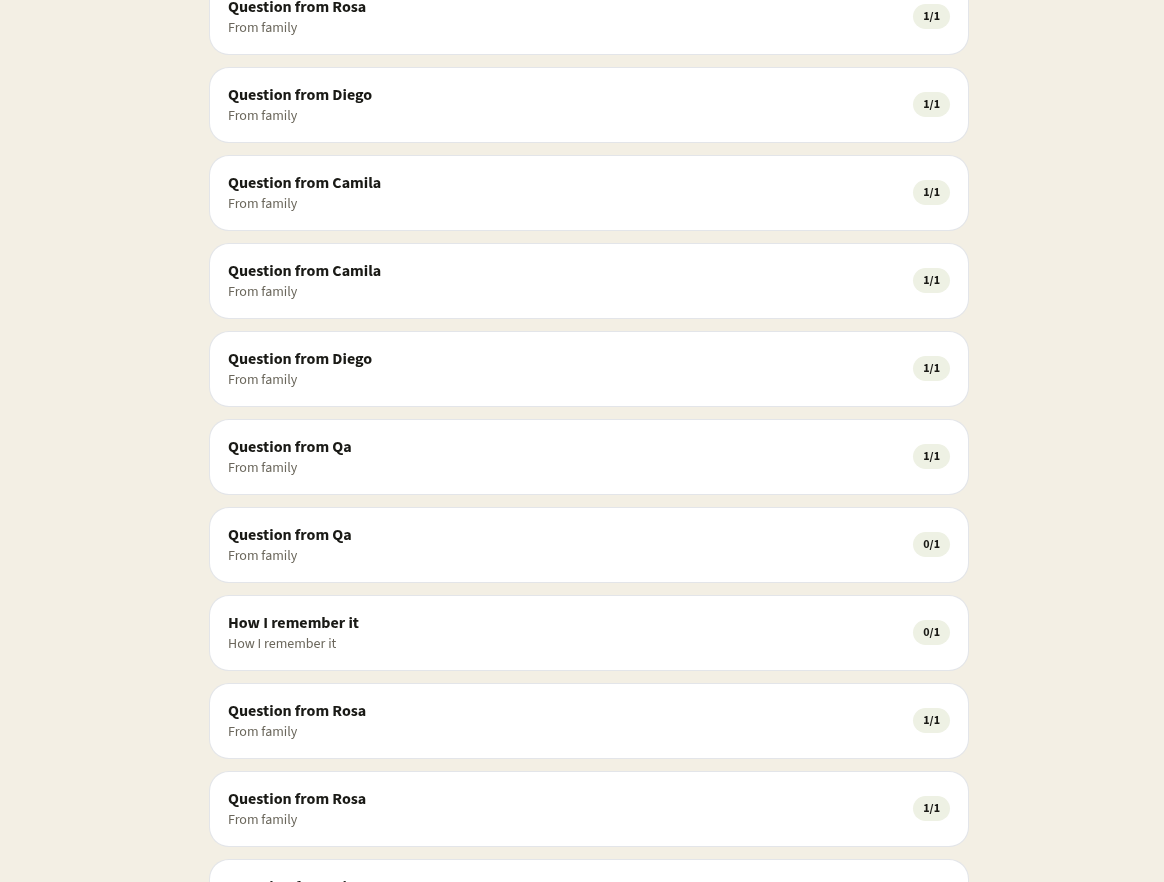
That’s where something like Kinnect comes in. It’s a private, invite-only platform that helps families preserve memories, stories, and essential life information across generations. The Echo feature, for example, is built exactly for this: it offers daily prompts, gently nudging you to share a thought, a memory, or an answer to a question. It's not a feed or a chat. It's a growing, permanent, private archive of your family's real stories over time. Each answer is dated, searchable, and stays in your group forever, making self-archiving a consistent, easy habit rather than a daunting, never-finished project. It’s about building a living history, day by day, for the people who matter most.
Q: Why is it important to document your own life story?
Documenting your life story ensures your experiences, wisdom, and personality are preserved for future generations. It provides context for your family's history and helps them understand where they come from, fostering a deeper connection.
Q: What’s the biggest challenge in documenting a life story?
The biggest challenge is often the sheer scale of the task, making it feel overwhelming and impossible to start or finish. Many people wait for "the right time" or believe it requires a complete, linear memoir, leading to procrastination.
Q: Should I focus on major life events or everyday details?
Both are valuable. Major life events provide the structure of your narrative, but everyday details, small anecdotes, and daily reflections paint a richer, more personal picture of who you truly are and what mattered to you.
Q: How can I make documenting my story a consistent habit?
Break the task into small, manageable pieces. Use prompts, dedicate a few minutes each day, or focus on specific themes weekly. Consistency with small actions is more effective than attempting one large, infrequent project.
Keep reading
Kinnect is now LIVE!
Experience the private family network on the web or download the iOS app today.
Of course, when sharing such personal stories, understanding how they are kept private and secure is essential. You can learn more about protecting your digital legacy by reading about how to reclaim your family memories and the importance of echo app privacy.