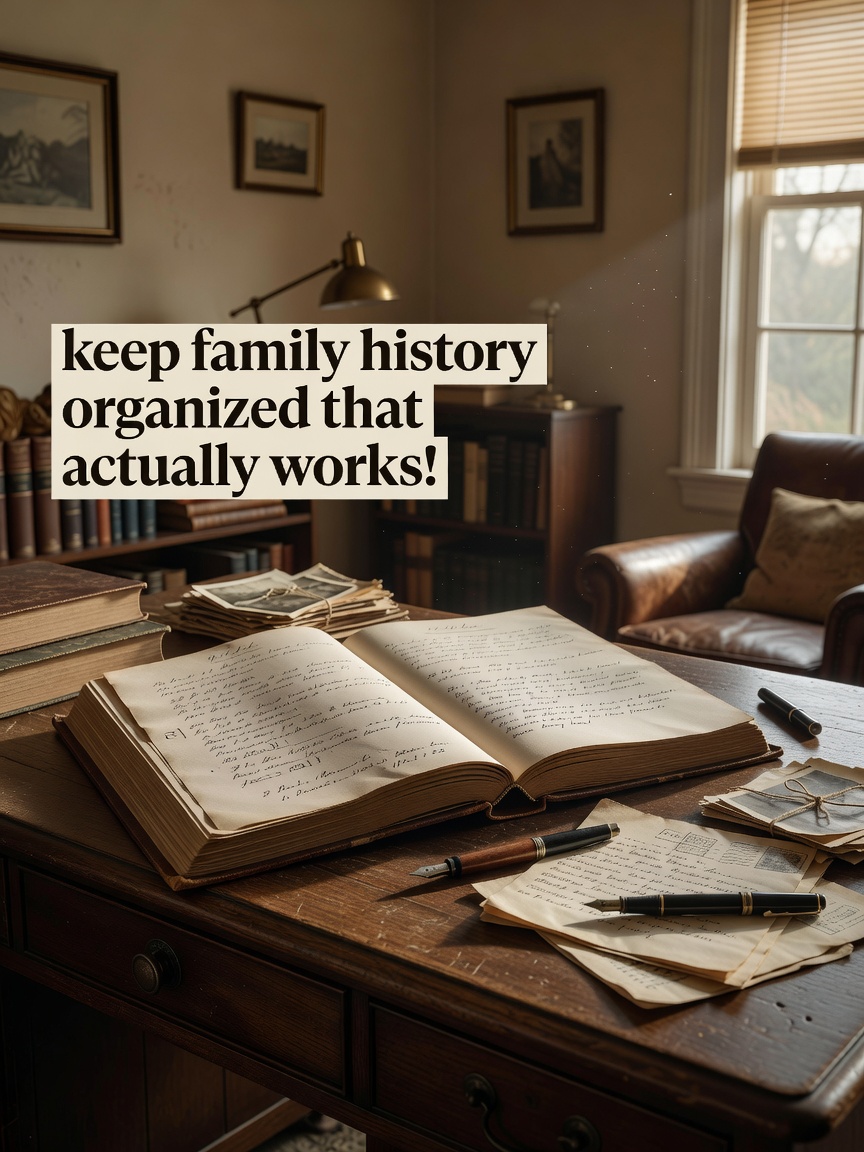
Organizing family history collaboratively involves creating a centralized digital system where multiple family members can contribute photos, stories, and documents as they happen. A private family network like Kinnect provides the tools for this living archive, turning a solo research project into an ongoing family activity.
Organizing family history is the process of creating a central, collaborative system for multiple family members to collect, preserve, and share genealogical records, photos, videos, and stories. This modern approach focuses on building a living archive that captures both past generations and the ongoing history of the current family.
Kinnect is now LIVE! Start your private family group today.
👉 Try Kinnect on the Web
👉 Download the iOS App
We all have it. The box. Maybe it’s a dusty shoebox in the attic filled with curling, black-and-white photos of people we’re told we should know. Or maybe it’s the digital version: a dozen different genealogy apps, a sprawling Google Drive folder, and a family group text that’s a chaotic mix of baby pictures and logistical noise. It feels overwhelming, like a puzzle with half the pieces missing and no picture on the lid to guide you.
I remember sitting with my own box after my dad passed. I felt this desperate need to know the stories behind the faces, but the one person who knew them was gone. That’s when I realized the old way of organizing family history—as a solo project for one designated “family historian”—is broken. It treats our legacy like a static museum of the dead. But our family story isn't over. It’s being written right now, in every new photo, every holiday video, every funny story told over dinner. What if we stopped trying to just archive the past and started building a living system, together, for the future?
Beyond the Archives: Building a Living Family History System
The goal isn't just a tidy digital folder. It's about creating a place where your kids can hear their great-grandmother's laugh, where a cousin across the country can add a story you've never heard, and where your family's identity becomes a source of strength. Research from Emory University found that children who score in the top third on family story knowledge show up to 3x higher resilience and self-esteem scores. We're not just organizing files; we're building stronger kids.
Step 1: Choose Your Central, Private Hub
Your family’s history is too precious for a platform built on advertising. Public social media networks are designed for broadcast, not preservation. Their business models often rely on using your data, including your family photos, for ad targeting. A simple cloud drive lacks the context and storytelling tools needed. You need a private, secure space designed for one purpose: connecting your family across generations. This becomes your single source of truth, the one place everyone knows to go to add a new memory or find an old one.
Step 2: Start with the Voices, Not Just the Dates
Before you scan a single document, record a conversation. The Legacy Preservation Gap is a heartbreaking reality: our research shows 85% of Gen X adults report they wish they had recorded their parents' voices before they passed, yet only 12% have a system for doing so. Use the voice memo app on your phone. Ask your mom about her first date with your dad. Ask your uncle about the story behind his funny nickname. This oral history is the soul of your archive; the documents and photos are just the skeleton.
Step 3: Create a 'Contribution Rhythm'
To make this a collaborative effort, you have to make it easy and engaging. Don't just send out a mass email asking for “everything.” Instead, create a rhythm. Start a “Throwback Thursday” where one person shares an old photo and story each week. Or a “Story Sunday” where you post a prompt like, “What’s the best family recipe and who made it famous?” This turns a daunting task into a fun, ongoing family ritual.
The Hidden Variable: The Myth of the 'Family Historian'
The single biggest mistake we make is assuming one person has to be the designated keeper of the family story. This old model creates a bottleneck and puts immense pressure on one person. The truth is, everyone holds a unique piece of the puzzle. Your aunt remembers the summer vacations, your cousin has the videos from the last reunion, and you have the photos from your childhood. A truly organized family history is a chorus of voices, not a solo performance. The goal isn't to create a perfect, finished book, but a living, breathing digital archive that grows with your family.
Why organize family history research?
Organizing your research prevents you from re-doing work and helps you see connections you might have missed. More importantly, it transforms a collection of names and dates into a coherent story that can be shared and understood by the next generation, strengthening their sense of identity.
How do I create a family history file?
Start digitally. Create a main folder for your family and sub-folders for each branch or individual. Use a consistent naming convention for files (e.g., `Lastname-Firstname_Event_Year.jpg`) and add metadata or tags to make photos and documents searchable by person, place, and date.
What is the best way to store old family documents?
For physical primary sources, use acid-free, archival-quality folders and boxes, and store them in a cool, dark, and dry place. For digital preservation, scan documents at a high resolution (at least 300 DPI) and save them in a stable format like TIFF or PDF/A in multiple secure locations, including a dedicated family hub.
Building this system isn't about finding the perfect software; it's about creating a shared home for your memories. It’s a place where a cousin can upload a video of grandpa's 80th birthday, and your daughter can hear his voice years from now, long after he's gone. That connection, that feeling of belonging to something bigger than yourself, is the entire reason we built Kinnect—to be that private, permanent home for the story of your family.
Learn more at Kinnect.
