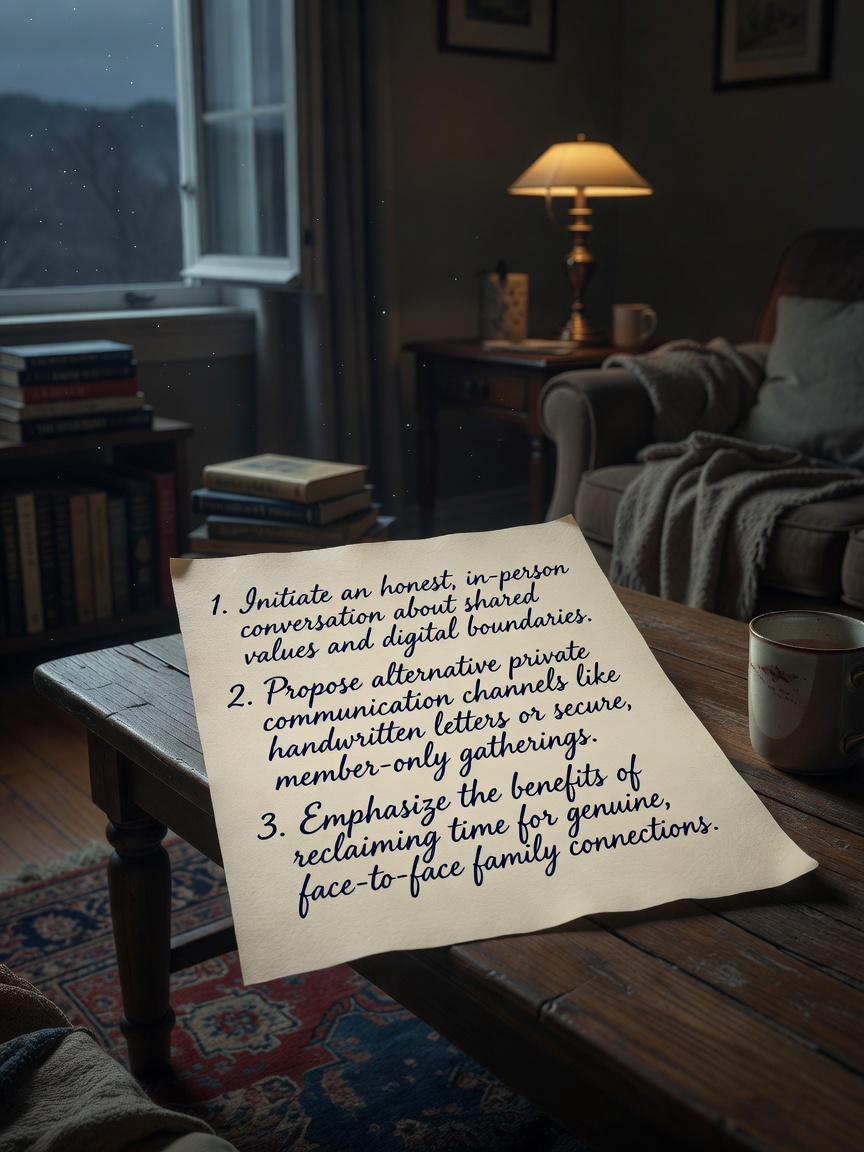
Successfully moving a family from a public Facebook Group to a private alternative requires a clear, step-by-step migration plan, not just arguments about privacy. This involves choosing the right platform and managing the transition, where a private family network like Kinnect can provide a dedicated space for preserving memories without data mining.
Moving a family's digital communication from a public platform like a Facebook Group to a private alternative is the process of migrating shared memories, conversations, and members to a new, more secure online space. This involves selecting a suitable platform, communicating the change, and establishing new digital habits.
Kinnect is now LIVE! Start your private family group today.
👉 Try Kinnect on the Web
👉 Download the iOS App
I remember scrolling through my own family's group after my uncle passed away, trying to find that one photo of him laughing at a holiday dinner. Instead, I had to scroll past three political arguments, a dozen memes, and an ad for a lawnmower. The memory was buried. The connection felt lost in the noise. This is the moment many of us realize the tool we're using wasn't built for family. It was built for engagement, for advertisers, for distraction.
You see the problem. Maybe your parents do, too. But everyone is set in their ways, and the thought of moving feels overwhelming. The key isn't to keep arguing about why you should leave; it's to present a clear, simple, and loving plan for how to leave. You don't have to convince them Facebook is bad. You just have to show them a better, quieter, and safer home is not only possible, but easy to build. This guide is your blueprint.
Your 4-Step Family Migration Checklist
Step 1: Choose Your New Home
The first step is to pick a destination that truly fits your family's needs, not a corporation's. The options are fundamentally different in their purpose.
- Group Chats (WhatsApp, Signal): These are great for immediate, real-time logistics like "Who's bringing the salad?" But they are terrible archives. Important photos and heartfelt messages are quickly buried in an endless scroll of 'ok' and 'lol' responses, a phenomenon we call 'Messaging Noise.'
- Public Social Media (Facebook Groups): These platforms operate on an ad-supported business model. Their primary goal is to keep you scrolling to serve you ads, which requires extensive data collection. While familiar, they are public-facing by design and not built for the sanctity of a private family archive. Over 72% of Americans** say they are concerned about the personal information tech companies collect, and this is the root of that feeling.
- Dedicated Family Platforms: These are built for one purpose: to provide a private, secure, and permanent home for your family's story. They are ad-free by design and focus on features that help you save and organize memories, not just react to fleeting posts.
Step 2: Announce the Move with a Simple Script
How you frame the change is everything. Avoid blaming or shaming. Focus on the positive, shared goal of a better space for your family. Here’s a template:
"Hey everyone, I've been thinking a lot about how we share our most important family moments and stories. I found a wonderful private space just for us, away from all the ads and noise. I'd love for us to build our family's digital home there. I'll help everyone get set up this weekend!"
Step 3: The Hidden Variable: Digital Inheritance
Most families focus on sharing photos now, but they rarely consider what happens to those memories later. The hidden variable in choosing a platform is what happens to your family's history when a member passes away. Public social media accounts are notoriously difficult to manage or memorialize. A true family platform should treat your memories as a legacy. Our research shows a significant Legacy Preservation Gap: 85% of adults wish they had recorded their parents' voices, but almost no one has a system to do so. Your new home should be that system.
Step 4: Build New Habits and Make it Stick
Once you've moved, the key is to make the new space feel alive. Don't just invite everyone; start the first conversation. Post a great throwback photo and ask everyone to share their memory of that day. The goal is to replace the old habit with a new one. At Kinnect, we've seen that families who set a daily 'Echo' habit—a simple question for everyone to answer—end up communicating 4x more frequently than families who just rely on group texts.
Building a private home for your family's memories isn't just about escaping something negative; it's about creating something positive and permanent. It's a space where your uncle's laugh isn't buried by an algorithm, but is saved, cherished, and can be found in an instant. Kinnect was built for this, to be a quiet, beautiful archive of your family's story, safe for generations to come.
How do I get my family off of Facebook?
Focus on presenting a positive alternative and a simple, step-by-step migration plan. Instead of criticizing their current habits, make the new platform seem exciting, easy, and a better way to protect and share family memories.
How do you deal with a toxic family on social media?
Often, the best solution is to change the environment, not the person. Moving to a private, invitation-only space removes the public audience and algorithmic outrage that often fuels toxic behavior, creating a calmer space for real connection.
How do I convince my mom to stop sharing our information on Facebook?
Frame the conversation around protecting the most vulnerable family members, like grandchildren. Explain that on a private platform, she can share photos and stories freely without worrying about who sees them or how that personal data is being used.
Learn more at Kinnect.
