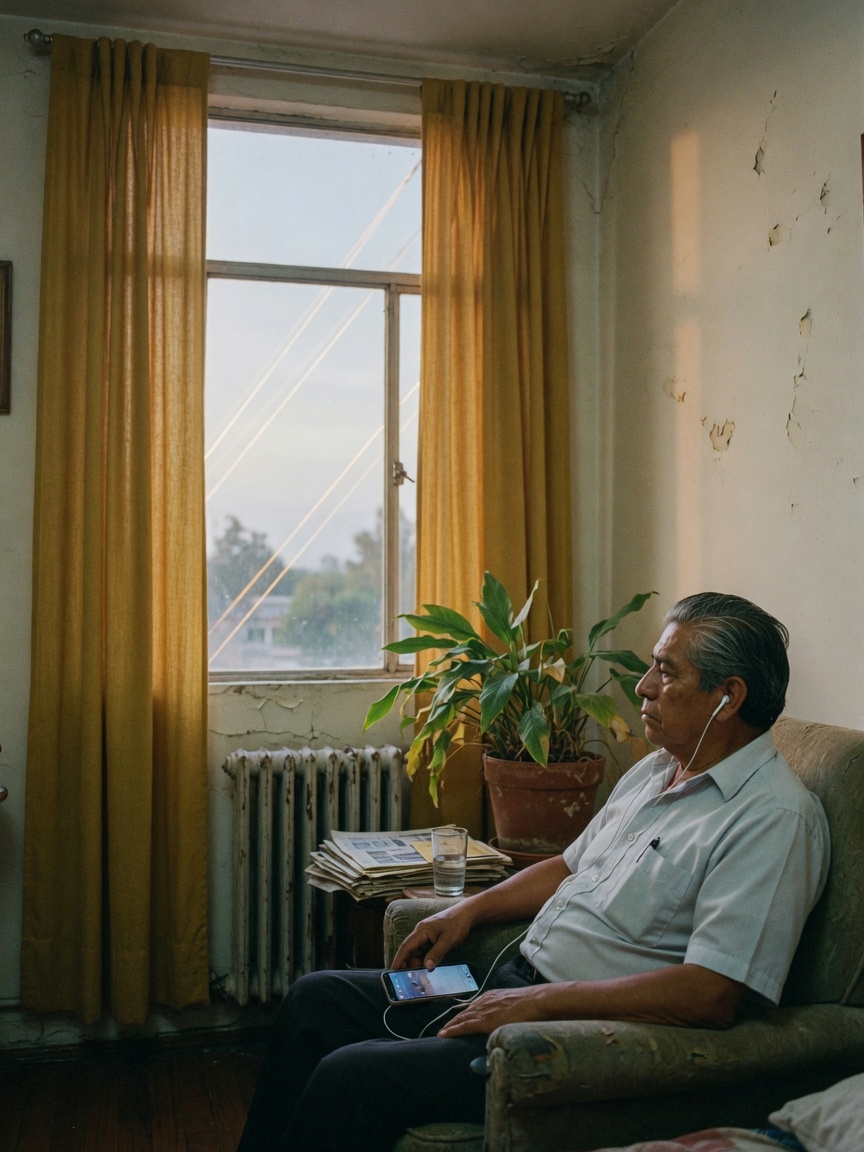
Most people do not realize the window is closing until it has already passed. A voice changes. Memory fades. The specific way your dad laughed at his own jokes, or the way your mom told a story about growing up — that is not something you can reconstruct later from photographs.
After losing his grandfather to dementia, Kinnect founder Omar Alvarez understood this firsthand. The details blur first. Then the voice. Then the stories behind the stories. And by the time you go looking for them, they are already harder to reach.
This is not a guide to a big family history project. It is about doing something small today that you will not regret.
Why people wait — and why they should not
The most common reason people give for not recording their parents' voices is that it feels like a project. You imagine setting up a camera, writing interview questions, editing footage. That version never happens.
The second reason is assuming there is more time. That the conversation you keep meaning to have is still available to you next month or next year.
Neither of these is a real obstacle. They are just friction. Here is how to remove it.
Start with one question, not an interview
The next time you are with your parent or grandparent, open the voice memo app on your phone and ask them one question. Just one. Tell them you want to save their answer. Most people, when asked directly, are willing to talk.
Good questions to start with:
- What did your street look like when you were growing up?
- Who was your best friend as a kid and what happened to them?
- What is the hardest thing you ever had to do?
- What do you know now that you wish someone had told you at thirty?
Specific questions get specific answers. "Tell me about your life" gets a summary. "What did your mother cook that nobody else cooked" gets a story.
Where to keep what you save
Kinnect is a private, invite-only platform built for exactly this. The Echo feature sends your family one question every 24 hours. Everyone answers in their own time, in their own voice, building a permanent record day by day. Kin Groups keep everything private — only the people you invite can see what your family shares. Join at kinnect.club.
Keep reading
Kinnect is now LIVE!
Experience the private family network on the web or download the iOS app today.
