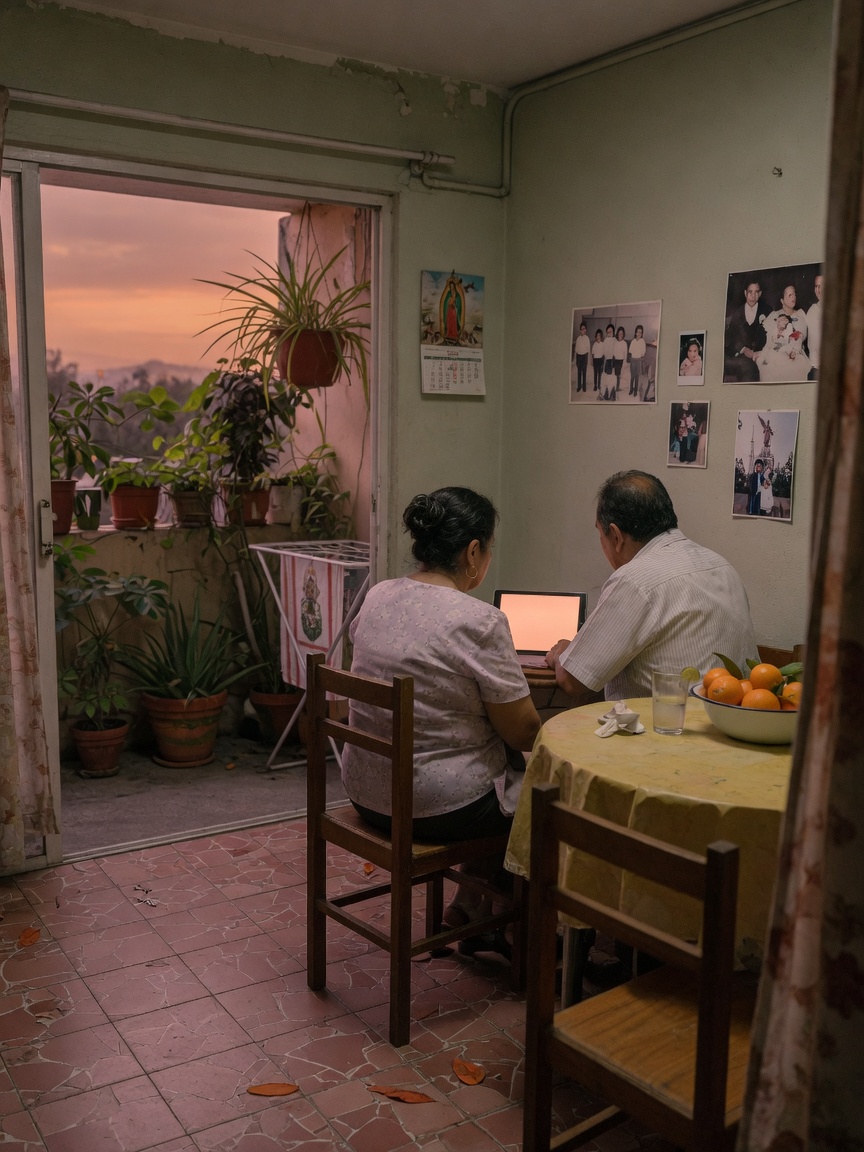
Mapping your modern family involves creating a visual representation of relationships based on emotional connection, not just bloodlines. This approach honors chosen family and complex dynamics, and a private platform like Kinnect provides the perfect space to build and share this richer family story.
Kinnect is now LIVE! Start your private family group today.
👉 Try Kinnect on the Web
👉 Download the iOS App
A relationship-based family map is a visual diagram that prioritizes emotional connections, shared experiences, and support systems over traditional bloodlines. Unlike a genealogical chart, it's designed to represent the reality of modern families, including chosen family, mentors, step-relatives, and other significant non-biological bonds.
For generations, the family tree has been the standard. A rigid, top-down chart of births, deaths, and marriages. But for many of us, that model feels incomplete, even exclusionary. It has no room for the step-father who taught you how to drive, the best friend who is more like a sister, or the mentor who shaped your career. It erases the beautiful, complex, and chosen relationships that form the true foundation of our lives.
This isn't just about record-keeping; it's about honoring the people who have made us who we are. When we limit our family story to bloodlines, we are telling an incomplete story. We are leaving out the chapters that are often the most meaningful. The goal is to create a living document that reflects not just where you came from, but who holds you up.
5 Ways to Map Your Family's True Relationships
Creating a map of your modern family is an act of love and recognition. It’s a powerful way to see the network of support that surrounds you. Here’s how to get started, moving beyond the limitations of a traditional tree.
- Start with Your Core Support System: Instead of starting with grandparents, start with yourself. From there, branch out to the people you rely on most, regardless of their official title. Who do you call in a crisis? Who celebrates your wins? This is your true core family.
- Use Visual Cues for Connection: Use different types of lines to signify the nature of a relationship. A thick, solid line could mean a strong bond, a dotted line for a distant or strained connection, and a colored line for mentorship or deep friendship. This adds emotional depth that names and dates lack.
- Add 'Story Snippets' Instead of Dates: Below each name, instead of just their birthdate, add a one-sentence memory or a note about their role in your life. For example, “Aunt Carol (neighbor) - Taught me how to bake,” or “Sam (college roommate) - My go-to for advice.”
- Embrace a Circular or 'Constellation' Model: Ditch the top-down hierarchy. A circular map with you at the center, or a 'constellation' map where each person is a star connected to others, can better represent the interconnected web of modern relationships.
- Define 'Family' on Your Own Terms: Give yourself permission to officially include non-relatives. This is your story. Recognizing these bonds is what makes the map authentic. In fact, our research shows this is a critical need. That’s why Kinnect is the first platform to treat 'Chosen Family' as a first-class citizen, offering specific inheritance and legacy tools for non-biological kin.
This isn't just about feeling good; it's about building resilience. Research from the Journal of Family Issues shows that people who feel a strong sense of family identity—the kind you define for yourself—report 36% higher overall life satisfaction.
Stop trying to fit your beautiful, complex family into a rigid, outdated chart. Kinnect is a private, safe space designed for your entire family, biological or chosen. Start building your true family story today and invite the people who matter most.
What is a diagram that shows relationships between family members?
A diagram that shows relationships between family members is often called a genogram or a relationship map. Unlike a traditional family tree that only shows lineage, a genogram uses specific symbols to detail the emotional quality of relationships, such as close, strained, or distant.
How do you show adopted and stepchildren in a family tree?
In a modern family map, adopted and stepchildren are shown with lines that represent the social and emotional bond, not just the biological one. You can use a dotted or colored line to the non-biological parent to signify a step or adoptive relationship, while ensuring they are positioned as equal members of the family unit.
How do you show relationships in a family tree?
To show relationships beyond simple lineage, use different line styles (solid, dotted, wavy) to represent the emotional quality of the connection (e.g., close, distant, conflicted). You can also add short text descriptions or color-coding to provide context about the nature of the bond, such as 'mentor' or 'chosen sibling'.
Learn more at kinnect.club.
Keep reading
- 3 Steps to keep family history organized from chaos
- Reclaim your real family: map chosen family tree
- Share family tree privately, even when public feels wrong.
As you build your family map, you are creating a beautiful digital story. It's crucial to understand how to protect those memories for the long term, so we've written a guide on what happens to photos when an app shuts down.

