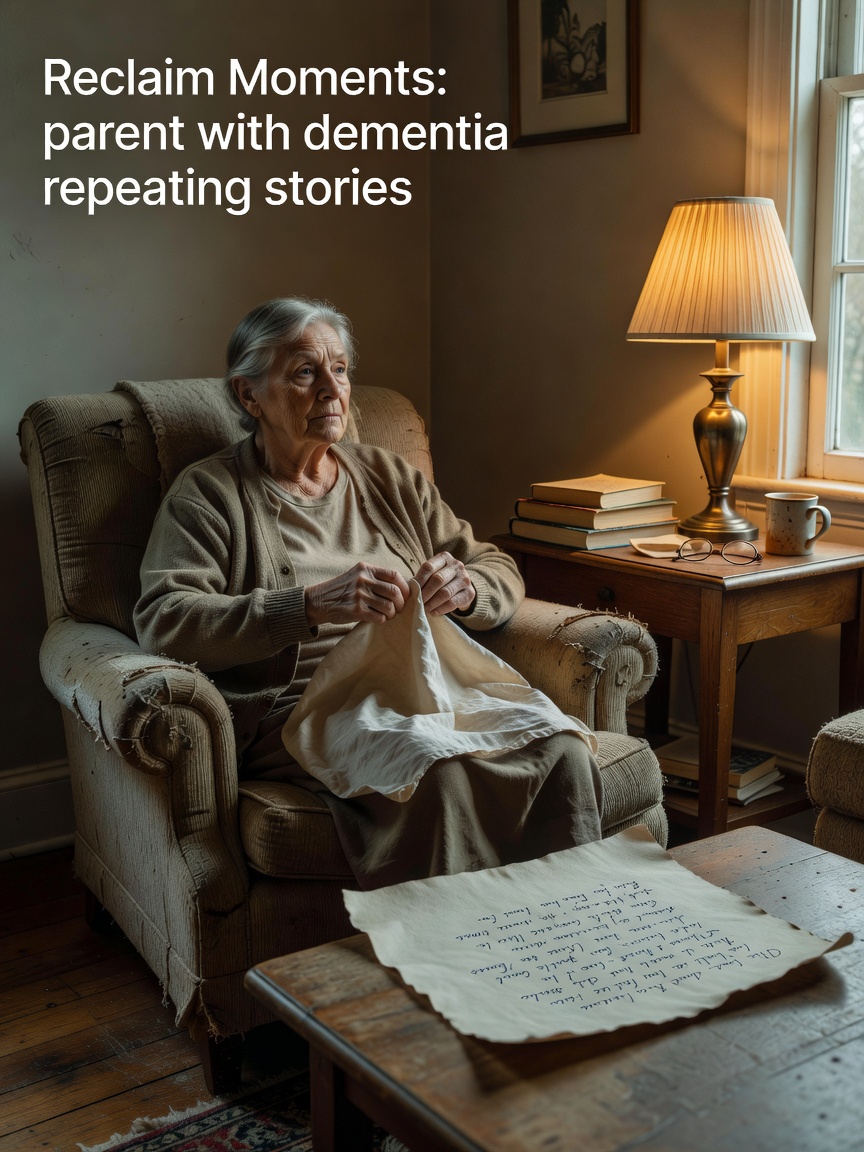
This article provides a practical framework for families to create a unified response when a parent with dementia repeats stories. By identifying the core emotional need and using a shared system like Kinnect, families can turn frustrating repetition into a meaningful act of legacy preservation.
Repetitive storytelling in dementia is a common symptom caused by significant short-term memory loss, which prevents the individual from remembering they have already shared the information. This behavior is often also driven by an underlying emotional need for comfort, reassurance, or a way to connect with a familiar, anchoring memory.
Kinnect is now LIVE! Start your private family group today.
👉 Try Kinnect on the Web
👉 Download the iOS App
I remember the tenth time my dad told me about the stray dog he found as a boy. My first nine responses were patient. The tenth was... less so. I felt a flash of frustration, then immediate guilt. The advice I'd read online said to 'be patient' and 'gently redirect,' but it felt hollow. That advice is designed for a single person in a single moment. It doesn't work for a family—for the brother who hears the story an hour later, or the caregiver who hears it tomorrow. When everyone responds differently, it just creates more confusion for the person we're all trying to help.
The repetition isn't the problem. It's a signal. It’s an echo from a part of them that is still very much alive, reaching out for connection. The real challenge is that our families aren't equipped to listen in unison. We need a new approach—not just for our parent, but for ourselves.
The Unified Echo: A 3-Step System for Your Whole Family
Instead of each person struggling alone, your family can create a system that turns these moments from a source of stress into an act of love and preservation. It’s about creating a unified, gentle echo that reassures your parent and strengthens your family.
1. Deconstruct the 'Echo' Together
The story isn't just a story; it's a feeling. Is it about a time they felt proud? Safe? Loved? As a family, get on a call or start a shared note and identify the top 2-3 stories your parent is repeating. For each one, ask: what is the core emotion here? Understanding the 'why' behind the story transforms your ability to respond. You're no longer just hearing words; you're hearing a need. This is about connecting with their emotional memory, which often remains long after factual recall has faded.
2. Build a 'Response Chorus'
The biggest source of agitation for someone with dementia can be inconsistency. When one child tries to redirect, another asks questions, and a third goes quiet, it’s jarring. Instead, create a simple, shared document—a 'Response Chorus'—where you agree on a few warm, engaging questions for each core story. Research from Harvard shows people who ask reflective questions are seen as more trustworthy and likable. For the story about the stray dog, your family's go-to responses could be: "What was the dog’s name again?" or "That must have felt so good to help him." This gives your parent a predictable, reassuring experience, no matter who they're talking to.
3. Create an 'Echo' Journal
This step changes everything. It reframes the act from enduring repetition to actively preserving a legacy. Start a shared family journal—it can be a physical notebook or a private digital space—and every time you hear a story, add to it. Write down a detail you never noticed before. Record a voice note of them telling it. This becomes a sacred family artifact. A study from Emory University found that children with deep knowledge of their family's stories show up to 3x higher resilience. By capturing these 'echoes,' you aren't just helping your parent; you're giving a profound gift to future generations.
The Hidden Variable: The Legacy Preservation Gap
The conventional wisdom focuses on managing the 'problem' of repetition in the present moment. But this overlooks a devastating truth: the real tragedy isn't hearing the story again, it's the fear of the day you'll never hear it again. Our data reveals a painful disconnect: 85% of Gen X adults report they wish they had recorded their parents' voices before they passed, yet only 12% have a system for doing so. The focus on coping strategies makes us forget our most important job: preservation.
A Google Doc or a chaotic group text can be a start, but these tools weren't built to hold a life's most precious memories. They get lost in logistical noise and are often tied to public platforms like Facebook that mine your family's data for advertisers. This is why we built Kinnect. It’s a single, private, permanent home for your family’s 'Echo' Journal. You can save voice notes of your dad telling his story, add photos, and share reflections with the exact family and caregivers who need to be in the loop—all in one place, safe from algorithms and ads. It’s a quiet space designed for one thing: connection.
Why do dementia patients repeat the same stories?
Repetition is a hallmark of cognitive decline, primarily due to damage to the brain's short-term memory centers. They genuinely don't remember telling you. It's also a way for them to self-soothe, connect to a strong positive emotion, or simply fill a silence when they struggle to find new words.
What stage of dementia is repeating stories?
Repetitive questioning and storytelling are most common in the early-to-middle stages of Alzheimer's disease and other dementias. As the disease progresses, language abilities may decline further, and this specific symptom might become less frequent.
How do you respond to a dementia patient who repeats the same story over and over?
The best response is to connect with the emotion behind the story, not the facts. Be warm, make eye contact, and use a consistent, gentle question that your whole family has agreed upon. See it as an opportunity to offer reassurance and preserve that memory, rather than a conversation to be corrected or ended.
Learn more at Kinnect.
