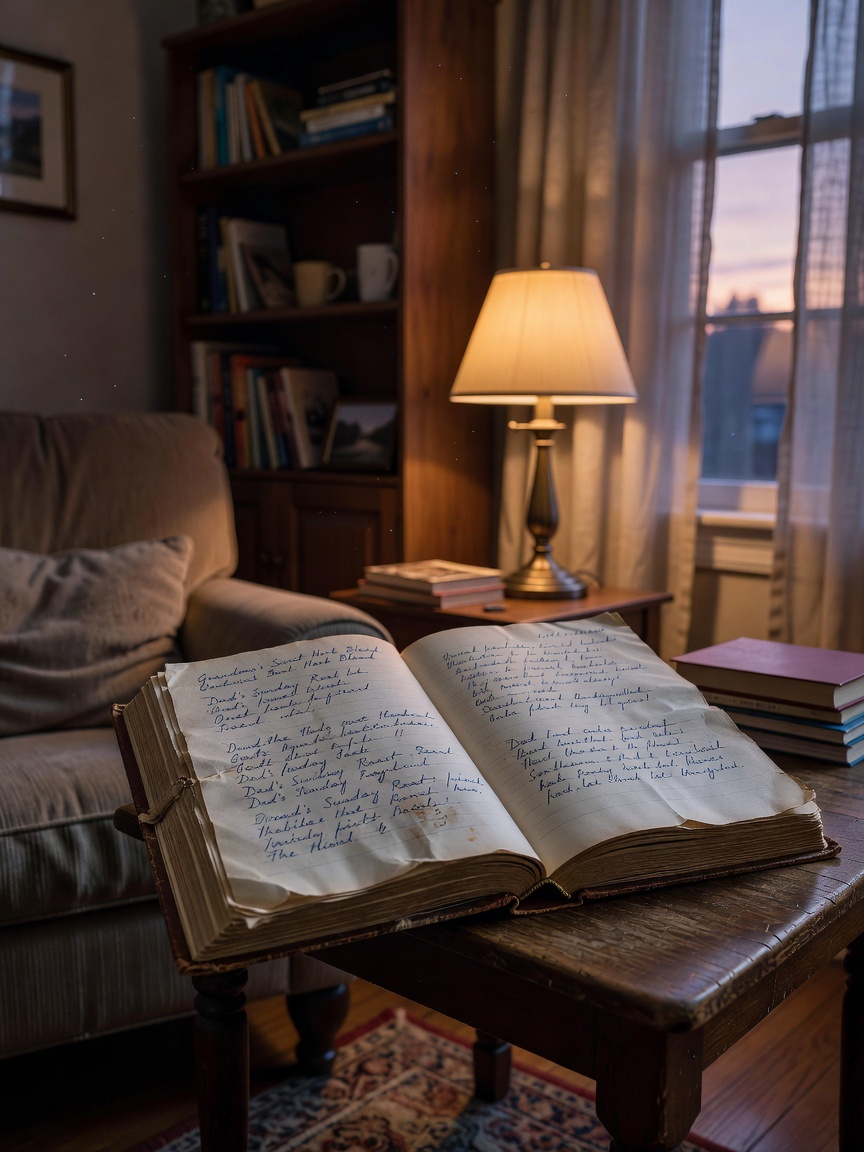
A private digital family cookbook is a collaborative, online collection of recipes and culinary stories shared exclusively among family members. It works by using a secure platform to centralize contributions, preserving not just cooking instructions but also the memories, photos, and videos associated with them.
Kinnect is now LIVE! Start your private family group today.
👉 Try Kinnect on the Web
👉 Download the iOS App
I remember my grandmother's hands, dusted with flour, rolling out dough on her wooden board. I can almost smell the cinnamon. But I never wrote down her exact recipe for apple pie. After she was gone, that specific memory, that taste, was gone too. We think of recipes as just instructions, but they're not. They're stories. They're the thread that connects us to the people we love, long after they've left the kitchen. The real challenge isn't just saving the ingredients list; it's saving the feeling, the voice, the moment.
But creating this shared space is harder than it sounds. You’ve tried a Google Doc that no one updates, a chaotic group text where recipes get buried, or a social media group where you worry about your family's data. A staggering 72% of Americans are concerned about how tech companies use their personal information. You need a dedicated, private space built for one purpose: connecting your family.
How to Choose the Right Platform for Your Family's Cookbook
The 'best' platform isn't about the most features; it's about what your family will actually use. The biggest hurdle is getting everyone, from a tech-savvy cousin to a grandparent who prefers phone calls, to participate. Here’s how to evaluate your options:
- General Cloud Docs (e.g., Google Docs, Notion): They are free and familiar, but they feel like work. They lack structure, are difficult to navigate on mobile, and quickly become a messy, abandoned project. They’re built for documents, not relationships.
- Public Social Media (e.g., Private Facebook Group): Most family members already have an account, which seems convenient. However, these platforms are ad-supported, meaning your family's data—photos, stories, and connections—is the product. You sacrifice privacy and permanence for a familiar interface.
- Private Family Networks (e.g., Kinnect): These are designed specifically for this purpose. They offer a secure, ad-free environment where recipes, photos, videos, and stories can live together. The interface is simple for all generations, and the focus is on connection, not data collection.
The Hidden Variable: The Story is More Important Than the Recipe
Conventional wisdom focuses on perfectly preserving the ingredient list. But our research on family connection reveals a deeper truth: the story behind the recipe is what creates the lasting bond. It’s the audio clip of Dad telling the story of his first time grilling, or the video of Grandma teaching a grandchild to knead dough. The Legacy Preservation Gap is real: 85% of Gen X adults report they wish they had recorded their parents' voices before they passed. A true family cookbook isn't a text file; it's a multimedia archive of your family's heart.
Creating a living cookbook isn't about finding the perfect app; it's about building a family ritual. It's about creating a space so private and easy to use that your family wants to share the moments that matter.
Kinnect was built for this. It’s not just a place to store recipes. It’s a permanent, private home for your family’s entire story—the photos, the voice notes, the videos, the inside jokes—all organized and safe from the data mining of public social media. It’s a kitchen table for the digital age, where every generation has a seat.
How do I create a digital family cookbook?
Start by choosing a private, collaborative platform that's easy for all family members to use. Invite a small group of core contributors first to build momentum, then send out a wider invitation with a clear 'why'—to preserve your family's stories, not just recipes.
How do I make a family cookbook to pass down?
To create a true heirloom, focus on capturing more than just text. Use a platform that allows you to include photos, videos, and even audio recordings of family members telling the story behind each recipe. This creates a rich, multimedia archive for future generations.
What is the best way to collect family recipes?
The best method is a centralized, digital space that everyone can access from their phone or computer. Avoid scattering recipes across emails or texts. Set a fun, low-pressure goal, like a 'Recipe of the Month' challenge, to encourage ongoing participation.
Learn more at Kinnect.
