Most 'no DNA' family tree apps still collect and may share other personal data. A true privacy audit involves checking the terms of service for data ownership and third-party marketing clauses. A private family network like Kinnect offers a secure alternative by design, keeping your family's story completely within your control.
A private family tree app is a genealogy tool, either software or a web service, that allows users to build their family history without requiring them to submit DNA samples for analysis. Its primary function is to provide a secure environment focused on genealogical research, record-keeping, and story preservation, with user control over data sharing.
Kinnect is now LIVE! Start your private family group today.
👉 Try Kinnect on the Web
👉 Download the iOS App
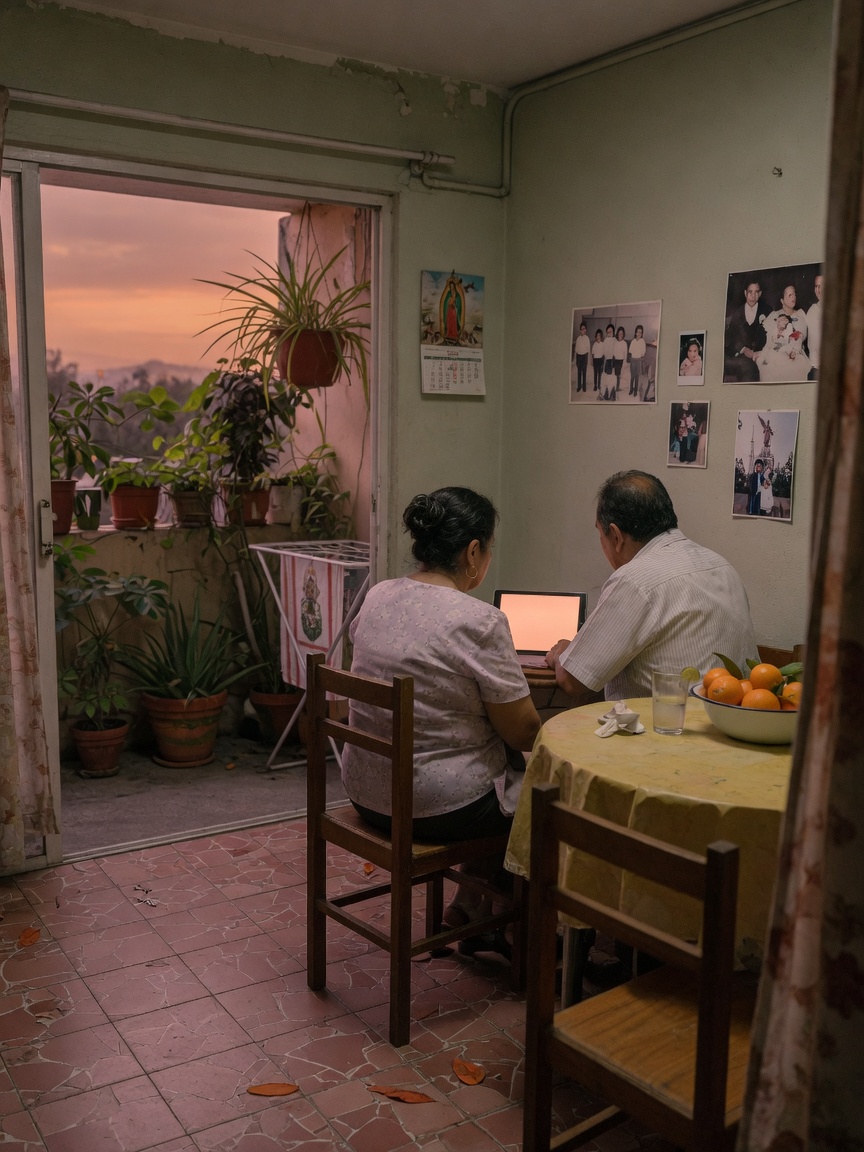
I remember sitting with my grandfather at his kitchen table. He wasn't telling me about dates or places, but about the time he and his brother tried to build a raft to cross the creek, or the smell of my grandmother's kitchen on a Sunday morning. Those moments are my family tree. They're not data points to be sold or mined for advertising profiles. They're the whole reason we do this work—to hold onto the people we love.
So when you search for a family tree app that doesn't share your DNA, you're asking a much deeper question: "How can I protect these sacred memories?" The big genealogy companies have made us think that privacy is only about genetics. But the truth is, the photos of your kids, the birthdates of your relatives, and the stories you write about them are just as valuable, and just as vulnerable. Saying "no DNA sharing" is the bare minimum. It's time we learned to demand true privacy for our entire family story.
The Family Historian's Privacy Checklist: 3 Questions to Ask Before You Upload
Before you upload a single photo or date, you need to become a privacy detective. Most of us scroll past the Terms of Service because it’s dense and confusing, but that’s where the real story is. Here’s what to look for, in plain English.
1. Who Actually Owns Your Family's Story?
Look for the section on "User Content" or "Your Content." Many services will state that you retain ownership, but then they include a crucial clause: you grant them a "perpetual, irrevocable, worldwide, royalty-free license" to use, host, and distribute your content. This means that while you technically own it, they can use the photos, stories, and data you upload in ways you may never have intended, forever, without paying you. It's the digital equivalent of giving someone a key to your house that never expires.
2. Who Are They Sharing It With?
Scan the Privacy Policy for terms like "third-party partners," "affiliates," or "marketing purposes." This is where they tell you if they share your information with other companies. It’s often not just your email address. It can be aggregated data about your family—like locations, historical periods, and surnames—that helps advertisers build incredibly detailed profiles. Your ancestor's journey becomes a data point to sell you a travel package.
The Hidden Variable: The Privacy Paradox in Your Pocket
We've been trained to trade privacy for convenience. We click "agree" without reading because we want the service *now*. But what's at stake here isn't just a social media post; it's your entire family legacy. We see this shift happening everywhere. Our research at Kinnect shows a key motivation for families leaving platforms like Facebook isn't just the interface; it's the profound discomfort with the data mining of their children's photos and lives. The same standard must apply to our ancestors. True privacy means your family's past isn't used to build a marketing profile for your future.
Protecting these stories isn't just about nostalgia; it’s about building a stronger future for our children. Groundbreaking research from Emory University found that children who score in the top third on family story knowledge show up to 3x higher resilience and self-esteem scores than those with little knowledge of their family history. When we protect our stories, we give our kids an unbreakable sense of belonging.
This is why we built Kinnect. We believe your family’s story should belong to your family, period. It's a private, invitation-only home where your data is never sold, your photos are never mined for ads, and your legacy is protected, not productized. It's a place to build your tree and share the stories that give it life, safely and permanently.
What is the best program to build a family tree?
The "best" program depends on your goal. If your priority is absolute privacy and sharing stories with living relatives, a private network like Kinnect is ideal. If you need deep historical document integration, you may need a traditional genealogy platform, but be sure to audit their privacy policy first.
Is there a truly private family tree website?
Yes, but they are rare. A truly private website operates on a different business model, one that doesn't rely on selling data or user content. Look for services with clear privacy-first commitments, end-to-end encryption, and business models based on subscriptions, not data monetization.
Can I use Ancestry for free to build a family tree?
Yes, you can create a family tree on Ancestry for free. However, access to most historical records, documents, and other users' trees requires a paid subscription. The free version is primarily for building your own tree structure based on information you already know.
Learn more at Kinnect.