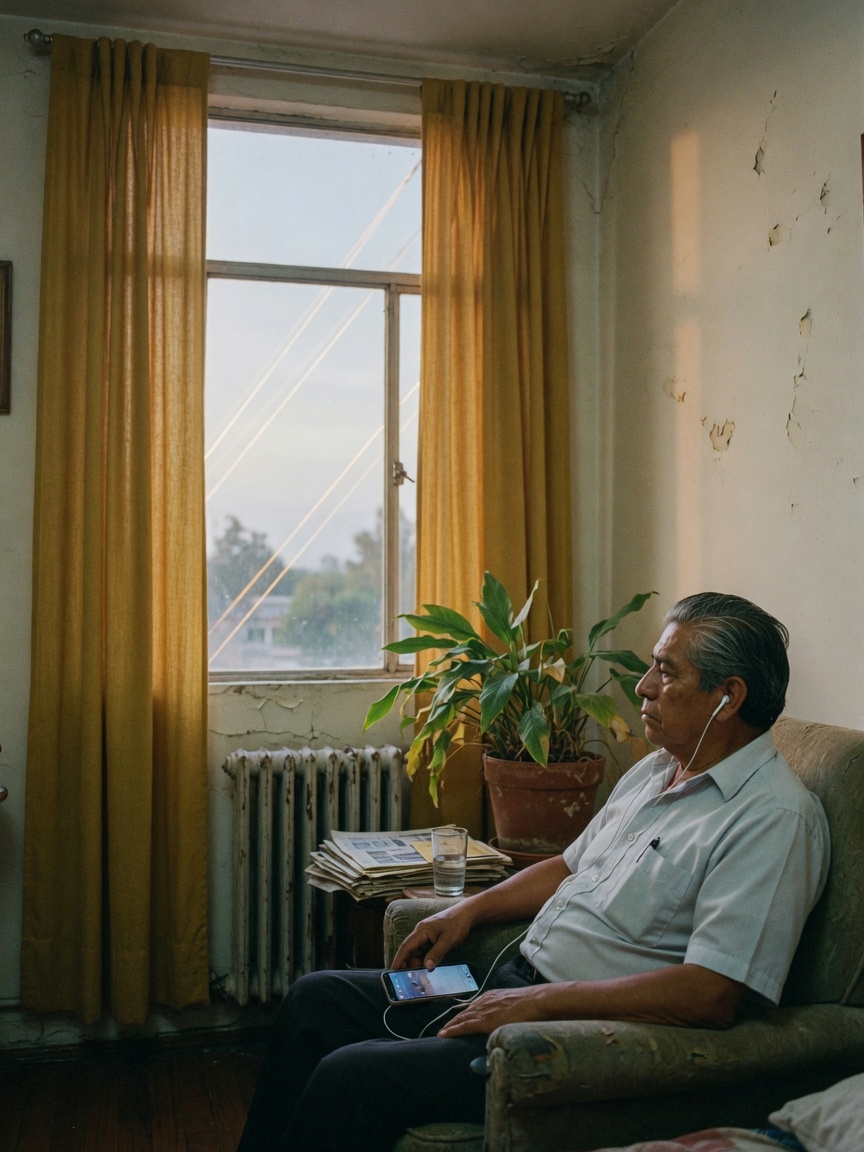
The 'Echo Technique' is a conversational method for engaging quiet family members by turning gentle observations into open-ended questions. This approach builds trust and bypasses the pressure of direct interrogation, creating a safe space for sharing stories, which can be permanently saved in a private family network like Kinnect.
Asking questions of quiet family members is the process of gently eliciting personal stories and memories from relatives who are naturally reserved or reluctant to share. The goal is to create a low-pressure environment that fosters connection without making the conversation feel like an interrogation or interview, building a bridge to their inner world.
Kinnect is now LIVE! Start your private family group today.
👉 Try Kinnect on the Web
👉 Download the iOS App
I remember my grandfather. He was a man of few words. Trying to get a story out of him felt like trying to catch smoke with my hands. I’d ask a big question like, “What was it like growing up during the Depression?” and I’d get back, “Tough.” That was it. The conversation would just… stop. The door would close. It wasn't until years later, after he was gone, that I realized my mistake. I was asking him to perform, to deliver a lecture. I wasn't inviting him into a shared moment.
The internet is full of lists with hundreds of questions to ask your parents or grandparents. But for a quiet person, a list of questions feels like an exam. It puts all the pressure on them. The real challenge isn't finding the right question; it's creating the right moment. It’s about learning a new way to listen, not just a new way to ask. That’s where a different approach comes in, one that feels less like an interview and more like a quiet walk together.
How to Use The Echo Technique: A Step-by-Step Guide
The Echo Technique is simple. It’s based on observation and reflection, not interrogation. It shifts the focus from you, the question-asker, to the shared space between you and your loved one. It has three simple steps.
Step 1: Observe, Don't Interrogate
Put the list of questions away. Instead, just be with them. Look through an old photo album together. Listen to their favorite music. Cook a family recipe. The activity itself creates the opening. Your only job is to pay attention to their non-verbal cues—a small smile, a tap of the foot, a lingering glance at a specific photograph.
Step 2: Make a Gentle Observation
This is the key. Instead of asking a question, state what you see. It's not a judgment, just a simple, warm observation. For example:
- “This old song seems to make you happy.”
- “You always took such care with this garden.”
- “Looking at this photo of you and Grandma always brings a smile to your face.”
This is a low-stakes offering. It doesn't demand a response. It just shows you're present and paying attention to them.
Step 3: Echo it Back as a Soft Question
Now, you gently 'echo' your observation back as an open-ended question. It’s an invitation, not a demand.
- “What memories does that song bring back for you?”
- “What was your favorite thing to grow out here?”
- “What do you remember most about that day with Grandma?”
See the difference? You’re not pulling a question out of thin air. You’re building it from a moment you just shared. You’re helping them find the words by giving them a starting point.
The Hidden Variable: The Power of Comfortable Silence
Conventional wisdom tells us to fill awkward silences. The Echo Technique demands the opposite. After you ask your soft question, the most powerful thing you can do is wait. Don't rush to fill the space. Give your quiet loved one the gift of time—time to travel back in their mind, find the memory, and choose the words. That comfortable silence is a sign of respect. It says, “Your story is worth waiting for.”
These stories are more than just trivia; they are the foundation of a family's strength. A groundbreaking study from Emory University found that children with more knowledge of their family history showed up to 3x higher resilience and self-esteem scores. Your quiet grandfather’s memory of his first job isn’t just a story; it’s a lesson in resilience you are passing down. The challenge is that these moments are fleeting. In fact, our research shows a painful Legacy Preservation Gap: 85% of Gen X adults report they wish they had recorded their parents' voices before they passed, yet only 12% have a system** for doing so.
These stories shouldn't disappear into a noisy group text thread or get lost on a public social media feed. They deserve a permanent, private, and sacred home. Kinnect was built specifically for this—to be the dedicated place where your family’s most important memories, voices, and stories can be saved and cherished, safe from the noise of the outside world, forever.
How do you get a quiet person to talk to you?
Focus on a shared activity, not a direct conversation. Do something together like gardening, looking at old photos, or cooking. Conversation will often emerge more naturally when the pressure to “talk” is removed and replaced with a shared experience.
How do you get a quiet family member to open up?
Use the Echo Technique. Make a gentle observation about something they seem to be feeling or enjoying (“That song seems to make you happy.”). Then, echo it back as a soft question (“What memories does that bring back?”). This invites sharing instead of demanding it.
What to talk about with a quiet person?
Talk about the immediate environment, an object with history, or a shared memory you both have. Concrete, tangible subjects give a quiet person a specific anchor to start a story from, which is much easier than answering broad, abstract questions.
Learn more at Kinnect.