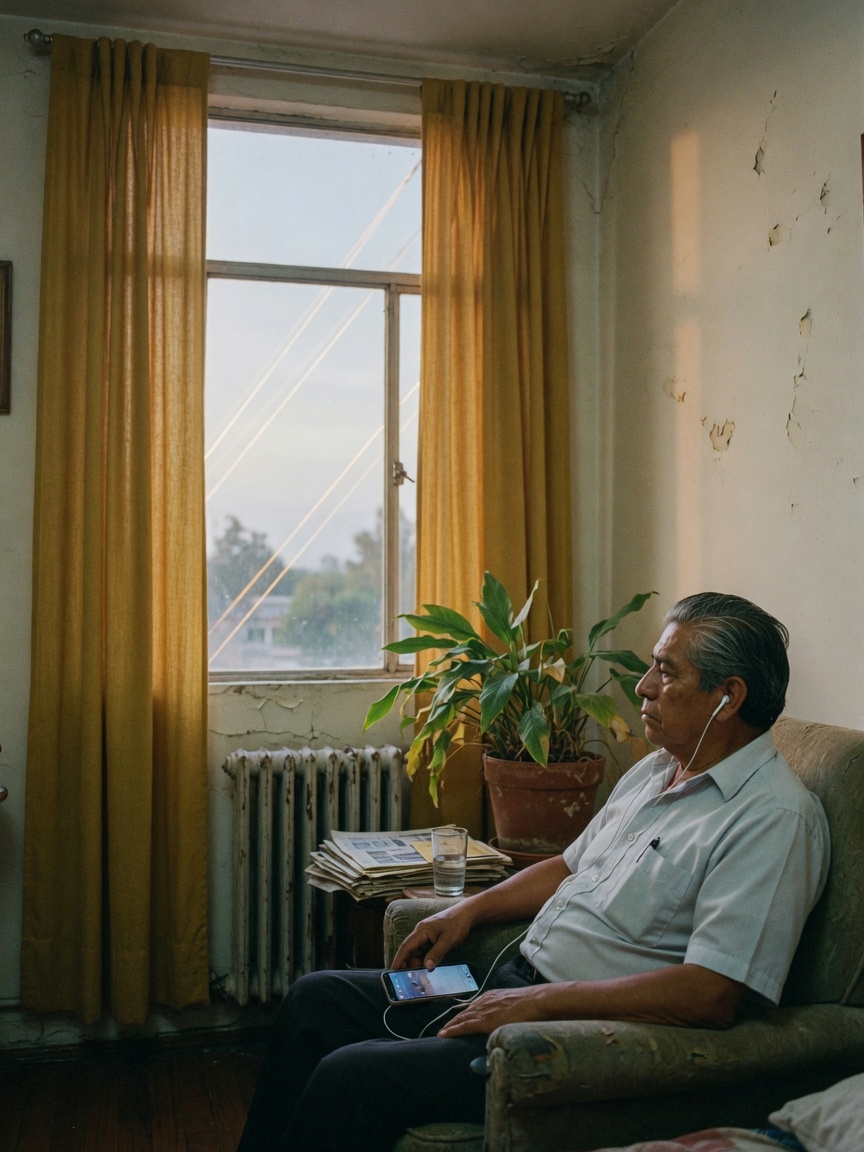
When you need to record memories of a parent with dementia in its early stage, the best approach is to start now, gently and consistently, while they can still actively participate. Waiting even a few months can mean losing whole chapters of their life story forever, and that's a truth that hits hard.
Kinnect is now LIVE! Start your private family group today.
👉 Try Kinnect on the Web
👉 Download the iOS App
I remember my dad, even just a year or two before his diagnosis, telling stories about growing up in rural Ohio. He’d talk about the general store, the old creek, the smell of fresh-cut hay in summer. Later, when the signs started, those details became fuzzier. He'd remember the creek, but not the specific day he almost fell in. He’d remember the store, but not the name of the owner he always used to tease. It’s like watching a photo slowly lose focus, or a recording getting static.
That feeling of watching it slip away is a heavy one. More than 11 million Americans provide unpaid care for people living with Alzheimer's or other dementias, according to the Alzheimer's Association. Each one of us is seeing those stories, those memories, become fragile. And it makes you desperate to hold onto what's left.
So, what do you do? The key is not to make it feel like an interrogation or a test. That just causes frustration and withdrawal. You want conversation, not an oral history project. Think small, everyday moments. A cup of coffee, a quiet afternoon. Ask about a specific photo you pull out. "Dad, who is this in the picture with you? What were you doing that day?"
And don’t correct them if they get something wrong. Not in this context. The goal isn’t perfect historical accuracy right now. The goal is connection and capturing *their* version, *their* feeling of the past. It's about their voice, their laugh, the way their eyes light up when a memory surfaces, even if it's incomplete.
Sometimes it helps to talk about things they did every day, things that were routine, because those pathways can be stronger. What was their first job? What did they eat for lunch at school? Where did they go on their honeymoon? Simple questions, not open-ended ones that require too much recall at once.
And be ready for repetition. They might tell the same story three times in an hour. Listen each time. Act like it’s the first time. The kindness in that act, the patience, is its own kind of memory, too. It builds a different kind of archive, one of shared presence.
Making sure the stories last for everyone
Capturing these memories isn't just for you; it's for the whole family. Siblings, grandchildren, even future generations who will never get to meet them. The challenge then becomes how to collect it all in a way that’s organized, accessible, and not just sitting on your phone or in a scattered notebook.
This is where many caregivers get overwhelmed. You're already juggling appointments, medications, and the emotional toll of watching someone you love change. Approximately 40% of family caregivers report high emotional stress from caregiving, according to the National Alliance for Caregiving. Adding 'family archivist' to that list feels impossible.
The hard part is that someone still ends up being the hub — the one texting everyone, chasing updates, managing who knows what. That burden usually falls right back on the primary caregiver, turning what should be a shared effort into another source of stress.
And that’s the gap Kinnect was built to fill. It's a private, invite-only platform that helps families preserve memories, stories, and essential life information across generations. Instead of you being the central point for all communication and memory collection, Kinnect takes that off your plate. Family members can share their own memories, coordinate visits, and contribute to a shared history directly, reducing your load.
The Kinnect Echo feature, in particular, is designed with this kind of situation in mind. It sends gentle, daily questions that are easy to answer, slowly building a permanent archive. Even for a parent in the early stages of cognitive decline, these prompts can be manageable, allowing them to participate at their own pace without pressure. It’s not a feed or a chat; it’s a growing record of your family's real stories over time, each answer dated, searchable, and staying in the group forever. It helps ensure that everyone in the family can contribute to and access these precious memories, making it a collective effort rather than an individual burden.
Q: What if my parent gets frustrated or refuses to answer questions?
A: Don't push them. Respect their mood and try again another time. Frame it as a casual conversation, not an interview. Sometimes just looking at old photos together and letting them lead the discussion works best.
Q: How do I get other family members to help?
A: Share the burden by inviting them to a shared platform. Assign small, specific tasks, like asking about a particular photo or a specific period of life. Emphasize that every small memory contributed adds up.
Q: I’m worried about the accuracy of their memories. Does it matter?
A: For personal family history, the emotional truth of their memories often matters more than perfect factual accuracy. Capture their perspective as they remember it. You can add notes later if there are discrepancies from other family members' recollections.
Q: What if I feel like I'm running out of time?
A: That feeling is real, and it’s okay to acknowledge it. Focus on what you can capture today, even if it's just a single sentence. Consistency over perfection is key in these situations; every little bit adds to the legacy.
Written with Dr. Evan Ciarloni, MD, geriatric medicine
Keep reading
Kinnect is now LIVE!
Experience the private family network on the web or download the iOS app today.

