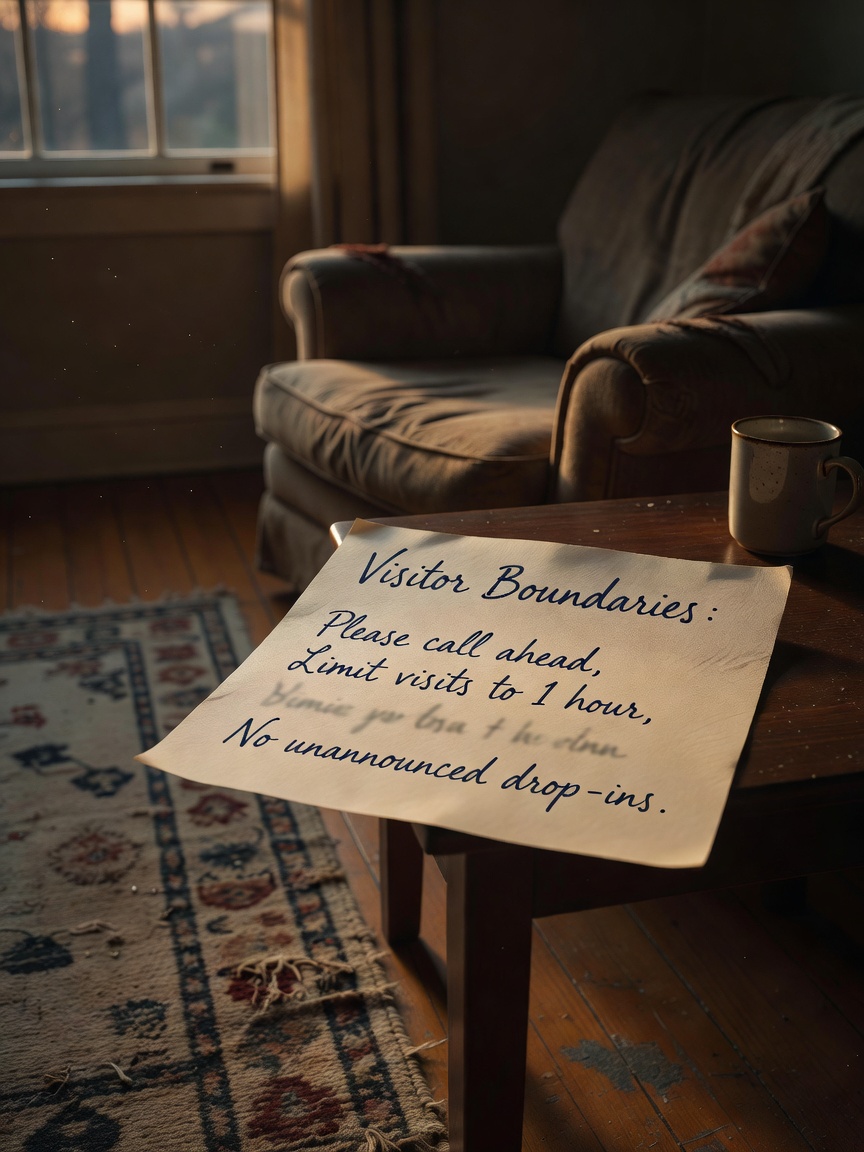
Setting visitor boundaries for an elderly parent is the process of establishing clear guidelines and schedules for friends, family, and other guests. This proactive management aims to protect the parent's physical health, emotional energy, and daily routine while ensuring they still receive the benefits of social connection.
Kinnect is now LIVE! Start your private family group today.
👉 Try Kinnect on the Web
👉 Download the iOS App
When my father was nearing the end of his life, our house developed a revolving door. Friends, neighbors, distant cousins—all of them meant well. They brought casseroles and stories. But they also brought noise, exhaustion, and a constant, low-grade chaos. I became more than a son and a caregiver; I was suddenly a traffic controller, an event planner, and a secretary, all while my heart was breaking.
The constant stream of texts and calls asking, “Is now a good time to stop by?” became its own full-time job. Important medical updates from my sister would get buried under a dozen logistical messages. This is the reality for so many of the 53 million Americans providing unpaid care. You’re not just managing a person’s health; you’re managing their entire social world. And if you don’t set boundaries, that world can overwhelm both of you.
Becoming the loving gatekeeper for your parent isn’t about shutting people out. It’s about letting the right people in, at the right time, in the right way. It’s about protecting your parent’s peace and your own sanity.
A Step-by-Step Guide to Creating Your Visitor System
Step 1: The Family Huddle
Before you communicate with the outside world, you need to get your core team on the same page. This means key family members, like a sibling in another state or a close aunt who helps out. Have a direct conversation. Acknowledge that everyone wants to help, but explain that to protect Mom or Dad’s energy, you need a coordinated plan. Decide together on ideal visiting hours, quiet times, and who the main point of contact will be. This unity is your foundation.
Step 2: Create a Central 'Source of Truth'
Why do group texts fail for caregiving? Our research on family communication identified a phenomenon we call 'Messaging Noise'. It revealed that over 70% of messages in a typical family group text are logistical chatter—memes, 'ok' replies, and planning noise. This buries the vital information, like a medication change or a doctor’s update. Instead of a chaotic text thread, you need one place where everyone can see the visitor schedule, read the latest health update, and understand the rules of engagement *before* they ask.
Step 3: Design the Visitor Schedule & Rules
Create a simple, accessible schedule. A shared Google Calendar can work, or even a physical whiteboard in the kitchen. The key is that it’s visible. Alongside the schedule, post a few gentle 'Rules of Engagement.' This isn't about being harsh; it's about being clear. Examples include:
- Please call or text before you come by.
- Visits are best kept to 30 minutes to conserve energy.
- Quiet hours are from 2 PM to 4 PM every day.
- If you're feeling even a little unwell, please visit another time.
The Hidden Variable: The Gift of 'No'
Here is the single most important mindset shift: saying 'no' to a visit is not a rejection. It is an act of protection. Conventional wisdom tells us to be accommodating, to accept all offers of support. But in caregiving, unmanaged support can be as draining as the illness itself. When you tell a well-meaning friend, “Today isn’t a good day, Dad is too tired,” you are giving your father the gift of rest. You are also giving that friend the gift of a better future visit, one where your dad is present and able to connect, instead of being exhausted and overwhelmed. Preserving the *quality* of connection is more important than the *quantity* of visits.
Step 4: Use Scripts for Graceful Gatekeeping
Having a few pre-planned phrases removes the emotional labor of setting boundaries in the moment. You can text these, say them on the phone, or put them in an email.
- For the drop-in visitor: “It’s so wonderful to see you! Mom’s resting now, but she’d love a visit. Can we schedule a time for tomorrow afternoon? Let me check the calendar.”
- For the long-staying guest: “It has been so good to have you. Dad needs to rest now, but this visit meant the world to him. Let’s do it again soon.”
- For setting expectations: “We’re so glad you want to visit! To make sure Mom gets the most out of it, we’re keeping visits to about 30 minutes. The best time is between 11 AM and 1 PM.”
Building this system from scratch with texts, emails, and calls can feel like a second job, especially when you’re already stressed. It's why we built Kinnect. You can use a shared family calendar just for visits, post daily updates in one private place so everyone is informed, and keep all the sensitive conversations off of ad-supported platforms like Facebook or chaotic group chats on WhatsApp. It’s one central, private space to coordinate the logistics of love.
What are examples of setting boundaries with parents?
In the context of managing visitors, examples include: “Dad, I know you want to see everyone, but we need to stick to the schedule to make sure you have energy for your physical therapy.” Another is, “We’ll have quiet hours from 2-4 PM every day, so no visitors then.”
How do you set boundaries with elderly parents without feeling guilty?
Reframe the boundary as an act of protection, not punishment. You are not limiting them; you are preserving their limited energy and health. Remind yourself that a well-rested parent can have a higher quality of life and more meaningful interactions.
How do you deal with a parent who doesn't respect your boundaries?
Address it with calm, consistent repetition. Gently explain the 'why' behind the rule. For example, “Mom, I know you’d love for Susan to stay longer, but the doctor was very clear that too much activity will set your recovery back. We have to protect your health first.”
Learn more at Kinnect.
