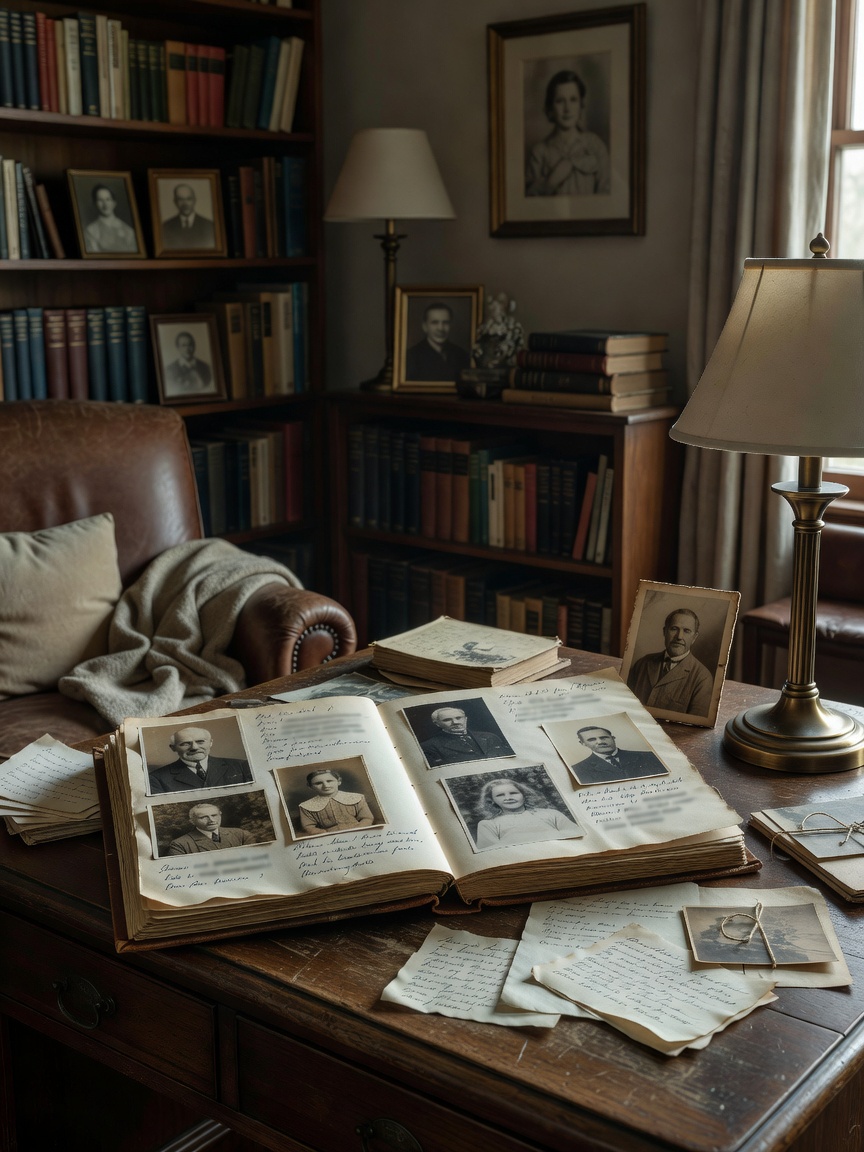
Sharing ancestor history with children is the process of translating genealogical facts—names, dates, and locations—into engaging, age-appropriate narratives. This method works by focusing on storytelling techniques to build an emotional connection between a child and their family's past, making their heritage feel personal and alive.
I remember the day my uncle passed away. Suddenly, all those half-finished stories he used to tell at Thanksgiving were just… gone. All I had were fragments, and an ache for the questions I never asked. That’s the moment you realize a family tree isn’t just a collection of names and dates on a website; it’s a library of lives, and if we’re not careful, the books will never be opened. We worry our kids won’t care, but maybe we just haven’t been telling the story right.
Beyond the Family Tree: Finding the Narrative
The first step is to stop thinking like a genealogist and start thinking like a screenwriter. A list of facts is not a story. The magic happens when you find the human drama within the data. Look at the information you have and ask, what is the core narrative here? Was it a story of immigration and bravery? A love story that overcame incredible odds? A tale of resilience during a difficult time in history?
Kinnect is now LIVE! Start your private family group today.
👉 Try Kinnect on the Web
👉 Download the iOS App
For example, “Great-Grandma Sofia came from Sicily in 1921” is a fact. But “At only 17, Great-Grandma Sofia boarded a crowded ship all by herself, with nothing but a few dollars and her mother’s recipe for pasta sauce, to build a new life in a country where she didn’t know a soul”—that’s the beginning of a story. It has stakes, emotion, and a hero we can root for.
Casting Your Ancestor as the Hero
Every good story needs a relatable main character. Your goal is to transform your great-grandparent from a black-and-white photo into a living, breathing person your child can connect with. Go beyond the dates of their birth and death. What was their personality like? What made them laugh? What were they afraid of? What was their biggest dream?
Use sensory details and physical objects to make them real. Maybe you have their worn-out wooden spoon, a letter they wrote, or the locket they always wore. Holding that object while telling their story makes the connection tangible. You’re not just talking about history; you’re letting your child hold a piece of it in their hands.
A Practical Guide to Telling the Tale
The Simple Three-Act Structure
You don’t need a film degree to structure a compelling story. Just use the classic three-act structure: a beginning, a middle, and an end.
- Act 1: The Beginning. Describe their world before the big change. What was life like in their small village in Ireland? What did the world look like before they went off to war? Set the scene so the coming change has an impact.
- Act 2: The Middle. This is the journey or the challenge. It’s the difficult boat ride across the ocean, the struggle of starting a new business during the Great Depression, or the moment they met the love of their life. This is where the action and the emotion live.
- Act 3: The End. This is the resolution. How did their journey change them and the family’s future? They arrived in a new country and built a community, they came home from the war and started a family, their business succeeded and created opportunities for their children. It connects their past actions to your child's present reality.
The Hidden Variable: The Power of the "Known" Story
Conventional wisdom tells us to dig for new, undiscovered family secrets to make history interesting. But the hidden variable is often the opposite: the most powerful tool you have is organizing the stories your family *already* tells into a single, powerful narrative. That fragmented anecdote your aunt tells about grandpa's first car, or the way your mom describes her grandmother's cooking—these are the building blocks. Your job is to be the editor, to gather these known pieces and weave them into a coherent story for the first time, giving it the weight and permanence it deserves for the next generation.
Handling the Hard Parts
Our ancestors’ lives weren’t always fairytales. They faced poverty, war, discrimination, and loss. When sharing these parts with children, you don’t need to expose them to the trauma, but you shouldn't erase the struggle. Frame these events around the themes of courage, resilience, and love. Instead of focusing on the hardships of the journey, focus on the bravery it took to make it. This isn't just about fun anecdotes; it's about building a child's sense of identity and strength. In fact, a landmark study from Emory University found that children who score in the top third on family story knowledge show up to 3x higher resilience and self-esteem scores.
This fear of losing our history is real. Our data highlights a significant Legacy Preservation Gap: 85% of Gen X adults report they wish they had recorded their parents' voices before they passed, yet only 12% have a system for doing so. Telling these stories is the first, most important step. Preserving them is the next.
You need a permanent, private home for these narratives—a place where your great-grandmother's journey can be saved in your own voice, attached to her photo, for your children and their children to discover. It’s a living family archive, safe from the noise and data-mining of public social media, built to last for generations. It’s a place where your family’s story can finally be told, and never forgotten.
Frequently Asked Questions
How do I write a short story about my grandparents?
Start by picking one significant event in their life, like how they met or a major move. Outline a simple beginning (their life before), middle (the event itself), and end (how it changed them). Focus on their feelings and choices to make it a personal story, not just a list of facts.
How do I get my child interested in family history?
Connect the past to their present. Show them a photo of an ancestor who had the same curly hair or loved to draw just like they do. Framing it as a mystery or an adventure with them as the detective makes it exciting and personal, not like a boring history lesson.
How do you explain genealogy to a child?
Explain it as building your family's superhero team. Each person on the family tree is a member with their own special story and strengths that helped create your family today. It’s the origin story of “us” and how you all came to be here, together.
Learn more at Kinnect.