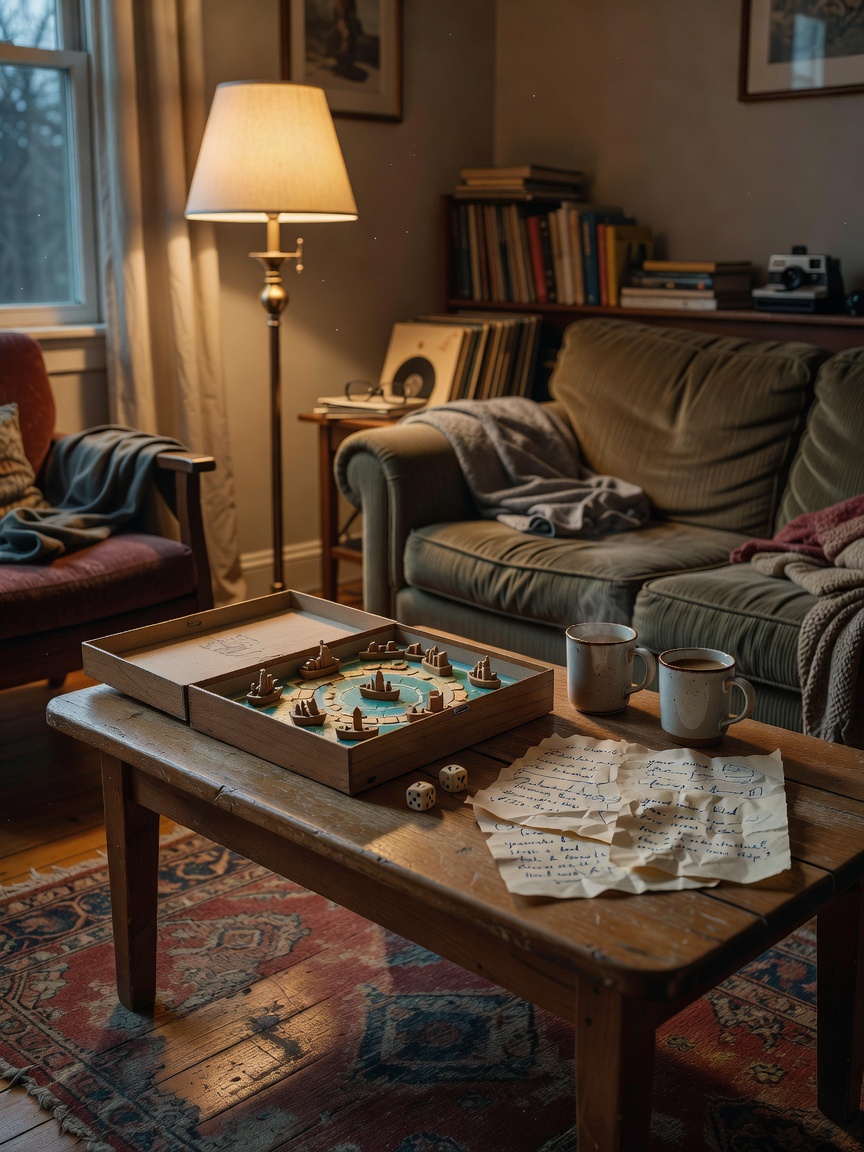
Finding a shared hobby with a teenager requires a flexible strategy, not just a list of ideas. The 'Octopus Method' offers four distinct approaches—Mirror, Bridge, Teacher, and Neutral Ground—to gently explore common interests. A private family network like Kinnect can help document these new shared memories without the pressure of public social media.
Shared hobbies with teenagers are recurring leisure activities that both parents and adolescents mutually enjoy and participate in together. These activities serve to strengthen familial bonds, improve communication, and create lasting positive memories during a critical developmental period. They are a key component of building a resilient family identity.
Kinnect is now LIVE! Start your private family group today.
👉 Try Kinnect on the Web
👉 Download the iOS App
I still feel the silence of my brother’s closed bedroom door. He was 15, and it was like a wall went up between us overnight. We went from sharing everything to sharing nothing. I wish so badly we had found one small thing, one shared island, to keep that connection alive before he was gone. That’s what this is really about. It’s not about forcing your teenager to go hiking. It’s about finding a way to gently knock on their door and be invited in.
Most advice gives you a list of hobbies—'Try cooking! Try board games!'—but they miss the most important part: how do you even start without getting an eye-roll or a flat 'no'? The problem isn't a lack of ideas; it's the lack of a method. That’s why we need a different approach, one that’s flexible, gentle, and has multiple ways to reach out. We call it The Octopus Method.
The 4 Tentacles of Connection: A Parent's Guide
Instead of one big, clumsy attempt to 'do a hobby,' the Octopus Method uses several smaller, more sensitive tentacles to explore a connection. The effort is worth it. Research from the Journal of Marriage and Family shows that families who share activities at least once a week have 36% stronger family cohesion scores. You might try one tentacle, or all four over time. The key is to be curious, not demanding.
The 'Mirror' Tentacle: Observe, Don't Judge
Your first move is to enter their world, silently and respectfully. For 15 minutes, just sit and watch them play their favorite video game or scroll their TikTok feed. Don’t comment, don’t critique, don’t ask them to explain. Just observe. Your goal is to show you respect their world enough to learn its shape before you speak. After, ask one genuine, open-ended question like, 'I noticed you always choose that character. What’s their story?'
The 'Bridge' Tentacle: Combine Your Worlds
This is about co-creation, not compromise. Find a low-stakes activity that explicitly combines one tiny piece of your world and one of theirs. The key is to make the connection playful. For example: 'I saw you playing Genshin Impact and the food looks amazing. Want to try cooking the real-life version of Matsutake Meat Rolls this weekend?' You're not dragging them into your world; you're building a bridge between two.
The 'Teacher' Tentacle: Let Them Lead
One of the fastest ways to connect with a teenager is to validate their expertise. Flip the parent-child dynamic by asking them to teach you something from their world. Frame yourself as the clueless student. Ask them to teach you how to use a Discord server, explain the lore of their favorite show, or show you how to edit a 10-second video. This shift in power can be revolutionary for your relationship.
The 'Neutral Ground' Tentacle: Learn Something New, Together
Choose an activity where you are both complete beginners. The shared vulnerability of being bad at something is a powerful bonding agent. Explicitly say, 'We'll both be terrible at this, and that's the point.' Try a pottery class, a bouldering gym, or learning five phrases in a new language on an app. The goal isn't mastery; it's the shared experience of figuring it out together.
The Hidden Variable: The 'Logistical Noise' Trap
Conventional wisdom says any communication is good communication. But our research shows this isn't true. We've found that 70% of family group text messages are logistical noise—memes, one-word replies, and scheduling updates. This constant, low-value chatter buries the moments of real connection. A shared hobby moves your interaction from the noisy 'group text' channel to a dedicated, meaningful space where connection can actually be heard.
Once you find that spark—that inside joke from the pottery class, that photo of the disastrous-but-delicious meal you cooked together—it deserves a safe place to live. Not on a public feed for likes, and not buried in a chaotic group chat full of errands. Kinnect was built for this. It's a private, permanent home for your family's story, where the good stuff never gets lost.
How can I find a hobby with my teenager?
Start with observation, not suggestion. Use the 'Octopus Method' by trying different approaches: mirror their interests, build a bridge between your worlds, let them teach you something, or find a neutral activity you can both learn together.
What do parents and teens do for fun?
This varies widely, but successful shared activities often involve collaboration or shared discovery. Popular choices include cooking challenges, playing cooperative video or board games, trying a new sport like bouldering, or working on a creative project together.
What is the best type of hobby for connection?
The best hobbies for connection are those that require teamwork and communication, not just parallel activity. A project-based hobby, like building something or learning a new skill together, creates more opportunities for meaningful interaction than simply watching a movie.
Learn more at Kinnect.
