Preserving an elderly parent's life story involves creating a collaborative, low-pressure environment for them to share memories at their own pace. This process focuses on mutual connection and the parent's well-being, using simple prompts and accessible tools rather than formal interviews to capture their unique history for future generations.
I remember sitting with my dad, trying to get him to talk about his childhood. I had a list of questions, a recorder... and it felt like an interrogation. He shut down. I realized I was making it about my fear of losing him, not about his joy in remembering. The shift happens when you stop trying to 'get' the story and instead create a space where the story wants to be told. It’s not an interview; it’s a shared moment of connection.
Kinnect is now LIVE! Start your private family group today.
👉 Try Kinnect on the Web
👉 Download the iOS App
Three Simple Ways to Start a Shared Story
Instead of a formal Q&A, try creating gentle entry points for memory. The goal is to make reminiscing feel as natural as breathing, not like a task to be completed. These methods require no special technology and put your parent in the driver's seat.
1. The Photo Box Method
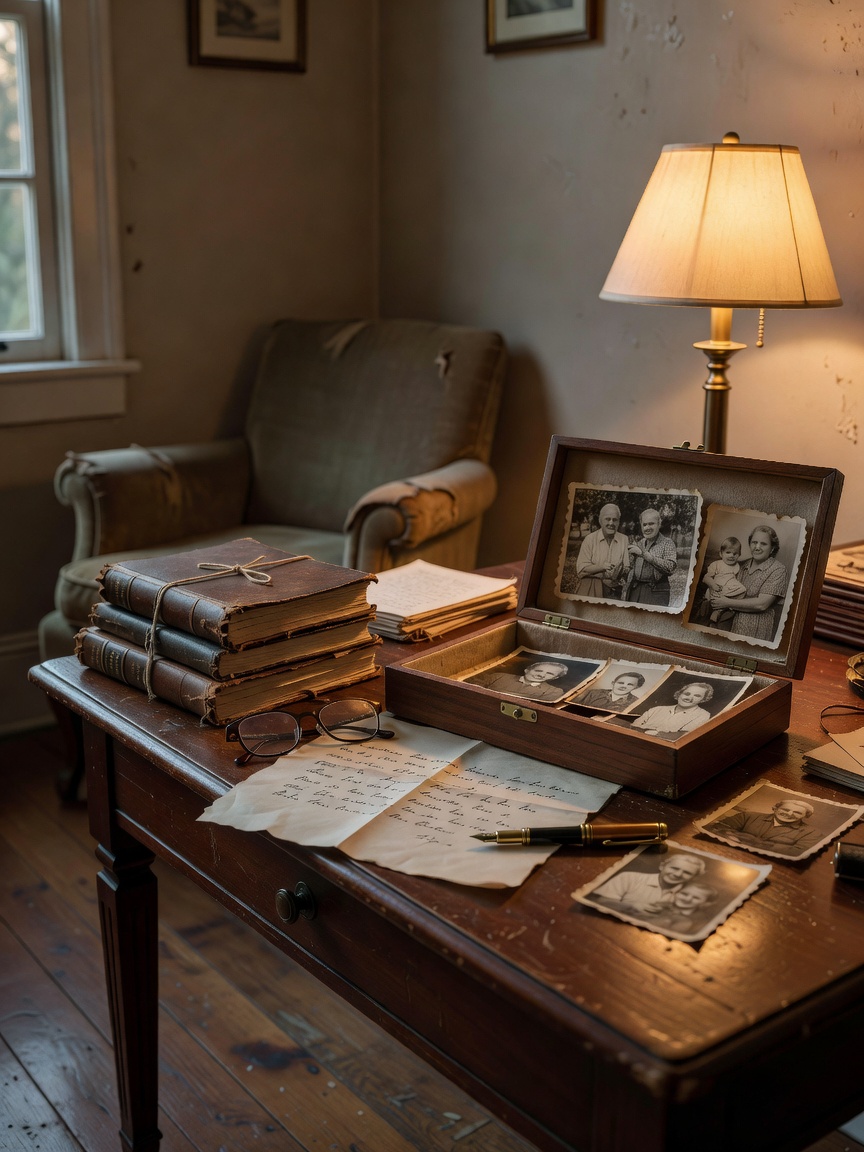
Forget the curated photo album. Find that dusty box of loose, forgotten photos from the attic. Sit together on the floor and just start looking through them, with no agenda. Let your parent pick one up. Don't ask “Who is this?” Ask, “What do you remember about this day?” The physical object acts as the key, unlocking stories you never would have known to ask about.
2. The Recipe Prompt
Choose a cherished family recipe and ask your parent to help you make it. The physical acts of measuring flour or the smell of an ingredient can trigger powerful sensory memories. As you cook, the stories will come—not just about the food, but about the grandmother who taught them, the kitchen they grew up in, the holidays it represents. You're not just saving a recipe; you're saving the context that gives it meaning.
3. The One-Question Walk
A change of scenery can be a powerful catalyst. Go for a short, slow walk around the block or simply sit on the porch. Instead of a barrage of questions, just ask one. “What was the silliest thing you and your best friend ever did?” or “Tell me about your first car.” The open space often creates mental space, allowing memories to surface without pressure.
The Hidden Variable: The Gift of Being Heard
Conventional wisdom frames this process as a gift for the children—a way to preserve a legacy. But the hidden truth is that the act of sharing is profoundly beneficial for our parents. This process, sometimes called reminiscence therapy, helps validate a person's life and reinforces their sense of identity, which can be crucial when facing cognitive decline. Social isolation is a massive risk for older adults, associated with a 50% increased risk of dementia. Sharing stories is a powerful antidote to that isolation. We see this in the Legacy Preservation Gap: research shows 85% of adults wish they had recorded their parents' voices, but only 12% have a system. The barrier isn't technology; it's approach. By making them the storyteller, not the subject, you give them a gift of purpose and connection.
Once these stories, voice notes, and captioned photos start to flow, you need a safe place to keep them. Public social media like Facebook is designed for broadcast, not preservation, and its business model relies on data mining. Group texts on WhatsApp are a sea of logistical noise where precious memories get buried. Kinnect was built to be a permanent, private family archive—a quiet, secure home where these moments are saved forever, organized by family member, and passed down through generations.
What is the best way to communicate with family about an elderly parent?
Establish a single, private channel for important updates. Using a dedicated platform prevents information from getting lost in noisy group texts or email chains, ensuring everyone from siblings to caregivers is on the same page.
How do I convince a parent to accept help?
Frame it as a partnership rather than 'help.' Instead of saying, "Let me record your stories for you," try, "I'd love to work together on saving our family history for the grandkids." This emphasizes collaboration and their important role as the family historian.
What if my parent denies memory problems?
Avoid direct confrontation, which can cause shame or anxiety. Instead, use memory prompts that don't feel like a test. Looking at old photos or listening to music from their youth allows them to share what they do remember, without the pressure of recalling specific facts or dates.
Learn more at Kinnect.

