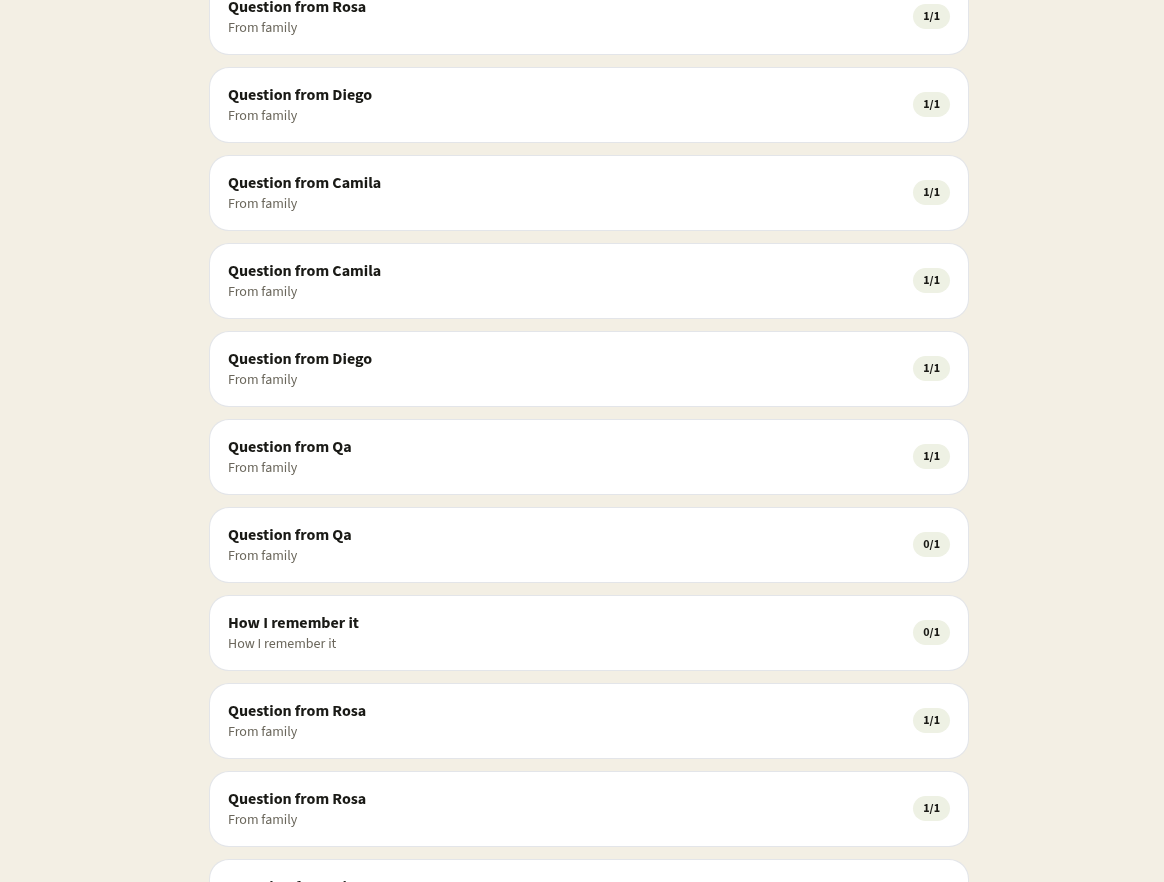
Maintaining strong family relationships relies on small, consistent environmental 'nudges' rather than grand gestures. By creating a home environment that prompts connection, like a shared question board, families can foster organic interaction. Kinnect provides a private digital space to extend this environment, capturing these small moments and turning them into a permanent family archive.
Kinnect is now LIVE! Start your private family group today.
👉 Try Kinnect on the Web
👉 Download the iOS App
To maintain family relationships, focus on creating small, automatic 'nudges' in your daily environment that prompt connection. This shifts the burden from remembering to call or plan events to letting your surroundings do the work of bringing you together.
Maintaining family relationships means creating an environment of small, consistent 'nudges' that prompt organic connection. Instead of relying on scheduled events, this approach uses subtle changes in your home and routines to make showing you care feel automatic, building a foundation of shared moments over time.
I remember my grandfather. He wasn't a man of grand pronouncements or big, planned outings. My most vivid memory is the sound of him unwrapping a Werther's Original candy and placing it on the small table beside my chair, every single time I visited, without a word. It wasn't a conversation. It wasn't an 'activity.' It was a tiny, repeated ritual that said, 'I see you. I'm glad you're here.' That small gesture built a bridge that words often couldn't.
We’re told to schedule family dinners, to plan game nights, to force conversations. For most of us, especially when we’re overwhelmed, that advice feels like another chore on an endless to-do list. It’s no wonder that, according to Gallup, only 38% of adults say they are very satisfied with their family life. We’re trying to connect in a way that feels unnatural and demanding.
The secret isn’t bigger effort. It’s smaller, smarter, and kinder. It's about designing an environment that does the work for you—creating small 'nudges' that make connection the easiest, most natural choice.
10 Environmental 'Nudges' That Build Connection Automatically
Instead of adding more to your calendar, try adding a few of these simple environmental prompts to your family’s life. They work because they don't require willpower or memory—they just exist, quietly encouraging you to see each other.
- The Kitchen Counter Question: Place a small whiteboard or chalkboard in the kitchen with a new, simple question each morning. 'What's one small good thing that happened yesterday?' or 'What song is stuck in your head?' It turns a passing moment into a point of connection.
- The 'Gotcha' Jar: A simple mason jar and a pad of paper. The rule: if you catch someone doing something kind or thoughtful, you write it down and put it in the jar. Reading them aloud once a month is a powerful ritual of appreciation.
- Tech-Free Landing Pads: Set up a charging station right by the front door. When family members come home, their phones go there to charge, not into the living room or to the dinner table. This creates a default state of being present.
- A Shared Story Shelf: Dedicate one shelf to objects that have a family story. A weird souvenir, a grandmother's teacup, a child's first trophy. It turns your home into a living museum of your shared history.
- The 'One Sentence' Journal: Leave a beautiful journal and a pen on a side table. Invite everyone to write just one sentence about their day whenever they think of it. It becomes a low-pressure, collective diary of your life together.
- Voicemail Over Text: Make a pact to leave one real voicemail for a family member each week. Hearing a voice, with its unique tone and warmth, is a powerful antidote to the coldness of text.
- The 'Memory Lane' Digital Frame: Load a digital photo frame with pictures from every era of your family's life. Seeing a forgotten moment flash by can spark a story you haven't told in years.
- The 'Pass-Along' Book: Start a book—a novel, a collection of poems, a history—and pass it between family members. Underline passages that move you and write notes in the margins. It’s a conversation that unfolds over weeks or months.
- The 'Signal' Object: This is for families who struggle to ask for comfort. Choose a small, unique object—a smooth stone, a small figurine. If you're having a hard day and need a hug or just a quiet moment of company, you place it on the kitchen counter. No words needed.
- The Daily 'Echo' Spot: Create a small, comfortable spot with a tablet or old smartphone logged into a private family space. The goal is one small update a day—a photo of the dog, a 15-second voice note about the traffic, a silly selfie. It's a tiny window into each other's lives.
These nudges work because they bypass the noise. Our research at Kinnect shows that 70% of family group text messages are logistical noise—memes, 'ok' responses, scheduling reminders—which buries the moments that actually matter. Creating a dedicated channel for connection is essential.
These physical nudges are powerful for the family under one roof. But how do you create that same feeling of a shared, private space when you live miles apart? How do you build a home for your story that cuts through the digital chaos?
That’s why we built Kinnect. It’s a private, permanent home for your family's story, designed for meaningful connection, not logistical chaos. It's the digital version of your family's kitchen table—a safe space to share the small moments that make up a life. We're now LIVE on the App Store and Web! Create your family's space today and start building your story, one small moment at a time.
Learn more about Kinnect or Download on the App Store.
How do you maintain a strong relationship with your family?
Maintain strong family relationships by focusing on small, consistent interactions rather than infrequent grand gestures. Create 'nudges' in your daily life, like a shared journal or a daily question board, that make connection feel automatic and effortless.
What are 5 ways to build strong family relationships?
Five ways to build strong family relationships are: 1. Create tech-free zones to encourage presence. 2. Share one small story or memory daily. 3. Establish a simple ritual of appreciation, like a 'thank you' jar. 4. Prioritize hearing each other's voices over just texting. 5. Dedicate a private space, physical or digital, just for family connection.
How do you keep family relationships healthy?
Keep family relationships healthy by creating a safe environment for both positive and difficult sharing. This means listening without immediately offering solutions, respecting individual differences, and making forgiveness a regular practice. Healthy relationships are built on a foundation of consistent, small acts of kindness and respect.
How do you show your family you love them in small ways?
Show love in small ways by paying attention to the details of their lives. Remember how they take their coffee, send a text about a song that made you think of them, or simply put your phone down and give them your full attention when they speak. These tiny acts of presence are more powerful than any gift.