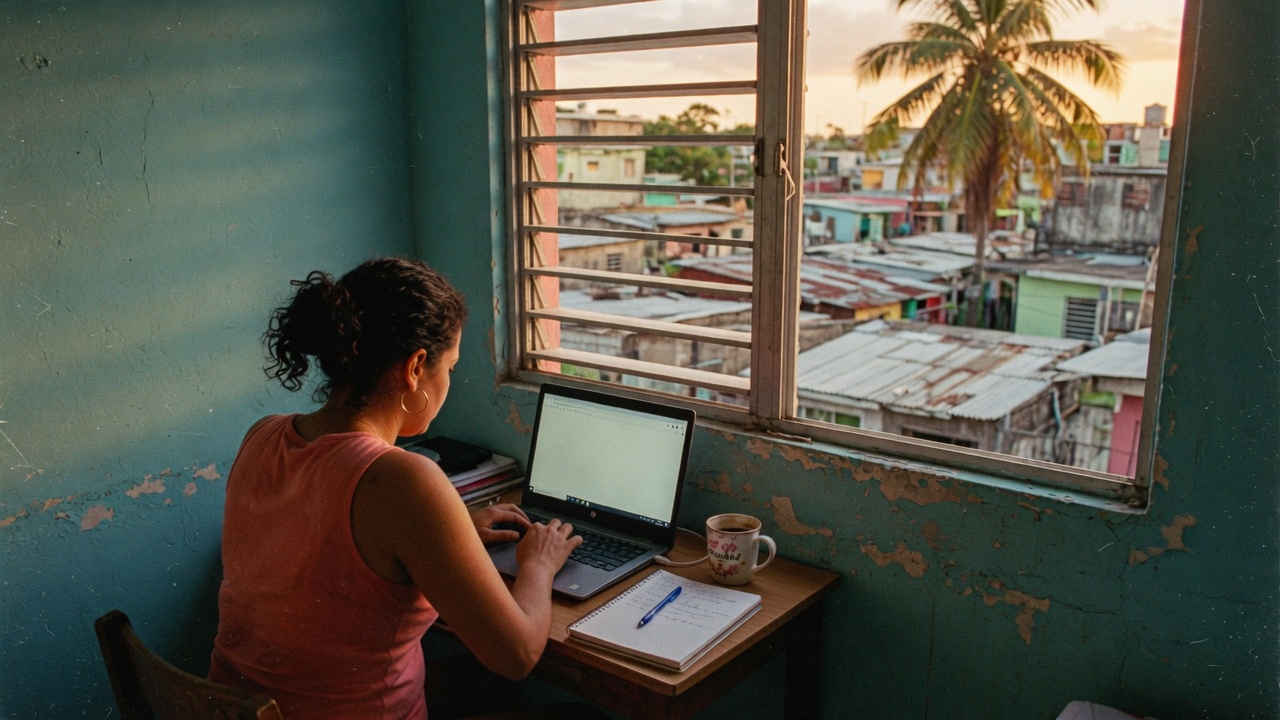
Want to reconnect with family you've grown distant from? It feels like a conflict. You can keep those vital ties, even while building new, equally important relationships. This pull between your upbringing and your current life is a common struggle.
Kinnect is now LIVE! Start your private family group today.
👉 Try Kinnect on the Web
👉 Download the iOS App
I’ve felt it myself. You grow up, you move, you build a life that’s entirely your own. You meet people who become your anchors, your chosen family, the ones who show up in ways you maybe never experienced before. That’s a beautiful, necessary thing. But it doesn't diminish the love you still have for your parents, your siblings, your cousins – the ones who share your history, your inside jokes from childhood, the stories that only they remember.
It feels complicated. Like you have to pick a side, or that connecting with one group means neglecting the other. Sometimes, the sheer effort of keeping up feels like too much. Before you know it, texts go unanswered, calls go unreturned, and the silence stretches longer than you ever intended.
Embrace Your Chosen Family
We increasingly rely on these new bonds. According to the Survey Center on American Life in 2021, 21% of Americans say their closest source of emotional support is a chosen family member — a friend they consider family. That's a significant number, highlighting the deep connection chosen families provide. But it doesn't mean your ties to your family of origin simply vanish.
Build Strong Bonds: Both Families Can Thrive
The truth is, you don’t have to choose. You can love your family of origin fiercely and still build a robust, supportive chosen family. The trick isn't to blend them artificially, or to pretend every dynamic is the same. It's about intentionality. It's about making space for each, on their own terms, without expecting them to be something they're not.
Creating distinct spaces for different family circles
The first step is often to acknowledge the differences. Your chosen family might be your confidantes, your travel buddies, the people who understand your career choices without needing an explanation. Your family of origin might be the ones who celebrate milestones, share genetic quirks, or simply know what you were like at five years old. Both are precious, but they serve different, equally valid, purposes.
And sometimes, the distance isn't just physical. As people get older, their lives can become more insular. The Survey Center on American Life reported in 2021 that Americans are reporting having fewer close friends than they did in the 1990s — the share with no close friends has roughly quadrupled. This trend can affect our family relationships too, making it harder to reach out and maintain those connections.
So, how do you bridge that gap without feeling overwhelmed or like you’re constantly performing? You start small. A phone call, a shared photo, a specific question about something you know they care about. Not a generic 'how are you,' but 'How did Aunt Carol's recovery go?' or 'Did Dad ever fix that leaky faucet?' It shows you're paying attention, even from a distance.
The hard part is that someone still ends up being the hub — the one texting everyone, chasing updates, managing who knows what. It’s hard to keep those worlds separate online, though. You don't want to dump your childhood stories on your new friends, or vice-versa. And you definitely don't want to force your different family circles to interact if they don't naturally blend. This is where a tool built for family infrastructure, not social media, really helps. Kinnect provides a private, invite-only platform that helps families preserve memories, stories, and essential life information across generations. It’s designed so you can create separate, private Kin Groups for distinct family circles – your family of origin and your chosen family. This way, you get to honor both relationships deeply, without mixing the streams or overwhelming anyone.
Q: What if my family of origin doesn't seem interested in reconnecting?
A: Start small and keep your expectations realistic. A simple text or a card for a birthday can open a door without demanding a full conversation. Focus on sharing a small part of your life or asking about a specific detail of theirs, rather than a broad 'reunion' effort. The goal isn't to force closeness, but to keep the channel open.
Q: How can I protect my new chosen family relationships from old family drama?
A: Boundaries are essential. You define what information is shared with whom. Kinnect allows for separate, private groups precisely for this reason. Your chosen family doesn't need to be involved in every detail of your family of origin, and vice versa. It’s about creating distinct spaces where each relationship can thrive without interference.
Q: Is it okay to keep some aspects of my life private from my family of origin?
A: Absolutely. You have every right to decide what you share with whom. Your chosen family often understands aspects of your life that your family of origin might not, or might judge. It's about respecting your own privacy and emotional well-being, while still nurturing the connections that matter.
Q: I feel guilty for having drifted apart. How do I move past that?
A: Guilt is a heavy burden. Recognize that drifting apart is a natural part of life as people grow and change. Focus on the present and what you can do now, rather than dwelling on the past. Small, consistent efforts to reconnect, without the pressure of perfection, can go a long way in easing that feeling.
Keep reading
Kinnect is now LIVE!
Experience the private family network on the web or download the iOS app today.
Navigating these relationships often brings up the importance of shared stories and history. Explore our guide on how to reconnect and preserve family history for future generations.