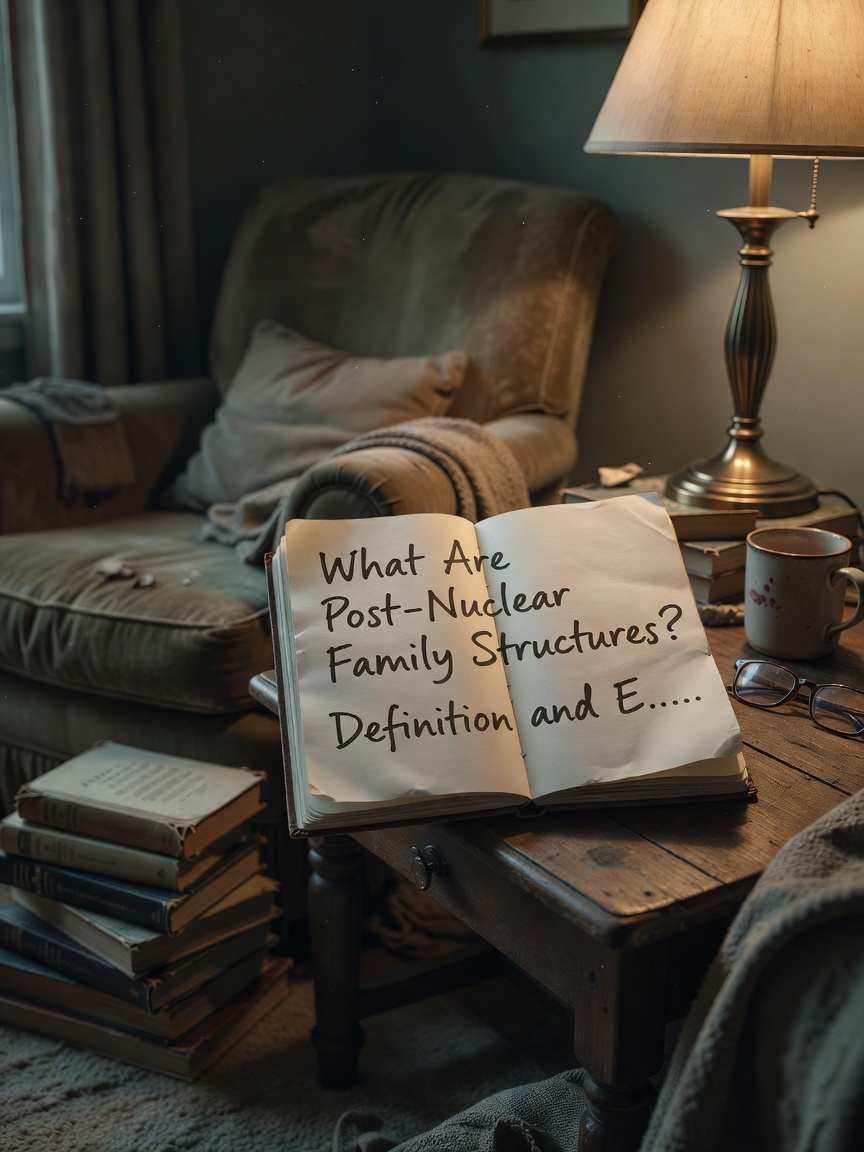
Post-nuclear family structures refer to the diverse array of domestic and kinship arrangements that do not conform to the traditional nuclear family model (a married heterosexual couple and their biological children). These structures reflect evolving social norms, economic shifts, and a broader understanding of kinship and care networks. They emphasize function and emotional connection over a prescribed form.
Key Components
- Diversity of Form: Includes single-parent households, same-sex parent families, blended families, child-free couples, cohabiting partners, multi-generational households, and chosen families (non-biological kinship networks).
- Emphasis on Function over Form: The validity of the family unit is based on the functions it performs—such as providing emotional, financial, and social support—rather than its adherence to a traditional structure.
Historical Context or Origin: The concept emerged in sociological studies in the late 20th century to analyze the decline of the mid-century nuclear family ideal and the rise of more varied domestic arrangements.
Why Post-Nuclear Family Structures Matter
Recognizing post-nuclear family structures is critical for modern legal, financial, and legacy planning. Traditional systems for inheritance, healthcare directives, and child custody often fail to accommodate the complexities of these diverse units, creating legal vulnerabilities and logistical challenges. Acknowledging these structures ensures that social policies and personal planning tools are inclusive, equitable, and reflect the reality of contemporary family life.
Digital platforms like Kinnect help modern families manage these complexities, providing a centralized system to organize, secure, and share critical information, legal documents, and end-of-life plans across their unique support networks.
Frequently Asked Questions
Q: What is the difference between a nuclear and a post-nuclear family?
A: A nuclear family is traditionally defined as two married parents and their biological children, while post-nuclear families encompass all other structures, such as single-parent, same-sex, blended, or multi-generational households.
Q: Are chosen families considered a post-nuclear family structure?
A: Yes, chosen families, which are non-biological kinship bonds formed by choice for mutual support, are a key example of a post-nuclear family structure that prioritizes social and emotional connection over traditional ties.