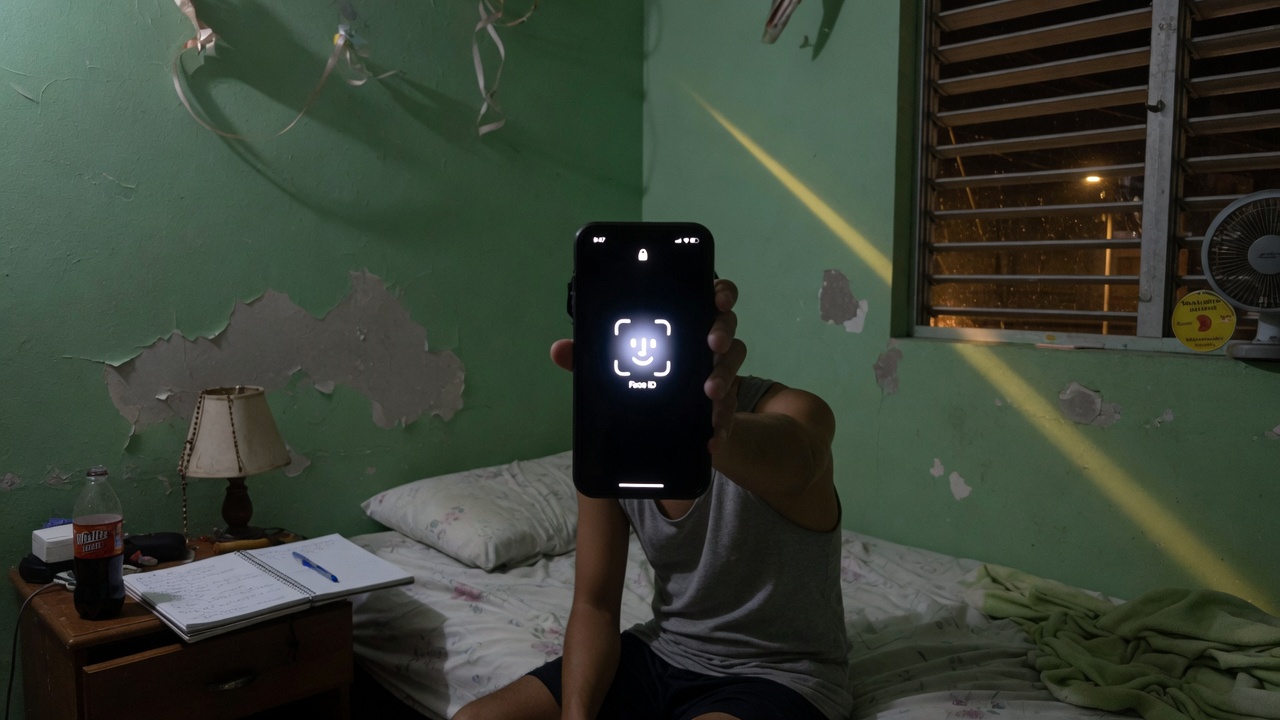
Managing WhatsApp privacy in an adult family involves setting boundaries around features like 'Last Seen' and group chat etiquette. This guide provides practical steps for these conversations, positioning private networks like Kinnect as a solution to the 'messaging noise' that often buries meaningful connection.
Setting WhatsApp privacy boundaries with adult family means customizing settings like 'Last Seen' and 'Read Receipts' and having open conversations about expectations. It’s about creating digital space without causing hurt feelings.
Navigating WhatsApp privacy within an adult family means actively managing settings and social expectations to maintain personal space without creating conflict. It involves more than just security; it’s about setting digital boundaries around features like online status, location sharing, and group chat participation to protect your mental well-being and relationships.
I remember the first time it happened. My dad, who I hadn't spoken to in a couple of days, sent a text: "Saw you were online. Everything okay?" My heart sank. I wasn't ignoring him; I was just exhausted, scrolling mindlessly after a long day at work. But in that moment, the technology designed to connect us had created a little chasm of misunderstanding and anxiety. He felt ignored, and I felt watched. This is the new, quiet tension in so many families.
WhatsApp, owned by Meta, wasn't built for the delicate ecosystem of a family. It’s a firehose. Our research at Kinnect shows that over 70% of messages in large family groups are logistical noise—memes, 'ok's, and planning chatter. The truly important things, the moments of connection, get buried. And with 72% of Americans already concerned about data collection by tech companies, adding family pressure to the mix feels overwhelming. It’s not about having something to hide; it's about wanting a space to breathe without feeling like you're performing for an audience of your closest relatives.
4 Steps to Reclaim Your Privacy (and Sanity) on WhatsApp
It's possible to set healthy boundaries on WhatsApp without making anyone feel shut out. It starts with being intentional about how you use the app's own tools.
- Audit Your Visibility Settings. Go to Settings > Privacy. You can change who sees your 'Last Seen & Online,' 'Profile Photo,' and 'Status' to 'My Contacts Except...' This is your most powerful tool. You can create a small circle of visibility, preventing your great-aunt from worrying when you were last online at 2 AM. It’s not about hiding; it’s about managing expectations.
- Have 'The Location Talk.' A partner or parent asking you to share your 'Live Location' can feel like a test of trust. A gentle way to set a boundary is to say, "I love that we can check on each other, but having it on all the time makes me feel a little anxious. Can we agree to only use it for specific situations, like when I'm driving home late?"
- Tame the Family Group Chat. You don't have to leave the group to get some peace. Use the 'Mute' function (for 8 hours, 1 week, or Always) to stop the constant notifications. Then, use 'Archive Chat' to move it out of your main inbox. You can check it on your own terms, once a day, instead of being pulled in by every single message.
- Establish Group Etiquette. Gently propose some ground rules. You could say, "Hey everyone, to make sure we don't miss important news, what if we tried to keep this chat for family updates and used a separate chat for all the funny videos?" This validates the desire for fun while protecting the main channel for what matters.
These are all workarounds for a platform that isn't designed for family. WhatsApp is for what's happening now; it was never meant to be the permanent home for your family's story. That's why we built Kinnect. It’s a private, quiet space away from the noise, where every memory is saved and organized, and conversations are centered on connection, not logistics. It's a place to share your family's most important stories, safely and forever.
Ready to build a real family archive? Kinnect is now LIVE on the App Store and the Web. Learn more about Kinnect and Download on the App Store.
How do I manage my family's WhatsApp group?
To manage a family WhatsApp group, use the 'Mute' and 'Archive' features to reduce notification fatigue without leaving. You can also propose simple ground rules, like keeping the main chat for important updates and creating a separate group for memes and casual chatter.
How do I hide my WhatsApp from my family?
You can't completely hide your account, but you can control what family members see. In 'Settings' > 'Privacy,' change who can see your 'Last Seen & Online,' 'Profile Photo,' and 'Status.' You can select 'My Contacts Except...' to exclude specific family members.
Can family members track you on WhatsApp?
A family member can only track your live location on WhatsApp if you have explicitly chosen to share it with them using the 'Live Location' feature. This feature is not on by default; it requires your active consent and has a time limit. They cannot track you without your knowledge through the app.
Can my parents see my WhatsApp messages?
No, your parents cannot see your WhatsApp messages unless they have physical access to your unlocked phone. WhatsApp messages are end-to-end encrypted, meaning only you and the person you're communicating with can read what is sent. The content is not visible to WhatsApp, Meta, or anyone else.