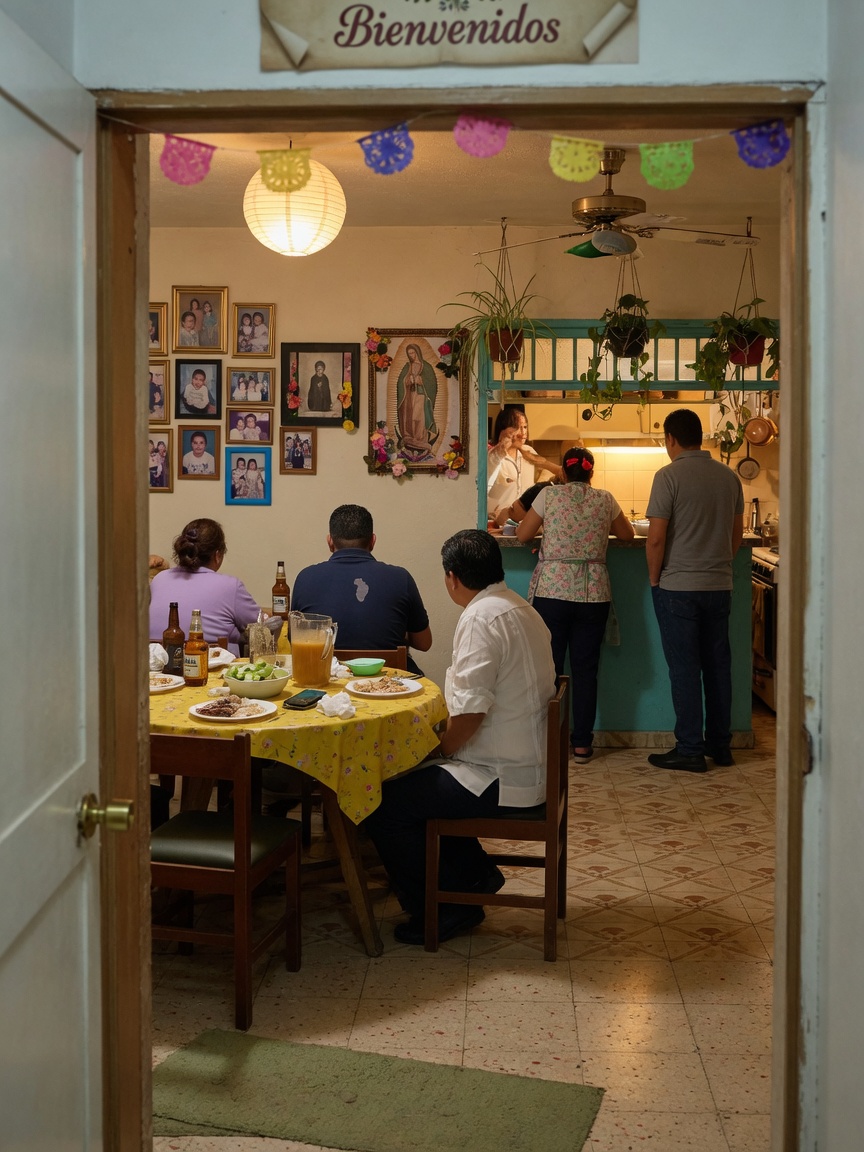
Honestly, it's getting harder to trust apps with our most personal conversations, especially when it comes to our families. The big concern around WhatsApp privacy family discussions usually boils down to its ownership by Meta. For a lot of us, that connection just makes us feel deeply uncomfortable, wondering where our stories and private moments really end up.
Kinnect is now LIVE! Start your private family group today.
👉 Try Kinnect on the Web
👉 Download the iOS App
You know, for years, WhatsApp felt like the go-to for family chats. It was simple, everyone was on it, and the end-to-end encryption sounded like a real shield. But then Meta bought it. And suddenly, that shield didn't feel quite so solid anymore. It wasn't about the encryption itself changing for our messages, not exactly. It was more about the underlying philosophy, I think. The parent company's whole business model is built on data, on understanding who you are and what you care about so they can show you ads.
And that just sits wrong when you're talking about your kids' milestones, your parents' health updates, or just silly inside jokes with your siblings. It’s not that I think Meta is actively reading my grandma’s texts. It’s more the feeling that everything I do online, every piece of data, is being collected and analyzed somewhere, for some purpose.
I remember reading that, back in 2019, the Pew Research Center found that 72% of Americans say they are concerned about the amount of personal information that technology companies collect about them. That’s a huge number, and it totally reflects what I hear from friends and family. We’re not paranoid, we’re just... aware. Aware that nothing is truly free, and if you’re not paying for a service, you’re usually the product.
Think about it. We pour our lives into these apps. We share photos of holidays, updates about job changes, even serious discussions about health or money. And all of that, even if the messages themselves are encrypted, lives on servers owned by a company that has a very clear incentive to learn as much as possible about its users. It feels like our family's digital living room is suddenly in a public square, even if the doors are locked.
It’s not just WhatsApp either. The whole ecosystem of big social tech feels this way. You start wondering, are my memories really safe here? Is this the right place to build a lasting family legacy, or is it just a temporary chat room?
And it's hard to move. Everyone’s already there, right? It takes effort to get people to switch. But honestly, the peace of mind you get from knowing your family’s private life isn’t just another data point for an algorithm is pretty huge. It really is. It’s about more than just privacy; it’s about control over our own family narrative.
How to build a truly private digital space for your family
So, if you’re feeling that same unease, what can you actually do? The first step is acknowledging that feeling. Your gut is telling you something important. You want a space where your family can connect without feeling like they’re under a microscope.
One option is to look at apps built specifically for privacy, like Signal. They're great for secure, real-time messaging. And for many families, that's enough for day-to-day chats. But sometimes, you need more than just messaging. You need a place to actually keep things. A place for stories, for photos that don't get lost in a scroll, for those deeper conversations that build a legacy.
I've noticed a lot of people are just fed up with the whole big tech scene. The Pew Research Center noted in 2021 that 64% of Facebook users had taken a break from the platform for several weeks or more. That tells you a lot about how people feel about their digital homes. They're looking for alternatives, for spaces that feel less like a public forum and more like, well, home.
The challenge is finding a solution that offers genuine privacy but also makes it easy for family members to share and connect without feeling like it's a chore. You want a place where those memories and conversations aren't just snippets lost in a long chat history, and definitely not shared with algorithms. A place where you can collect stories, photos, and important family details over time, knowing they're safe and only accessible to your chosen family.
That's exactly why something like Kinnect exists. It's a private, invite-only platform that helps families preserve memories, stories, and essential life information across generations. The whole point is that Kinnect stores only what you explicitly share inside your group. It’s not a social feed; it’s an archive, a shared family vault. You control who's in it, and everything you add stays there, private and permanent, without an algorithm deciding what you see or who sees what you've shared. It’s about building infrastructure for your family’s legacy, not just another place to chat.
Q: What exactly is the problem with WhatsApp's privacy?
A: The main concern stems from WhatsApp's ownership by Meta (formerly Facebook). While messages are end-to-end encrypted, Meta's business model relies on data collection, leading many to worry about how user data, even if not message content itself, is used for advertising and profiling across its platforms.
Q: Is there a way to communicate privately with family online?
A: Yes, absolutely. Apps like Signal offer strong end-to-end encryption for messaging. For more comprehensive family memory preservation and communication, platforms like Kinnect are designed specifically for private, invite-only family groups, ensuring your shared stories and information remain within your trusted circle.
Q: How can I convince my family to switch to a new app?
A: Focus on the benefits for them: peace of mind, a dedicated space for family, and the security of knowing their private moments are truly private. Start with a small group of enthusiastic family members, and once they see the value, others might be more willing to join. Frame it as building a lasting family legacy, not just another app.
Q: What if I have really sensitive family information to share?
A: If you have highly sensitive information, it's crucial to use platforms specifically designed for privacy and secure sharing within a closed group. Tools like Kinnect are built to create a controlled environment where only invited family members can access shared stories, documents, and memories, offering a secure alternative to general messaging apps.
Keep reading
Kinnect is now LIVE!
Experience the private family network on the web or download the iOS app today.