When you look for the best digital family archive app, you're probably picturing something organized, easy to use, and full of cherished memories. But in reality, many of us end up with shared drives and cloud folders that are just disorganized digital junk drawers nobody ever uses. You create a shared album, invite everyone, and then… crickets. Or worse, a chaotic dump of photos with no context, no names, and no dates.
Kinnect is now LIVE! Start your private family group today.
👉 Try Kinnect on the Web
👉 Download the iOS App
It's frustrating, right? You want to save those stories and photos before they're lost, but the tools meant to help just add to the clutter. The intention is good, but the execution falls flat. We've all been there: a family member passes away, and suddenly everyone scrambles to find old photos or stories, realizing how little was ever properly saved.
These traditional methods usually lack structure. There's no consistent way to label things, no easy search function, and no built-in prompts to encourage contributions. It just becomes another place to store files, not a living, breathing archive. Think about it: how many times have you actually gone back through a shared Google Drive folder looking for a specific memory from years ago? It's like finding a needle in a digital haystack.
The biggest problem is that these systems rely on self-discipline and a shared, unspoken understanding of how to organize. But families rarely have a unified archiving strategy. One person uploads everything at once, another trickles in a few photos here and there, and someone else just links a random video. Soon, you've got a digital mess that's more daunting than nostalgic.
And who is responsible for maintaining it? Often, it falls to one person, usually the most tech-savvy or the most sentimentally driven. That person becomes the unofficial family archivist, a job that quickly becomes overwhelming and thankless. They're chasing down photos, trying to remember dates, and begging for contributions. It’s a lot of emotional labor on top of the technical work.
This lack of a clear, shared system means that important narratives get lost. You might have a photo, but do you have the story behind it? The voice that tells the tale? Research from the Journal of Family Psychology in 2008 showed that families sharing stories across generations report stronger bonds and better mental health outcomes for children. But that only happens if the stories are actually accessible and shared, not buried in an unlabeled folder.
How to build a family archive that lasts
So, what does a digital family archive look like when it actually works? It's not just a storage space; it's a curated, living record. It's designed for participation, not just passive viewing. The key is to move beyond simply uploading files and instead focus on structuring information around the people and moments that matter most.
A truly effective archive organizes content by person, by date, and by the type of memory it is. Imagine searching for all the stories about your grandmother, or every photo from a specific family vacation, and actually finding them instantly. That’s the power of intentional organization from day one.
It needs to be easy to contribute to. If it feels like homework, nobody's going to do it. The best systems subtly encourage participation, maybe with prompts or shared activities that make adding memories a natural part of family interaction, not a chore. It makes sense, right? If you want people to talk, you give them something to talk about.
And it's vital that it feels safe and private. This isn't for public consumption; it's for your family. Knowing that only invited family members can access these intimate memories builds trust and encourages more personal sharing. This privacy is especially important for sensitive information or deeply personal stories.
The biggest hurdle families face in preserving these stories is often just starting the conversation. According to The Conversation Project National Survey from 2013, 90% of Americans say talking with their loved ones about end-of-life care is important, yet only 27% have actually done so. This applies to life stories too; we often wait until it's too late to ask about the past.
The problem with most digital archives is they don't solve this fundamental human challenge. They give you a blank slate and expect you to fill it. But what if the archive itself prompted the conversations, helped you organize the responses, and ensured everything was automatically preserved?
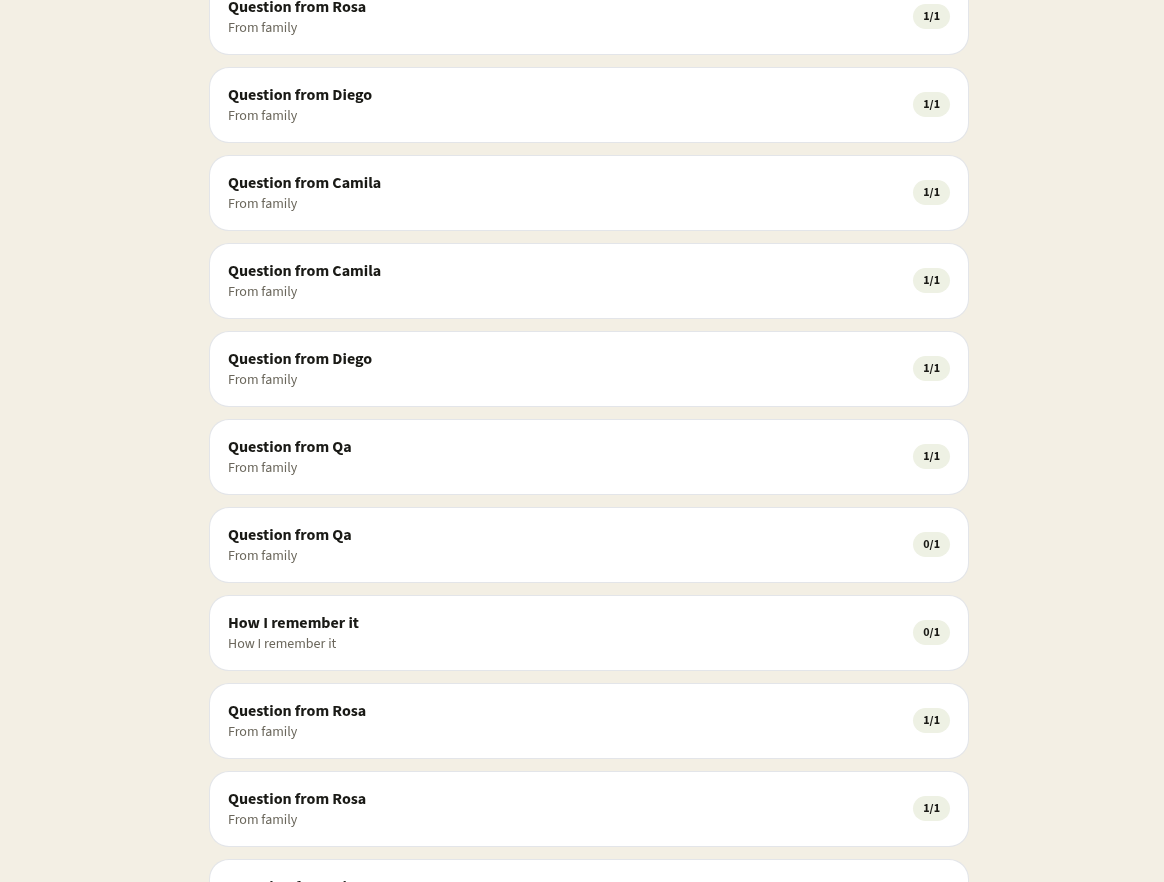
That's why Kinnect was built. It’s a private, invite-only platform that helps families preserve memories, stories, and essential life information across generations. It moves beyond just storage by organizing everything by person, date, and type, making it searchable from the moment it's added. It’s not just an app; it’s an infrastructure for your family’s legacy. It lets you create a living record of your family's real stories over time, where each answer is dated, searchable, and stays in the group forever, ensuring nothing falls through the cracks of a disorganized shared drive.
Q: What if my family isn't very tech-savvy?
A: A good digital archive should be intuitive. If it's too complicated, people won't use it. Look for platforms with clean interfaces and clear instructions that make it easy for everyone, regardless of their tech comfort level, to add and access memories without frustration.
Q: How do we make sure people actually use it?
A: The trick is making it part of your routine without feeling like a chore. Systems that offer gentle prompts or shared activities can encourage engagement. When contributing feels natural and low-effort, participation rates go way up.
Q: Is it really private? I worry about our family's information.
A: Absolute privacy is non-negotiable for family archives. Make sure any platform you use is invite-only, with no public profiles, algorithms, or ads. Your family’s memories should only ever be accessible by the people you explicitly invite.
Q: What kind of information should we save in an archive?
A: Go beyond just photos. Think about stories, family recipes, important documents, voice recordings, and even video clips. The goal is to capture the full richness of your family's history and present, not just visual snippets.
Keep reading
Kinnect is now LIVE!
Experience the private family network on the web or download the iOS app today.
If the idea of a private, dedicated space for your family appeals to you, you might be tired of mainstream social media. Explore our guide on apps like Facebook Groups without Facebook to find a better fit for your family's needs.
Deep Dive: More Resources on This Topic
If you found this helpful, explore our related guides: