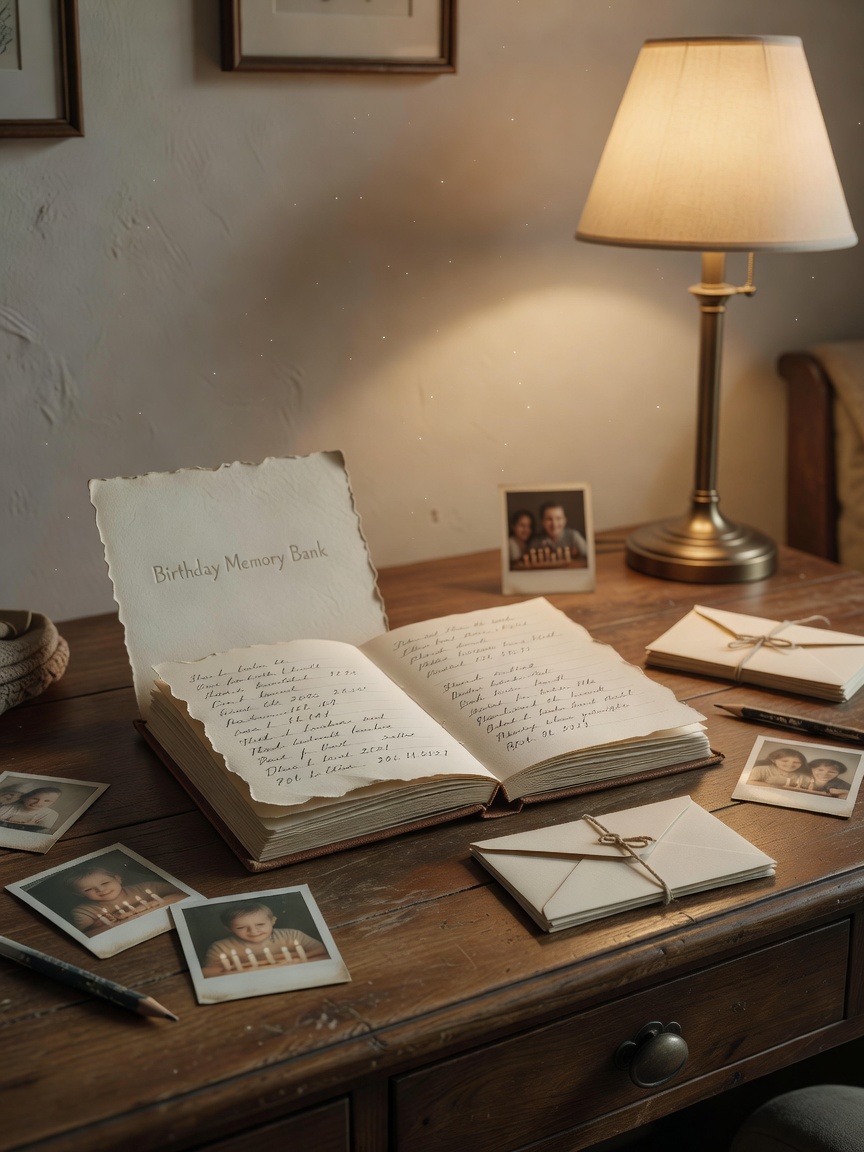
A birthday memory bank is a personal system for systematically recording meaningful details, preferences, and milestones for family members. This information is then used to craft deeply personal and thoughtful birthday messages that go beyond generic wishes, strengthening familial bonds by demonstrating attentive care and shared history.
We’ve all felt that jolt. The calendar notification pops up: “Aunt Carol’s Birthday.” Your heart sinks a little. It’s not that you don’t love her; it’s that life is a flood of information, and the specific, beautiful details about Aunt Carol have been washed away by grocery lists and work deadlines. You open a group chat, type “Happy Birthday!”, and feel a pang of guilt, like you’ve failed a test of love.
After I lost my dad, I would have given anything to remember the little things he’d mentioned wanting to do, or the silly jokes he’d made just weeks before. That ache taught me something vital: remembering is an act of love. But our brains aren’t designed to be perfect archives. The solution isn’t to try harder; it’s to build a better, kinder system. That's what a Memory Bank is. It’s not another chore; it’s a quiet place to store love as it happens.
Kinnect is now LIVE! Start your private family group today.
👉 Try Kinnect on the Web
👉 Download the iOS App
Step 1: Choose Your Simple Tool
You don't need fancy software. The best tool is the one you'll actually use. Here are a few simple options:
- Google Sheets: Create a simple spreadsheet. Columns could be: Name, Birthday, Recent Wins/Struggles, Inside Jokes, Mentioned Desires, Gift Ideas.
- Notes App (Apple Notes/Google Keep): Create a single note for each family member. Use checklists or bullet points to jot down details as you think of them throughout the year.
- Google Contacts: This is a sneaky-good one. Open a family member's contact card and use the 'Notes' field. You can even add custom fields like 'Recent Achievement' or 'Favorite Memory'.
Step 2: What Details to Capture
This is where the magic happens. Go beyond their favorite color. Train yourself to listen for the details that reveal who they are right now.
- Wins & Worries: Did your brother mention being nervous about a presentation? Did your mom finally finish her garden project? Write it down. Acknowledging their current reality is everything.
- The “I Wish…” List: People constantly mention things they want or need. “I wish I had a better reading lamp.” “My favorite coffee mug broke.” These are pure gold for both messages and gifts.
- Core Memories & Inside Jokes: What’s the story you always retell? What’s the one-word joke that makes you both laugh? Mentioning a shared memory is like a secret handshake of the heart.
- Their People & Passions: Who do they talk about most? Their best friend, their dog, their new pottery class? Showing you pay attention to what they care about makes them feel truly seen.
Turning Stored Details into Heartfelt Messages
Once you have your Memory Bank, the hard part is over. Now, when a birthday arrives, you open your notes instead of a blank text box. You’re not starting from scratch; you’re connecting the dots of a year’s worth of listening.
Example: Your Sister's Birthday
- Generic Message: "Happy birthday, sis! Hope you have the best day! Love you!"
- Memory Bank Message: "Happy birthday, sis! I was just thinking about how you were so nervous to start that new coding class, and now you're acing it. I'm so incredibly proud of your courage. I hope you get to celebrate today by curling up with your cat, Sherlock, and that new sci-fi book you were excited about. Love you!"
See the difference? One is a pleasantry. The other is a reflection of her actual life. It says, “I see you. I’m paying attention. You matter.” This is how we build the strong family cohesion that researchers have found leads to 40% higher relationship satisfaction among families who regularly celebrate milestones together.
The Hidden Variable: The Art of Passive Listening
The most common mistake is thinking you need to schedule interviews to fill out your Memory Bank. That's not it at all. The real insight is that this system works best when it’s passive. It’s about training your ear during normal phone calls and visits. When your cousin mentions their kid won a soccer game, take 10 seconds after the call to jot it down. The goal isn’t interrogation; it’s quiet observation. It’s about building a habit of noticing the details that are already flowing past you every day.
This is especially important in our modern world. Our research at Kinnect shows that 70% of family group text messages are logistical noise—memes, scheduling, and 'ok' responses. The truly meaningful details get buried instantly. A system like a Memory Bank rescues those moments from the noise.
Building this system for yourself is a powerful first step. But keeping it updated and sharing that 'mental load' across an entire family is the real challenge. That's why we built Kinnect. It’s a private, dedicated space designed from the ground up to capture and celebrate these small, meaningful details—not bury them. It turns your family's shared history into a living calendar, ensuring no one's story, big or small, gets lost in the noise.
Frequently Asked Questions
Why is a personal birthday message so important?
A personal birthday message shows you pay attention to someone's individual life, struggles, and joys. It moves beyond a social obligation and becomes a genuine act of connection, making the person feel seen, valued, and loved for who they truly are.
How can I gather personal details without being nosy?
The key is passive listening during regular conversations. Pay attention to what they voluntarily share about their hobbies, work, or family. The goal is to simply remember the details they already offer, not to probe for new information.
What is the best way to start a sentimental birthday message?
Start with a specific, positive memory from the past year. Instead of "Happy Birthday," try "I was just thinking about that time we..." or "I'm so proud of you for..." This immediately grounds the message in a real, shared experience and shows genuine reflection.
Learn more at Kinnect.