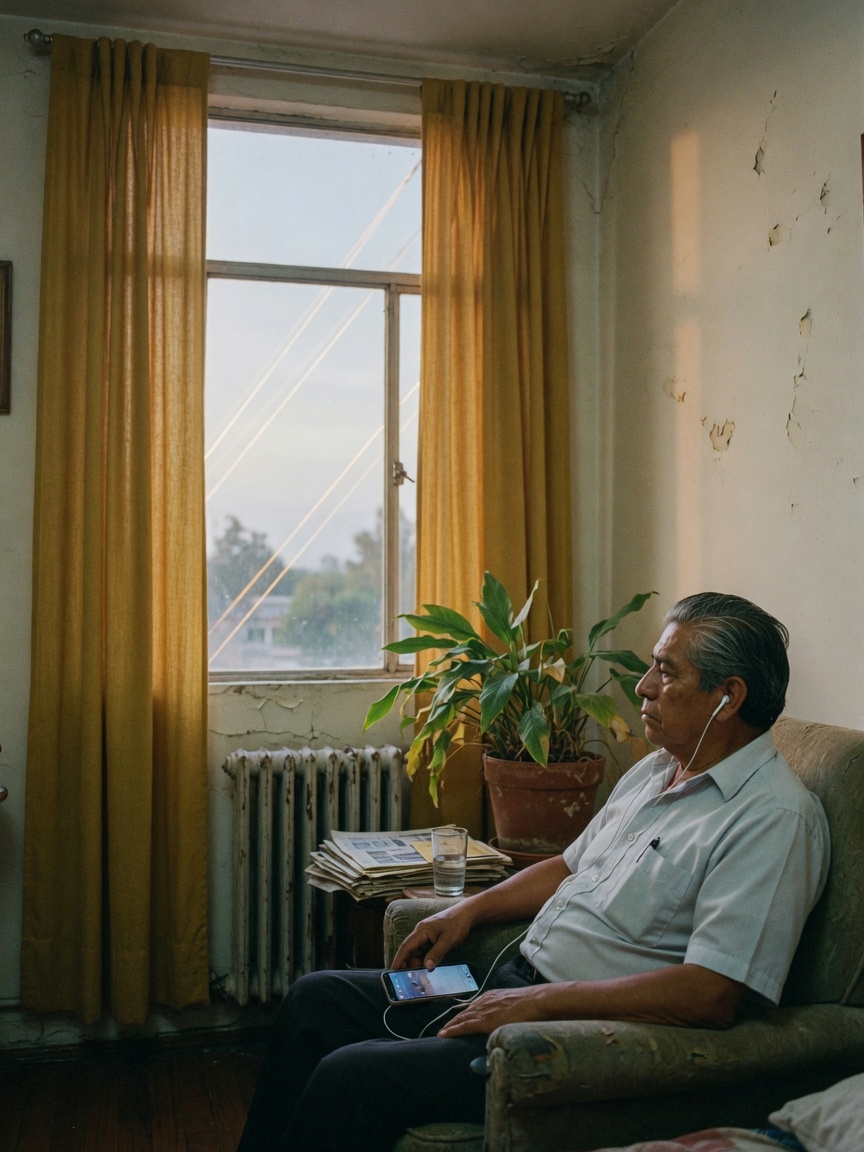
Answering difficult family history questions requires balancing truth with compassion. This guide offers strategies for sharing sensitive stories thoughtfully, ensuring the legacy you pass down is honest and healing, which is why families use private spaces like Kinnect to build and preserve their complete story.
Kinnect is now LIVE! Start your private family group today.
👉 Try Kinnect on the Web
👉 Download the iOS App
When answering difficult family history questions, focus on compassion over simple facts. Frame your answer with context, share the emotional truth, and be prepared to support the person asking, because how a story is told becomes part of the story itself.
Answering difficult family history questions means acting as a narrative steward, not just a fact-checker. It works by thoughtfully framing sensitive information, considering the emotional impact on the listener, and preserving the full, complex truth of a person's life. This approach ensures the legacy you pass down is one of honesty and healing, not just dates and names.
I remember after my father passed, my young nephew asked me why Grandpa was sometimes so sad. The easy answer was about his health. The true answer was a story of loss, of a business that failed, of dreams he had to let go. For a moment, I froze. I held the power to paint my father as either a victim of circumstance or a man who carried his disappointments with quiet dignity. In that moment, I wasn't just recalling a fact; I was shaping a memory for a new generation.
You are the bridge between the past and the future. The stories you hold aren't just trivia; they are the emotional DNA of your family. Research from Emory University found that children who know their family's stories—the good, the bad, the complicated—show up to 3x higher resilience and self-esteem. Knowing you come from a line of people who struggled, who made mistakes, and who loved fiercely, is a source of incredible strength. But that strength depends entirely on how the story is told.
The pressure to get it right is immense. Our own Kinnect research highlights a profound 'Legacy Preservation Gap': 85% of Gen X adults report they wish they had recorded their parents' voices before they passed, yet only 12% have a system for doing so. We want to preserve these legacies, but sharing them, especially the painful parts, is the hardest step. This guide is for you, the storyteller, the keeper of the flame. It’s about how to answer with love, even when the truth is hard.
5 Principles for Sharing Difficult Family Stories
When a child or relative asks a tough question, they are offering you a profound gift: trust. How you receive and answer that question will echo for years. Here are five principles to guide you in honoring that trust.
- Answer the Question Behind the Question. A question like, “Why did Grandma and Grandpa get divorced?” is rarely about the logistics. It’s about fear (“Will my parents get divorced?”), identity (“Am I part of a broken family?”), and love (“Did they stop loving each other?”). Before you give the facts, address the feeling. Start with, “That’s a big question. It sounds like you might be worried about…”
- Choose Your Frame, Not Just Your Facts. The same facts can tell a hundred different stories. Was your uncle’s struggle with addiction a story of personal failure, or a story of a kind man battling a disease he couldn’t beat? Frame the narrative around the person’s humanity, their intentions, and their love, even when their actions were painful.
- Share the Feeling, Not Just the Event. Facts are cold. Feelings are what connect us. Instead of saying, “They lost the farm in the Depression,” say, “They lost the farm, and I know it broke your great-grandfather’s heart. He felt like he had failed everyone, but he never stopped working to provide for them.” This honors the emotional truth of the experience.
- It's Okay to Say, “This is Hard to Talk About.” Your vulnerability gives them permission to feel their own emotions. Admitting your own pain or uncertainty doesn't weaken the story; it makes it more real. It models that it’s okay for family to be complicated and for these topics to be handled with care.
- Create a Space for Their Reaction. Your answer isn’t the end of the conversation; it’s the beginning. After you share, be quiet. Ask, “How does that land with you?” or “What does that make you think about?” Their reaction is part of the story now, too.
These conversations are too important for a noisy group text or a fleeting phone call. They deserve a permanent, private home where they can be shared, discussed, and preserved with the dignity they demand. This is why we built Kinnect. It’s a space to share the real stories, the hard ones, the beautiful ones, and build a family history that is true, complete, and healing.
The Kinnect Echo is now LIVE on the App Store and Web! It's a daily question that prompts your family to share the stories that matter most, creating a living archive of your history, in your own words. Start building your family’s true story today. Learn more about Kinnect and Download on the App Store.
What are some respectful questions to ask about a family's past?
Ask open-ended questions that invite stories, not just 'yes' or 'no' answers. Try phrases like, “What do you remember most about…?” or “Tell me about a time you felt really proud.” Always lead with warmth and make it clear they only have to share what they are comfortable with.
How do you start collecting family history stories?
Start small and be consistent. You can use a dedicated tool like the Kinnect Echo, which sends a daily prompt, or simply set aside time during family calls to ask one meaningful question. The key is to make it a gentle, ongoing ritual rather than a formal interview.
What are the best kinds of questions to ask for family history?
The best questions tap into emotions and senses. Ask about their favorite childhood meal, the song they danced to at their wedding, or the hardest challenge they ever overcame. These questions unlock memories and reveal character far more than asking for simple dates or names.
What is the best way to handle awkward family history questions?
As the person answering, acknowledge the difficulty by saying, “That’s a complicated story, and it’s a hard one to tell.” As the person asking, be gentle and give them an out: “We don’t have to talk about this if you don’t want to.” The best approach is always rooted in compassion for the people involved.