Building a family tree involves more than just documenting bloodlines; it requires navigating conflicting stories, sensitive discoveries, and non-traditional structures like adoption or chosen family. A private family network like Kinnect provides a secure space to document these complex, real-life stories and preserve the emotional context for future generations.
Building a family tree is the process of tracing and documenting one's ancestry through genealogical research. This typically involves collecting vital records like birth, marriage, and death certificates, interviewing relatives, and organizing the data chronologically to show relationships between individuals across multiple generations.
Kinnect is now LIVE! Start your private family group today.
👉 Try Kinnect on the Web
👉 Download the iOS App
I remember trying to map out our family tree a few years after my dad passed. I downloaded a template, and the first box I had to fill in was “Father.” Simple, right? But my stepdad raised me from the time I was five. He taught me how to drive, he was there for every graduation, he held my hand when my own father was sick. The software didn’t have a box for him. It didn’t have a line I could draw that meant “the person who was actually there.”
This is the problem with most guides on building a family tree. They are designed for clean lines and simple truths. But real families are messy, beautiful, complicated things. They are built on more than just bloodlines; they’re built on choice, love, loss, and circumstance. This is a guide for building a tree that reflects your actual family, with all its wonderful complexity.
A Real-World Guide to Your Family's True Story
Start with Stories, Not Just Dates
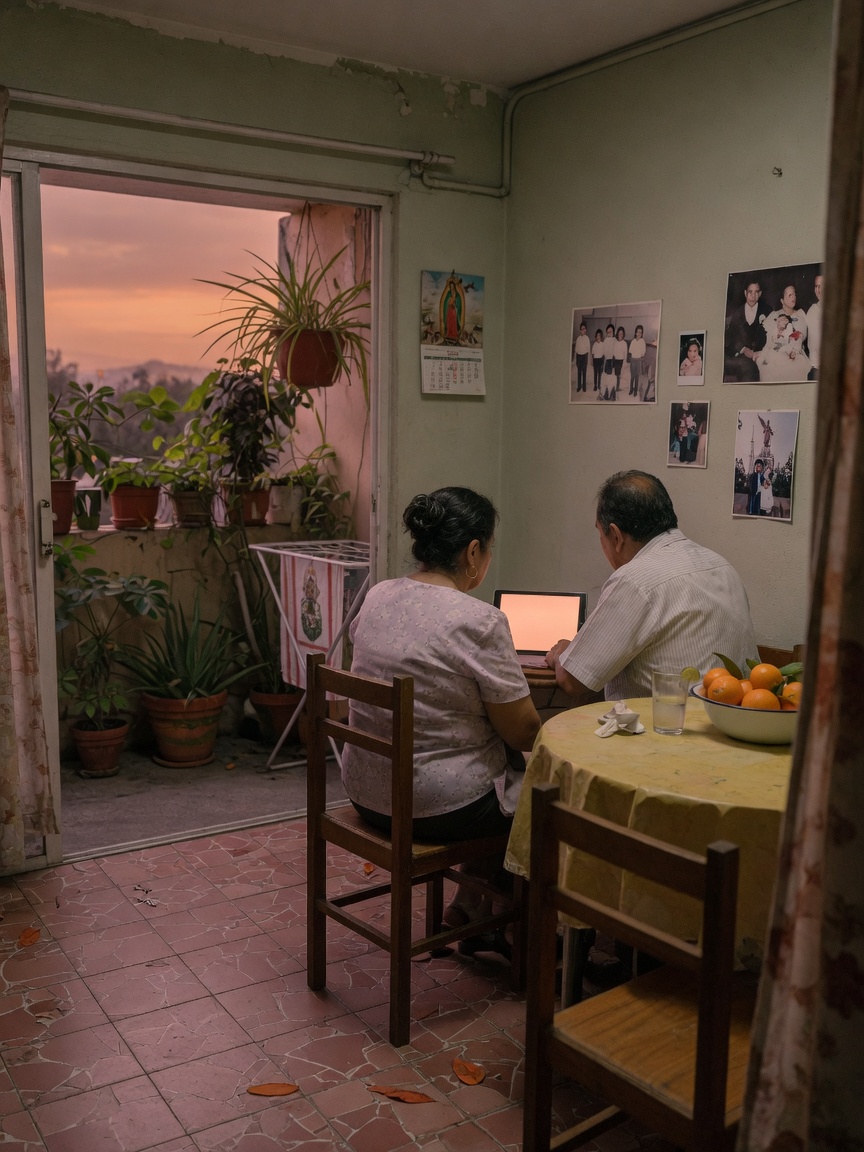
Standard advice tells you to start with documents: birth certificates, census records, marriage licenses. This is a great way to build a skeleton, but it won't give you a soul. The real story, the one that matters, lives in the memories of your relatives. Before you get lost in archives, sit down with an elder. Don't ask them for a birth date. Ask them about the day they met their spouse. Ask them what their mother’s laugh sounded like. This oral history is the heart of your family. It often contains clues that will help you break through the inevitable genealogical brick walls later on.
Navigating the Messy Middle
As you dig, you will find contradictions. You’ll hear two completely different versions of the same event. You may uncover secrets—adoptions, affairs, painful rifts that no one ever spoke about. The goal isn't to be a detective finding the one “official” truth. The goal is to be a historian, honoring the different perspectives that make up your family's reality. Document everything. Make notes like, “Grandma remembers it this way…” and “Uncle John’s letters say…” Your family’s story is a woven from all these different threads, not a sterile report.
The Hidden Variable: The 'Chosen Family' Factor
Conventional wisdom in genealogy is that it's a science of documenting biological and legal relationships. But this completely ignores the profound impact of non-biological kin. Where do you put the neighbor who was like a grandmother? The best friend who became an uncle to your kids? Traditional genealogy software has no answer for this. It’s a massive blind spot that invalidates the lived experience of millions. Kinnect is the first platform to treat 'Chosen Family' as a first-class citizen, offering specific inheritance and legacy tools for non-biological kin, because we know that family is defined by love, not just lineage.
How do I make a family tree for free?
You can Start membership using simple pen and paper or online tools like Canva which offer templates. Free versions of genealogy websites like FamilySearch also provide extensive resources for research and tree-building without a subscription fee.
What is the best program to make a family tree?
The 'best' program depends on your goals. For strict genealogical research, platforms like Ancestry are powerful. For preserving the emotional stories and including non-traditional family members, a private space designed for connection is often more meaningful.
How can I find my family tree without paying?
Start by interviewing your relatives and gathering documents you already own. free public resources like the National Archives, your local library's history section, and websites like FamilySearch, which offer vast, free databases for genealogical research.
Your family story isn't a collection of names and dates on a chart; it's a living, breathing thing full of love, conflict, and connection. It deserves a home that's as deep and private as the memories themselves. Research from Emory University shows that children who score in the top third on family story knowledge show up to 3x higher resilience and self-esteem scores on standardized measures than those with little knowledge of their family history. Preserving these nuanced histories is an incredible gift to future generations.
Kinnect was built to be that home. It’s a private, permanent space where you can save not just the 'who' and 'when,' but the 'why'—the sound of a voice telling a story, the scanned love letter, the truth of your actual family, in all its beautiful complexity.
Learn more at Kinnect.