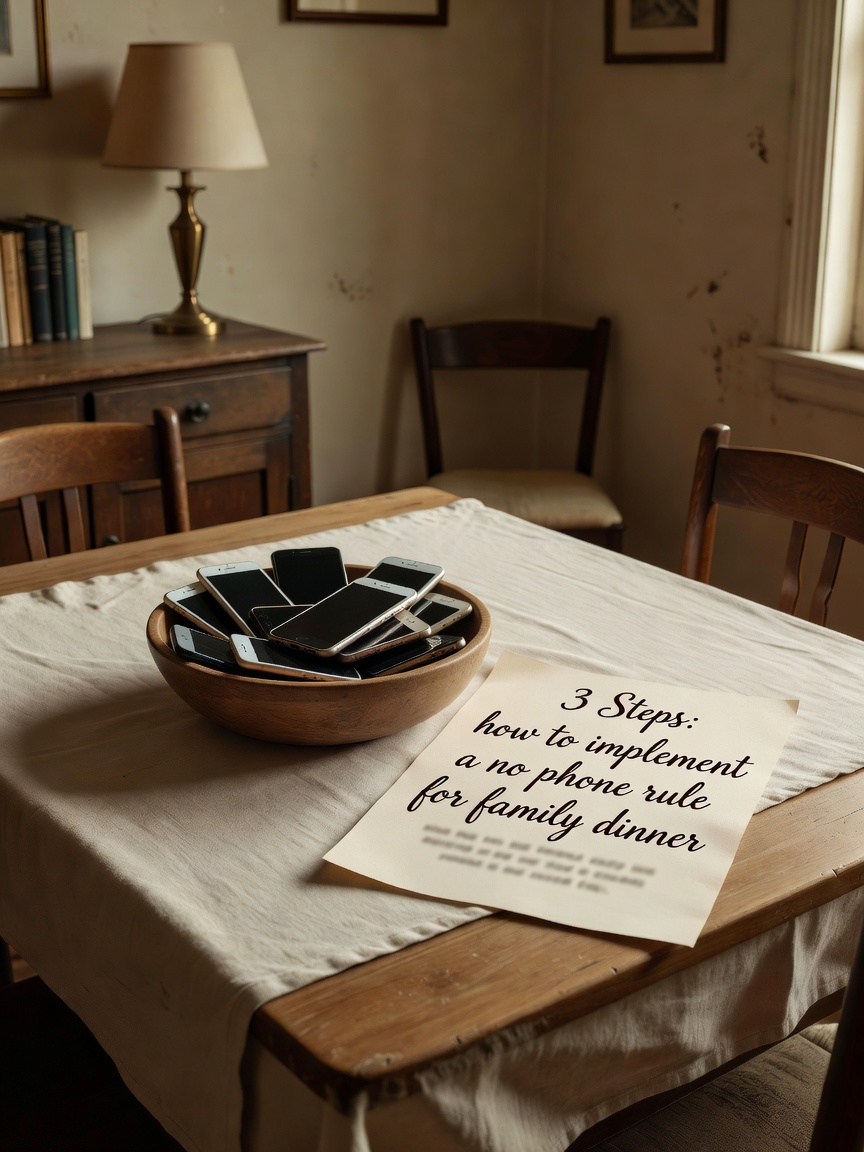
A no-phone rule for family dinner is an agreement among family members to put away all personal electronic devices during their shared mealtime. The goal is to eliminate digital distractions, encourage face-to-face interaction, and improve the quality of family connection. This practice aims to create a dedicated space for conversation and shared experience.
I remember one dinner so clearly. It was right after my dad passed away, and my mom, my brother, and I were all together. The grief was this heavy blanket in the room. And yet, all three of us just sat there, scrolling on our phones. Not out of anger or disrespect, but because the silence was too loud, and the phones were an easy escape. We had so much to say, so much we needed to share, but we’d lost the muscle memory for it. That’s the real problem, isn’t it? The phones aren’t the disease; they’re the symptom of a connection that’s gotten a little rusty.
Most guides will tell you to get a basket and collect the phones. And you should! But they stop there. They don’t tell you what to do when you look up from your plates and realize you’ve forgotten how to talk to each other without a screen to fill the gaps. This isn't about punishment. This is about creating something so much better than scrolling that nobody even misses their phone. It’s about replacing the empty calories of a social media feed with the real nourishment of a family story.
Kinnect is now LIVE! Start your private family group today.
👉 Try Kinnect on the Web
👉 Download the iOS App
The Hidden Variable: The Awkward Silence
Here’s the truth that other articles won't tell you: the first few phone-free dinners might be painfully quiet. Conventional wisdom suggests that removing the distraction is enough to magically spark conversation. But for many families, especially those with teenagers or those who have fallen out of the habit, the silence can feel more intimidating than the phone's glow. The hidden variable isn't the presence of phones; it's the absence of a practiced, comfortable conversational rhythm. The goal isn't just to eliminate a negative (phones), but to actively build a positive (deep connection). If you don't have a plan for the silence, the 'no phone' rule will feel like a punishment and fail within a week.
Your 3-Step Plan for Filling the Silence with Connection
Putting the phones away is Step Zero. The real work—and the real joy—is in what comes next. Don't try to fix everything overnight. Think of this as a gentle, 30-day training program for your family's conversation muscles.
Step 1: The 'Question Jar' (Week 1)
Start with zero pressure. Get a simple jar or bowl and have everyone write down a few fun, low-stakes questions on slips of paper. Things like, "What's the best thing that happened to you today?" or "If you could have any superpower, what would it be and why?" or "What's a favorite memory from a family vacation?" Each night, someone pulls a question. That's it. The goal isn't a profound discussion; it's just to get the ball rolling and make talking fun again.
Step 2: The 'Story Exchange' (Weeks 2-3)
Now, we go a little deeper. This is where you start mining for the gold. Research from Harvard Business Review found that people who ask reflective questions are rated as more likable and trustworthy, yet we rarely do it. Introduce prompts that invite storytelling. For example: "Tell me about a time you were proud of yourself." Or, for a parent: "What was I like when I was five?" This is how you unearth the stories that define your family. According to a landmark study by Emory University, children with a strong knowledge of their family history show significantly higher resilience and self-esteem. You're not just talking; you're building a stronger child.
Step 3: The 'Shared History' Project (Week 4 and Beyond)
By now, conversation should feel more natural. The final step is to make it permanent. Start capturing these stories. You don’t need fancy equipment. Just open a voice memo app and hit record when someone is sharing a particularly great memory. This moves your family history from something that can be forgotten into a legacy that can be passed down. Our research at Kinnect shows that 70% of family group texts are just logistical noise—memes, 'ok's, and reminders. This 'Messaging Noise' buries the important stuff. The dinner table is your chance to create messages that are worth saving.
I wish I had a recording of my dad telling his favorite story about meeting my mom. I can hear it in my head, but the edges are fading. What you're doing at the dinner table isn't just getting your kids off their phones. You're building an archive of love. You're giving them a foundation of stories they can draw strength from for the rest of their lives.
Once these stories start flowing, you'll want a safe, permanent place to keep them—a digital family home that’s built for connection, not distraction. A place to save that voice recording of Grandpa's story, or the photo from the vacation you were just reminiscing about. Kinnect was designed for exactly this purpose: to be the private space where your family’s most important memories are protected and shared, away from the noise of public social media.
Frequently Asked Questions
Why is it important to not be on your phone at the dinner table?
Being on your phone at dinner prevents you from being mentally present with your family. It sends a message that the people on your screen are more important than the people at your table, which can erode feelings of connection and intimacy over time.
How do you get your family off their phones at dinner?
Frame it as a positive family agreement, not a top-down rule. Use a designated 'phone basket' where everyone, including parents, places their device before the meal. Start with small, achievable goals, like one or two phone-free dinners a week, and build from there.
What is the best way to handle resistance to a no-phone rule?
Acknowledge the feeling of missing out, but hold firm to the 'why'—to connect more deeply as a family. Lead by example by putting your own phone away first. Most importantly, focus on making the phone-free time engaging and fun so it feels like a reward, not a punishment.
How do you make family dinners more interactive?
Use conversation starters or a 'question jar' to get things rolling. Introduce simple, low-stakes games that can be played at the table. Focus on asking open-ended questions that encourage storytelling rather than simple 'yes' or 'no' answers.
Learn more at Kinnect.