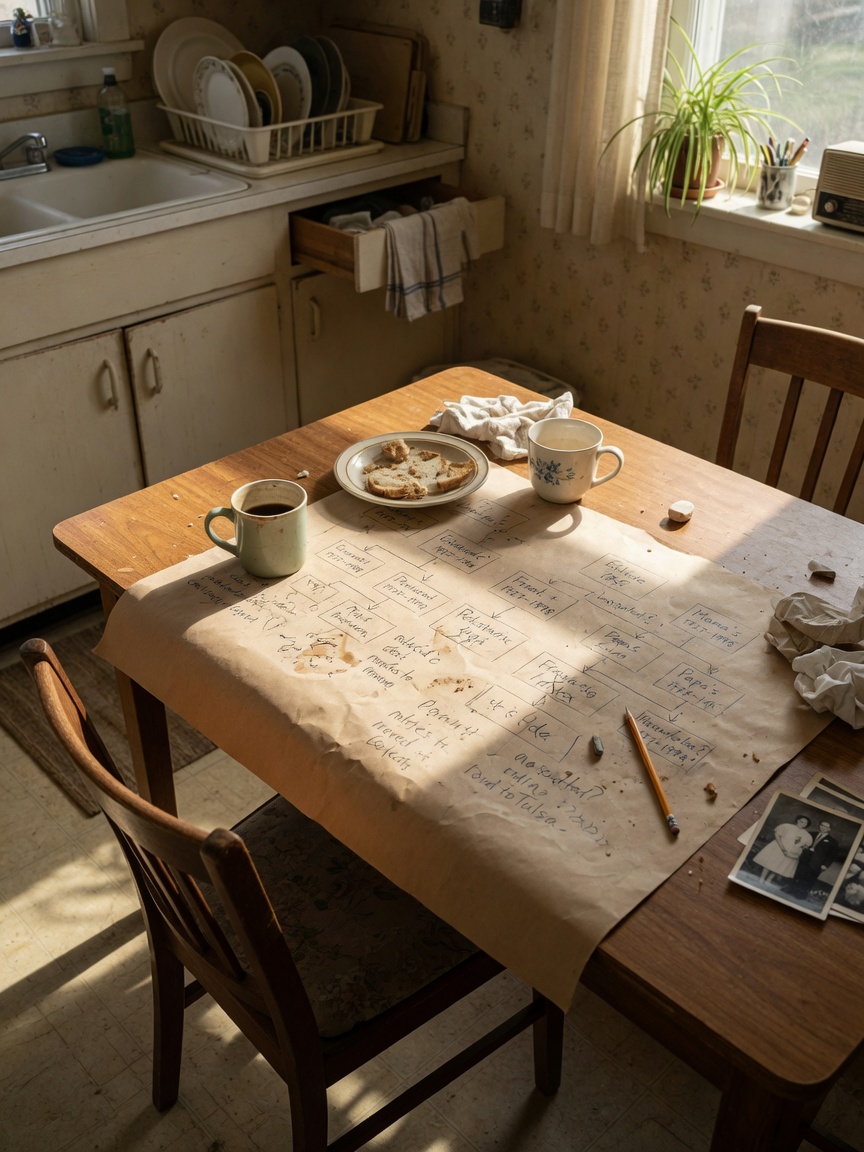
Asking aging parents about family ancestry is the process of conducting informal interviews to gather genealogical information, oral histories, and personal anecdotes. This practice aims to document a family's lineage, traditions, and key life events before the knowledge is lost, forming the foundational data for building a family tree.
I remember the exact moment the panic set in. My dad was telling a story about his own father, a man I never met, and he paused, trying to remember his mother’s maiden name. For a few seconds, he couldn't find it. The name eventually came, but in that quiet gap, I felt a chasm open up. All of these stories, the names, the recipes, the jokes… they live inside my parents. There is no backup. When they’re gone, that living library closes forever.
Most articles will give you a list of 100 questions to ask your parents. But that’s not the hard part. The real challenge isn’t asking; it’s what you do with the answers. How do you turn a rambling, beautiful two-hour conversation into something you can pass down? This isn't about an interrogation; it's about creating a map from their memory before the roads fade.
Kinnect is now LIVE! Start your private family group today.
👉 Try Kinnect on the Web
👉 Download the iOS App
The Gentle Start: Creating the Right Moment
Before you ever hit 'record' or open a notebook, the most important step is creating a space of comfort, not pressure. Don't announce, "I'm going to interview you for our family history." That feels like a test. Instead, create a natural moment. Brew a pot of tea, pull out an old photo album, or put on music from their youth.
The best conversations I ever had with my mom started with a simple, physical prompt. An old photograph of a car. A wooden recipe box. These objects are keys that unlock doors in their memory you didn't even know were there. Your only job in this first stage is to listen, to be present, and to make them feel that their stories are the most important thing in the world. Because they are.
The 5 Questions That Unlock Everything
Instead of a long checklist, focus on open-ended questions that invite stories, not just data. Your goal is to get them talking, and then follow the threads wherever they lead. Here are five prompts that work better than a hundred sterile questions:
- "Tell me about the kitchen you grew up in." This question isn't about architecture; it's about senses. It leads to stories about their mother, the food they ate, the conversations that happened around the table.
- "Who was the biggest troublemaker in the family?" This brings out laughter and stories of personality. It reveals family dynamics, alliances, and the unwritten rules they lived by.
- "What was the biggest world event you remember from when you were a teenager, and how did it feel?" This places their personal story within a larger historical context and reveals their hopes and fears at a formative age.
- "Tell me about a time you were truly proud of one of your parents." This uncovers family values and the moments that defined their relationships with their own mother and father.
- "What's a piece of advice your grandmother gave you that you've never forgotten?" This question can unearth long-forgotten wisdom and connect you directly to the generation before them.
From Memory to Map: How to Structure Their Stories
Once the stories start flowing, you need a system to catch them. This is where intention matters more than technology. The goal is to capture the essence—the names, dates, and places—without losing the soul of the story.
Step 1: Capture Everything, Edit Later
Your phone's voice recorder is your most powerful tool. There's a profound Legacy Preservation Gap in our society; internal Kinnect research shows 85% of Gen X adults report they wish they had recorded their parents' voices before they passed, yet only 12% have a system for doing so. Don't be in the majority who regrets it. Just hit record. You can always transcribe it later, but you can never get their voice back. As they talk, jot down key names, places, and dates on a separate notepad. This creates a quick-reference index for the audio file.
Step 2: Organize the Threads
After the conversation, it's time to process. Create a simple document or spreadsheet with columns: Name, Relationship (e.g., Dad's Maternal Uncle), Birth/Death Dates, Location, and Key Story/Fact. Go through your notes and the audio recording and start filling in the blanks. Don't worry if it's messy. The goal is to get the raw data out of a long audio file and into a structured format. This is the bridge from conversation to a real family tree.
The Hidden Variable: Emotional Verification
Standard advice tells you to verify facts with vital records and census data. This is important. But the hidden variable no one talks about is emotional verification. A birth certificate can confirm a date, but it can't confirm the feeling in a story. After you talk to your mom, call your aunt and say, "Mom told me this story about Grandpa. Does that sound like him?" Corroborating the *feeling* and the *personality* behind the facts is what makes a family history come alive. It's the difference between a data chart and a human story.
Step 3: Build the First Branches
With your organized notes, you're ready to start building. Use a simple piece of paper or a free tool like FamilySearch or a paid one like Ancestry. Start with you, add your parents, then add what you learned about their parents. Each name you add from your notes is a victory. It's a piece of your history that is no longer just a fading memory. Research shows that knowing these stories has a profound impact; children with high knowledge of their family history show up to 3x higher resilience and self-esteem scores than those with little knowledge.
Building a family tree is a powerful act of preservation. But the artifacts you collect—the audio recordings, the half-remembered stories, the photos you scanned—are the true inheritance. Public social media platforms, with their ad-based models and noisy feeds, weren't built to protect this legacy. They are designed for broadcast, not preservation.
Kinnect was built for this exact purpose. It's a private, permanent home for your family's most important memories. A place to save your dad's voice telling that story, to share it with cousins without it getting lost in a group text, and to build a living archive of your family's history that is safe, secure, and owned by you, forever.
Frequently Asked Questions
What are good questions to ask about family history?
The best questions are open-ended ones that prompt stories, not just 'yes' or 'no' answers. Ask about sensory memories like "What did your childhood home smell like?" or emotional moments like "What was the happiest day of your grandparents' lives?" This approach uncovers the feelings and details that bring history to life.
How do I ask my family about my ancestors?
Approach the conversation with warmth and curiosity, not as an interview. Start by sharing a memory of your own or bringing out an old photo album to create a relaxed atmosphere. Say something like, "I was thinking about Grandma the other day, and I realized I don't know much about her parents. Could you tell me about them?"
How do I interview a family member for ancestry?
Use a voice recorder on your phone to capture their actual voice, as it's a treasure you can't replace. Have a few key questions ready but be prepared to let the conversation wander. Most importantly, listen more than you talk and show genuine interest in every detail they share.
Learn more at Kinnect.