Preserving a parent's memories, especially with dementia, involves creating a system to capture their stories before they are lost. This process strengthens family bonds and builds a legacy for future generations. A private family network like Kinnect provides a dedicated, permanent space to save these voice recordings and photos safely.
Saving a parent's memories in the context of dementia is the process of proactively documenting their life stories, voice, and wisdom before cognitive decline makes it impossible. This involves using tools like audio recorders, journals, and photo albums to create a permanent archive for the family's legacy and emotional well-being.
Kinnect is now LIVE! Start your private family group today.
👉 Try Kinnect on the Web
👉 Download the iOS App
I sat across from my dad at the kitchen table a few years ago, the same one I’d done my homework at for years. I asked him about his first car, a story I’d heard a dozen times, and he just… stared. The details were gone. That silence was the loudest sound I'd ever heard, and it changed me. In that moment, I promised myself I wouldn't let that happen with my mom.
When my mom’s diagnosis came, the fear was paralyzing at first. It felt like a race against a clock I couldn't see. But fear doesn't save stories. Action does. I'm not a tech expert or a professional historian. I'm just a son who wants his own kids to hear their grandmother's voice, to know her laugh, and to understand where they came from. This is the simple, human system I built to make sure that happens.
A Simple System to Capture a Lifetime of Memories
You don’t need a film crew or expensive equipment. You just need intention and a quiet space. The goal isn't to create a perfect documentary; it's to create a connection.
1. Start with Photos, Not Questions
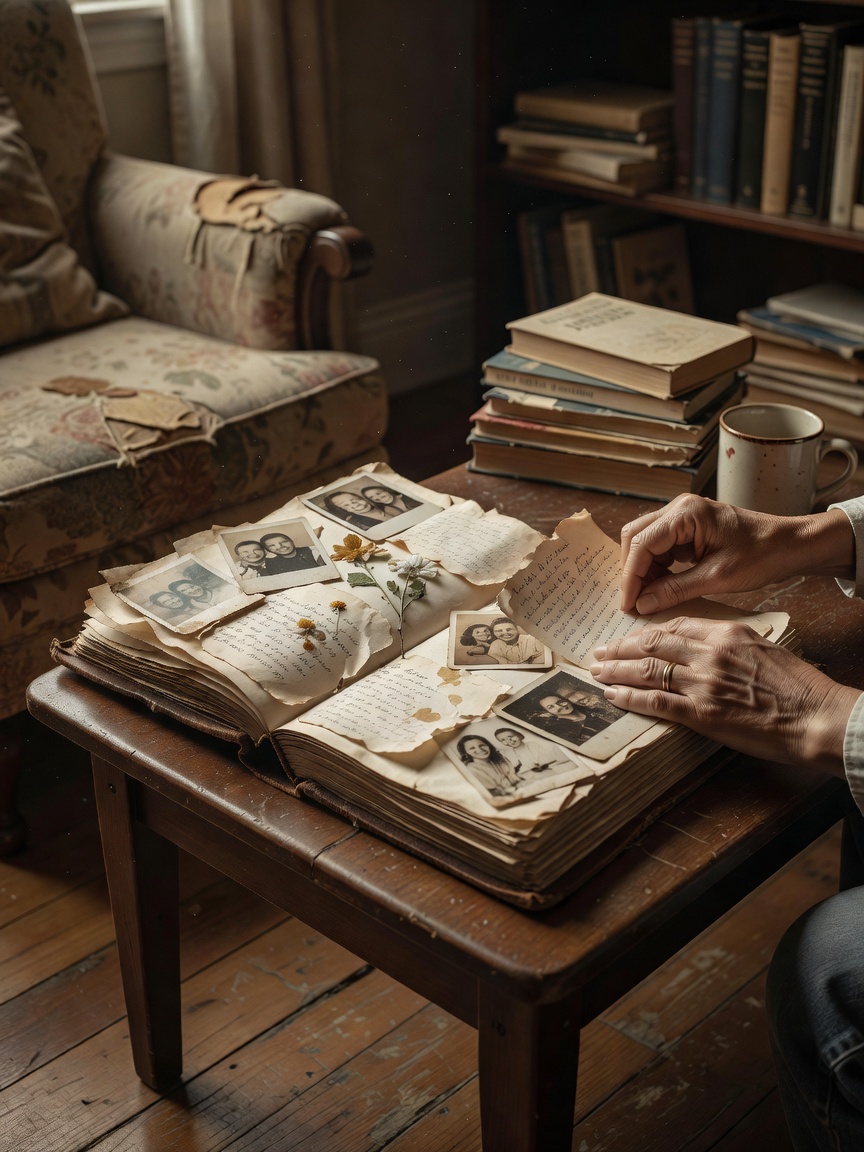
Sitting down with a microphone can feel like an interrogation. Instead, I bring out an old, dusty photo album. I don’t even ask a direct question. I just open it to a page and say, “Wow, look at this one.” The photos are the key. They unlock doors in the mind that a direct question can’t. The stories start to flow naturally, prompted by a familiar face or a forgotten place.
2. Use the Recorder You Already Have
Your phone is a powerful recording studio. Just open the voice memo app and set it on the table between you. Don't make a big deal out of it. The technology should be invisible. The most important thing is capturing the audio—the cadence of her voice, her laughter, the pauses. Those are the things you’ll miss the most.
The Hidden Variable: The Story *Behind* the Story
Most guides on preserving family history focus on cataloging facts: dates, names, places. But the real treasure isn't the data; it's the sound of her laugh when she tells the story of her disastrous first date. It's the emotion in her voice when she talks about her own mother. Our research uncovered a startling Legacy Preservation Gap: 85% of Gen X adults report they wish they had recorded their parents' voices before they passed, yet only 12% have a system for doing so. We're chasing the wrong thing—we need to save the *feeling*, not just the file.
And once you have these precious recordings, what do you do? Emailing large audio files is a nightmare. A WhatsApp group chat buries them under memes and logistical noise. And a platform like Facebook, which is built on an advertising model, feels too public and too vulnerable for something this personal. We realized the world needed a private family home for these moments—a place where they could live forever, safe and easily shared with only the people who matter most. A place where stories build resilience. In fact, a landmark study from Emory University found that children with deep knowledge of their family stories show up to 3x higher resilience scores.
Why is recording their voice so important?
A person's voice carries their personality, their humor, and their love in a way that text and photos cannot. Hearing their voice is a powerful way to feel connected to them long after they are gone, preserving the essence of who they were for future generations.
How do I start if my parent is resistant?
Avoid a formal interview. Instead, start by looking at old photo albums together or playing their favorite music. These activities can naturally trigger memories and stories without the pressure of a direct Q&A session, making them more comfortable and willing to share.
What is the best way to store these memories forever?
The best storage method is private, permanent, and easily accessible to your entire family. Cloud services can be impersonal and hard to manage, while public social networks lack privacy. A dedicated family platform ensures these precious memories are safe, organized, and can be shared securely with loved ones.
Learn more at Kinnect.
