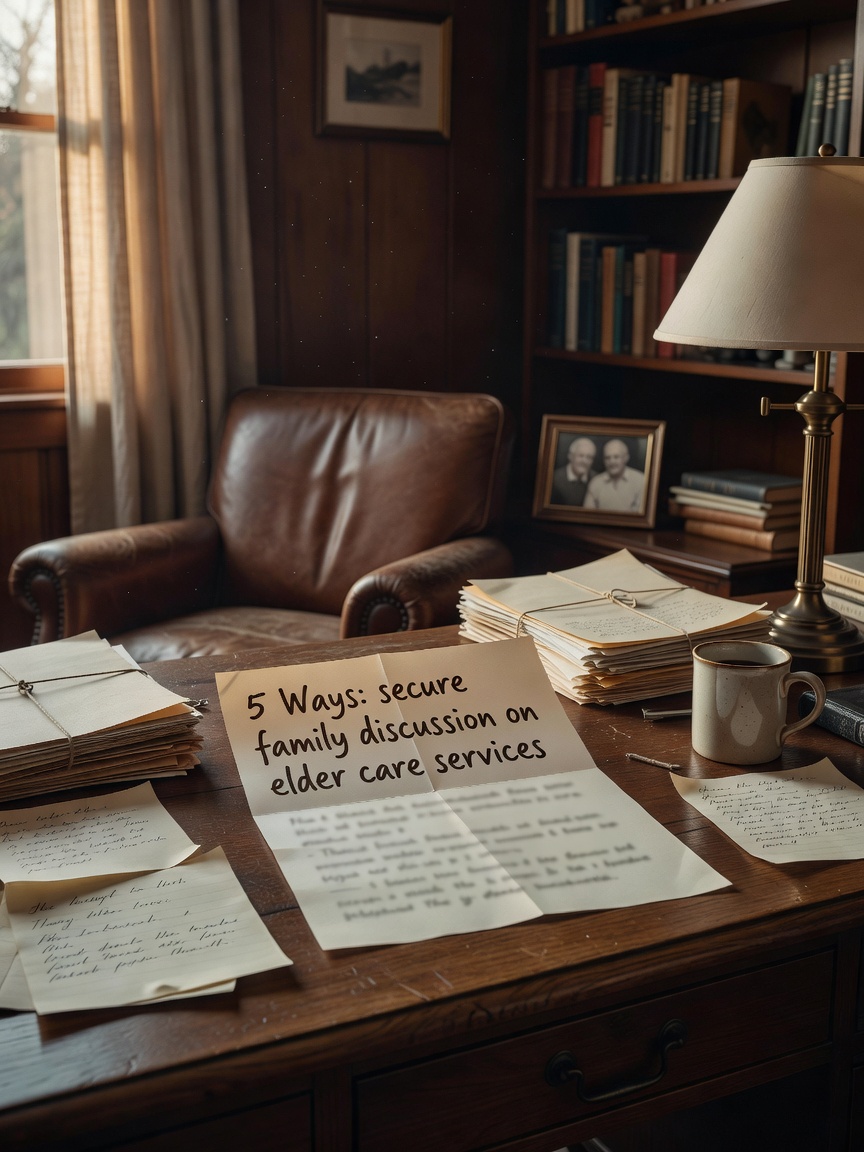
A secure family discussion on elder care services involves establishing a confidential and organized communication channel to evaluate care options, share sensitive information, and make collective decisions. This process requires a dedicated digital space to manage medical records, financial documents, and legal directives, ensuring privacy and preventing critical details from being lost.
I remember the exact moment my father’s diagnosis landed. The world tilted. Suddenly, the chaotic family group text became command central. But a critical update from the neurologist about medication was buried under a dozen well-meaning heart emojis and my cousin's vacation photos. We missed it for two days. That's when you realize 'secure' isn't just about feelings; it's about making sure the most important information never, ever gets lost.
You're not just having a conversation; you're building a digital command center for your parent's life. This is where you’ll share scans of their Power of Attorney, compare notes on assisted living facility tours, track medication schedules, and coordinate visits. The stakes are too high for a tool built for memes and casual chatter. You need a private, permanent, and organized home for this journey.
Kinnect is now LIVE! Start your private family group today.
👉 Try Kinnect on the Web
👉 Download the iOS App
The Digital Command Center: Beyond the Group Text
The tools we use every day weren't built for this moment. Group texts on platforms like WhatsApp or iMessage are designed for immediate, temporary exchanges, not for creating a permanent, searchable record of a parent's health. Emails become a tangled web of replies and attachments that are impossible to track. And public social media platforms like Facebook are, by design, built to monetize your data for advertisers, making them fundamentally unsuitable for sharing sensitive medical or financial information.
The Hidden Variable: The Legacy Preservation Gap
While you're focused on the logistics of care, there's a deeper need that often gets missed: preserving the person at the center of it all. Our user research at Kinnect revealed a profound regret among families: 85% of Gen X adults report they wish they had recorded their parents' voices before they passed, yet only 12% have a system for doing so. A truly secure space isn't just for documents; it's a place to capture their stories, their laughter, and their advice while you still can, creating a living legacy for generations to come.
A Secure Checklist for Your Family Discussion
- Centralize Key Documents: Establish one encrypted, access-controlled location for scans of legal papers (wills, POA), medical records, and financial statements. This ends the frantic search for documents across multiple email accounts.
- Create a Daily Care Log: A shared, running journal is essential for families with multiple caregivers. It allows everyone to see medication updates, notes from doctor visits, and changes in mood or symptoms in real-time.
- Maintain a Shared Calendar: Use a single, dedicated calendar for all appointments, caregiver shifts, and family visits to eliminate scheduling conflicts and ensure your parent is always supported.
- Control the Conversation: Ensure your chosen platform allows you to securely add or remove access for family members, partners, or professional in-home care providers without compromising the integrity of your family's private history.
Trying to stitch together a solution from five different apps is exhausting, especially when approximately 40% of family caregivers report high emotional stress. My dad's last years were a blur of texts and lost emails, and I desperately wish we'd had one quiet, organized place for everything that mattered. That's why Kinnect exists. It's a single, private home for your family’s most important conversations, documents, and memories—all organized in one place, safe and permanent.
Frequently Asked Questions
How do you start a family conversation about aging parents?
Start by expressing love and concern, not by making demands. Frame the conversation around their future happiness and safety. Say something like, "I want to make sure we always honor your wishes, so can we talk about a plan for the future?"
What are the 4 main topics for discussion in a family meeting for an elderly parent?
The four crucial pillars are Finances (budget for care), Health (current conditions and medical directives), Living Arrangements (aging in place vs. a facility), and End-of-Life Wishes (living will, power of attorney). A secure digital space helps organize documents for each of these topics.
How do you deal with difficult family members when caring for an elderly parent?
Focus on transparent, fact-based communication in a centralized place. A shared care log and document vault removes emotion and opinion from logistical discussions. If disagreements persist, consider a neutral third-party mediator like a geriatric care manager.
Learn more at Kinnect.
