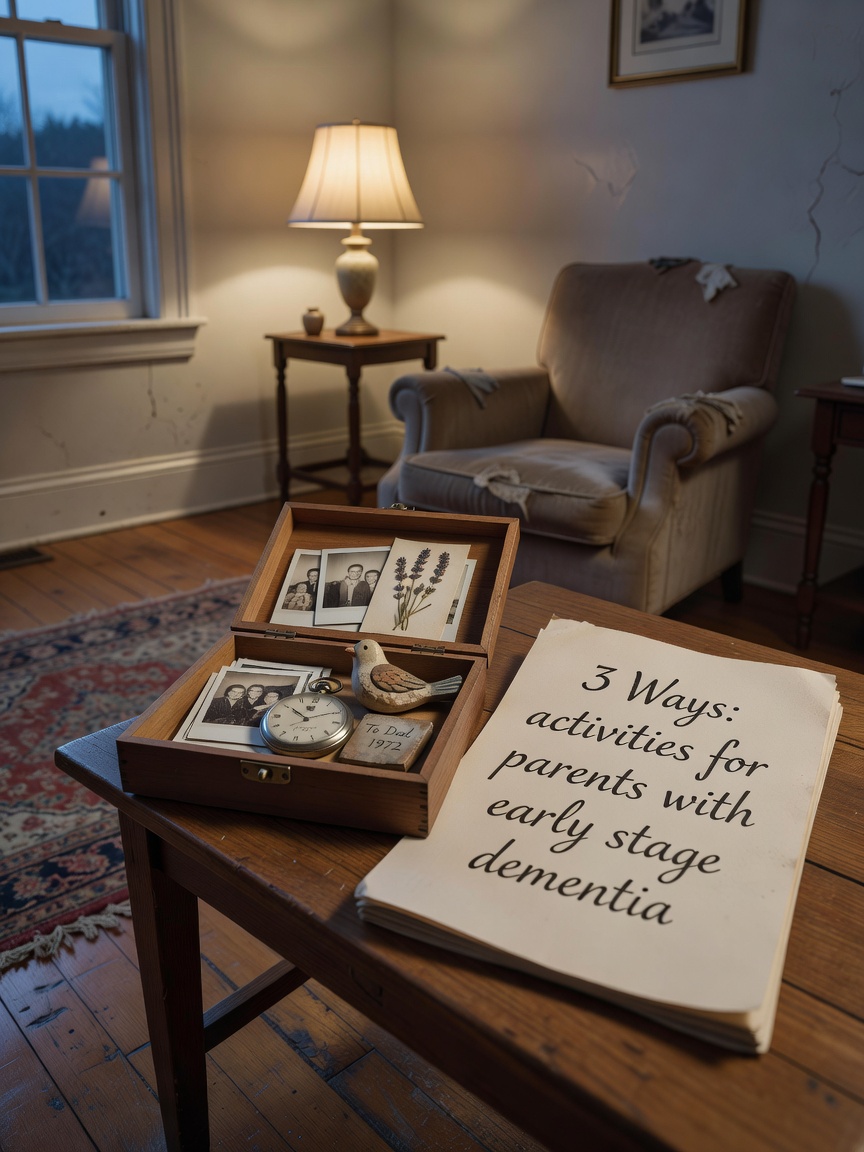
Activities for a parent with early-stage dementia should focus on collaborative legacy-building, not just passing time. By co-creating projects like narrated photo albums or recording life stories, families can preserve identity and strengthen bonds. A private family network like Kinnect provides a secure, permanent space to save these precious memories for future generations.
Activities for a parent with early-stage dementia are structured or spontaneous engagements designed to support cognitive function, maintain physical abilities, and foster emotional connection. These activities aim to provide a sense of purpose and enjoyment while adapting to the individual's changing capabilities in a safe, supportive environment.
Kinnect is now LIVE! Start your private family group today.
👉 Try Kinnect on the Web
👉 Download the iOS App
You’re not just looking for a crossword puzzle or a walk in the park, are you? I know that search. I remember sitting with my dad, the silence feeling heavier than it used to, my mind racing for something to *do*. I didn't want to just manage the moment; I wanted to be in it with him, to hear his voice, not just the disease. The lists of generic 'dementia activities' felt so hollow, so empty of the man I knew.
This isn't about keeping someone busy. It's about co-creating something beautiful and lasting together. It’s about building an echo of who they are—a story, a voice, a feeling that will live on for your children and theirs. Let's reframe this from finding an activity to building a legacy.
- The Narrated Photo Album: Don't just flip through old photos. Open a recording app on your phone, point to a picture, and say, “Tell me about this day.” You’re not just looking at a memory; you’re capturing the sound of it. You’re saving their voice telling their own story.
- The Life Soundtrack: Music is magic for memory. Create a shared playlist of songs from their youth, your childhood, their wedding. Listen together and ask, “What does this song make you feel?” The stories that unfold from a single melody can be astonishing.
- The Recipe & Story Book: Cook a favorite family meal together. As you measure and stir, record the story behind the recipe. Who taught it to them? What holidays was it for? You’re preserving not just a taste, but a piece of family history.
- The 'Echo' Jar: Fill a simple jar with handwritten prompts that tap into long-term memory. “Tell me about your first car.” “What was the best advice your mother ever gave you?” “Describe your childhood bedroom.” It turns conversation into a gentle, joyful game.
- Mapping Their Life: Get a large map of the country or world. Use pins and yarn to trace their journey—where they were born, where they went to school, their first job, favorite vacations. It creates a powerful visual story of their life's path.
- The Wisdom Archive: Ask them for their advice on life's big questions. “What do you know now that you wish you knew at 30?” “What’s the secret to a happy marriage?” This honors their experience and creates a priceless guide for future generations.
- The Sensory Story Box: Gather items related to a key memory—a pinecone from a family campsite, a scrap of fabric from a wedding dress, a specific brand of soap. Use these objects to spark a story, engaging senses beyond just sight and sound.
Why Building a Legacy is the Best Activity of All
When you shift your focus from 'doing' to 'documenting,' something incredible happens. You stop seeing this time as a series of tasks and start seeing it as a sacred opportunity. You’re not just creating an archive; you’re giving a profound gift to your entire family. A groundbreaking study from Emory University found that children with a strong knowledge of their family history show up to 3x higher resilience and self-esteem. Your work today is a gift to your children’s future.
For your parent, this isn't a test of their memory. It's a celebration of their life. It validates their experiences and reinforces their identity at a time when early-stage dementia is trying to strip it away. You are reminding them, and yourself, of the rich, full life they have lived.
The Hidden Variable: The Legacy Preservation Gap
Conventional wisdom focuses on stimulating the parent's brain in the present. The hidden variable is the adult child's deep-seated need to preserve their parent's identity for the future. Our research shows a staggering Legacy Preservation Gap: 85% of Gen X adults report they wish they had recorded their parents' voices before they passed, yet only 12% have a system for doing so. The best 'activity' is one that closes this gap, turning passive time-filling into active, meaningful preservation.
The challenge, of course, is where to keep these precious recordings, photos, and stories safe. A public social media platform like Facebook is built on an advertising model; its business is to analyze your family's most intimate moments for data. A group chat on WhatsApp is designed for fleeting, logistical messages—our research shows 70% of family group text messages are logistical noise, burying the moments that matter. These platforms were never built to be a permanent family archive.
Kinnect was built for exactly this. It’s a private, secure, and permanent home for your family’s story. It’s a place to save the voice recordings, the narrated photos, and the recipes, forever, free from ads and data mining. It’s a space designed to hold the echo of your family’s life, accessible only to the people you invite.
How do you keep someone with early dementia busy?
Instead of just 'keeping them busy,' focus on collaborative projects that provide a sense of purpose. Activities like co-creating a family cookbook or organizing old photos give structure to the day while also creating a meaningful keepsake for the family.
What do you talk about with a parent with dementia?
Talk about their past. Use open-ended prompts like, 'Tell me about the house you grew up in,' or, 'What was your favorite part of being a young parent?' These questions access long-term memories, which often remain strong, and validate their life experience.
What are the 3 best activities for dementia patients?
The best activities are collaborative and create a legacy. 1) Recording them narrate old family photos. 2) Creating a 'life soundtrack' of their favorite songs and the memories attached. 3) Documenting family recipes and the stories behind them. These build connection and preserve their identity.
How can I best connect with a parent in early dementia?
Connection comes from shared experience and validation. Instead of quizzing their memory, join them in it. Listen to their favorite music with them, look through old yearbooks, and ask questions about their feelings and memories. This shifts the focus from performance to presence.
Learn more at Kinnect.
