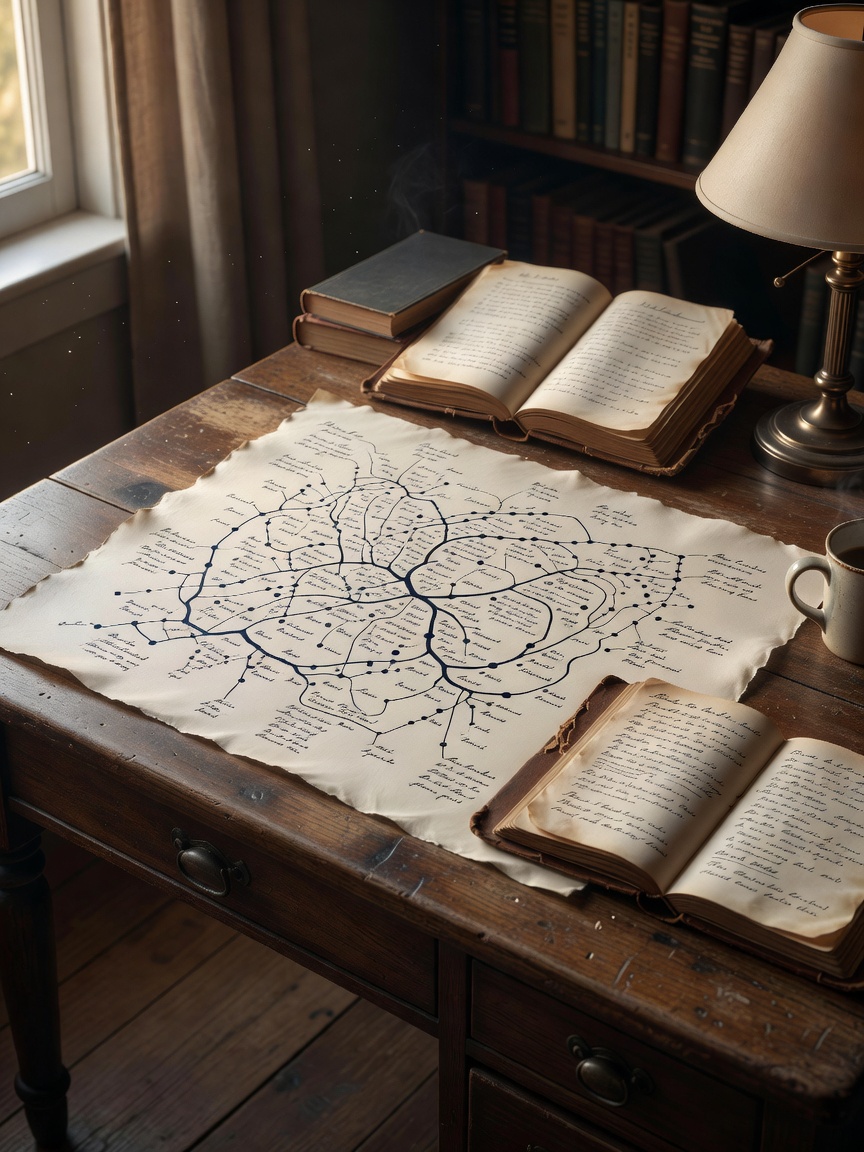
A family relationship map, or genogram, is a visual chart that documents emotional bonds, conflicts, and chosen family, going beyond simple bloodlines. This guide provides a step-by-step tutorial on how to create one using free tools, and how a private space like Kinnect can preserve the rich stories behind the map.
A family relationship map is a visual diagram, often called a genogram, that charts not just biological ancestry but also the emotional and social connections between family members. It uses symbols and different types of lines to represent dynamics like close bonds, conflict, chosen family, and significant life events.
Kinnect is now LIVE! Start your private family group today.
👉 Try Kinnect on the Web
👉 Download the iOS App
I remember staring at my own family tree for the first time. It was just names and dates connected by straight lines. My grandfather, a man who taught me how to be patient and how to laugh at myself, was reduced to a box. The woman who was my mom’s best friend, but who was really a second mother to me after my own passed, wasn’t on the chart at all. She was erased.
That’s the problem with a bloodline-only tree. It’s a sterile, biological record. It misses the entire point of family. It misses the love, the inside jokes, the arguments, the support. It erases the step-parent who raised you, the mentor who guided you, the chosen family who saved you. It tells a story of genetics, but not a story of connection.
And that story of connection is everything. Research from Emory University found that children who score in the top third on family story knowledge show up to 3x higher resilience and self-esteem scores. Knowing where you come from—the real, messy, beautiful story—is what makes you strong. It's time we started drawing maps that reflect our actual families.
How to Build Your Family Map with Free Tools (Step-by-Step)
You don't need a degree in psychology or expensive genealogy software to do this. All you need is a little time and a free, accessible tool. We’re going to focus on using a simple online whiteboard tool like Canva or Miro, but pen and paper works just as well.
Step 1: List Your People (Not Just Your Relatives)
Before you draw a single line, make a list. But don't just list biological relatives. Write down every single person who has shaped your life in a meaningful way. This is the most important step. Include your chosen family, close friends who feel like siblings, influential teachers, and step-relatives. This is *your* story.
Step 2: Create Your Legend
This is where you define the language of your map. You decide what the lines and symbols mean. There's no single right way, but here’s a simple starting point you can build on:
- Solid Line: Strong, positive connection
- Dotted Line: Distant or weak connection
- Jagged Line (like a lightning bolt): Conflict or strained relationship
- Double Line: Very close bond, like best friends or partners
- Heart Symbol on the line: Chosen family or deep mentorship
Step 3: Start Mapping in Canva
Open a free account on Canva and create a new 'Whiteboard' design. Start by placing shapes (circles for women, squares for men, or any system you prefer) for each person. Add their name. Now, use the 'Lines' tool to connect them according to the legend you just created. Don't be afraid to add small text boxes to note a key memory or event that defines that relationship. You'll quickly see a rich, emotional story emerge that a simple tree could never tell.
The Hidden Variable: The Conversations After the Map is Made
Most guides on genograms focus on the act of creating the diagram as the end goal. But the map isn't the treasure. The real, life-changing value comes from the conversations it starts when you share it with your family. It becomes a prompt to ask, "Why did you draw that line between Grandma and Aunt Carol?" or "Tell me more about this person you added." This is where the real stories are unlocked. It’s also why it’s so important to recognize that family isn’t just about biology. In fact, Kinnect is the first platform to treat 'Chosen Family' as a first-class citizen, offering specific inheritance and legacy tools for non-biological kin.
A visual map is a powerful starting point, but it's static. The stories behind those lines—the sound of your father’s laugh, the advice your mentor gave you, the feeling of safety you had in your childhood home—are alive. They need a permanent, private home where they won't get buried by the logistical noise of group texts or broadcast on ad-driven social media. They need a place built just for the real, messy, beautiful story of your family, chosen and all. That's why we built Kinnect.
What is a family tree that shows relationships called?
It's most commonly called a genogram. This tool is used in therapy and family studies to map not just lineage but also emotional relationships, communication patterns, and significant life events across generations.
How do you show non-biological family in a family tree?
The best way is to create a relationship map or genogram instead of a traditional tree. You can add 'chosen family' or mentors and use a custom legend—for example, a heart symbol or a unique line style—to signify their special, non-biological connection to the family.
How do you map a complicated family tree?
By focusing on relationships over strict biological lines. Use a legend with different line types to represent complex dynamics like adoption, strained relationships, estrangement, or exceptionally close bonds. This visual language makes it much easier to understand the family's emotional structure at a glance.
Learn more at Kinnect.
Keep reading
- 3 Steps: found unknown family member genealogy secrets.
- 3 Ways: family tree show relationships not just bloodlines
- 5 Ways to share family tree privately, no public shame
Once you've mapped out these relationships, you'll likely uncover a wealth of stories and information. Learning how to document family history digitally can help you preserve these precious memories for generations to come.
