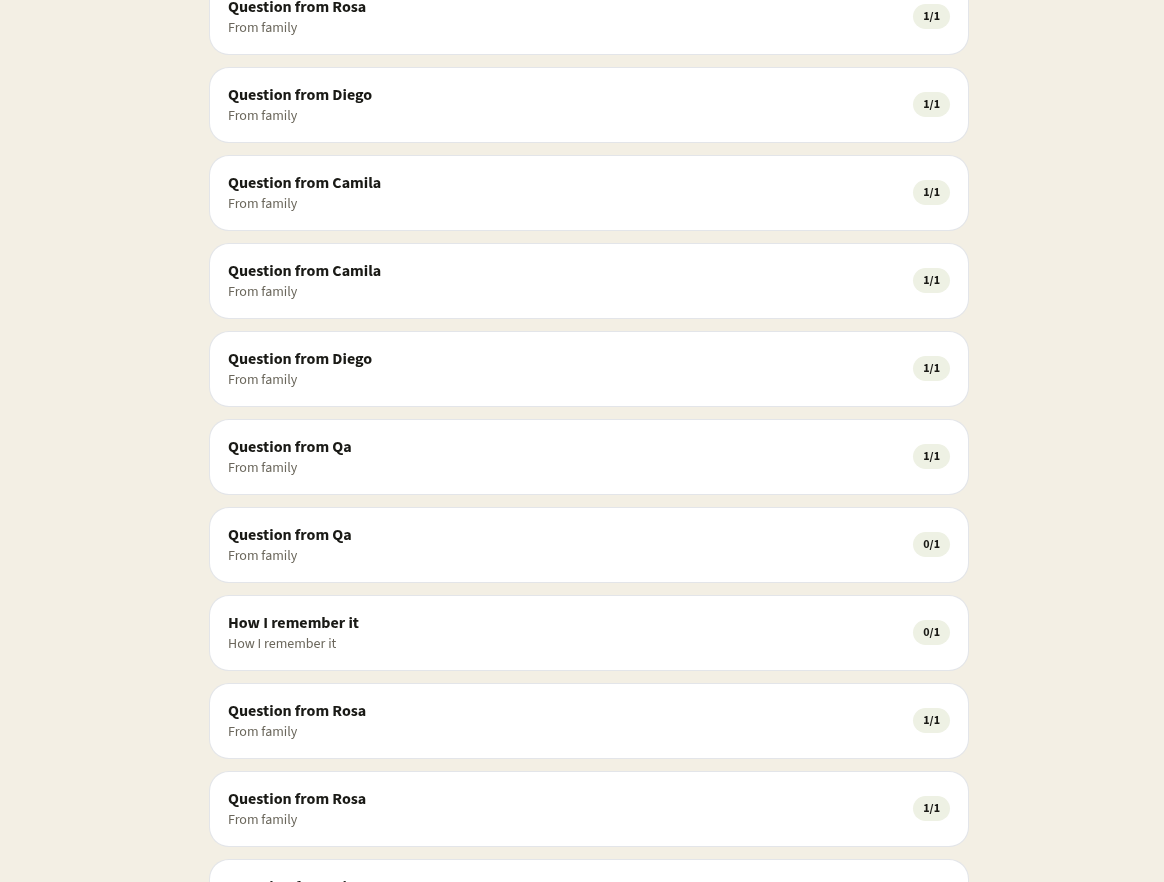
Organizing family history involves creating a unified system for both historical documents and living memories, such as oral histories and ongoing stories. This approach ensures that the emotional context isn't lost, creating a richer, multi-generational narrative that can be preserved in a private family social network like Kinnect.
Organizing family history is the process of systematically arranging genealogical records, photographs, documents, and oral histories to create a cohesive and accessible narrative of a family's past. The goal is to preserve this information accurately for future generations, making it easy to understand relationships, timelines, and key life events.
Kinnect is now LIVE! Start your private family group today.
👉 Try Kinnect on the Web
👉 Download the iOS App
We all have it. The box. That cardboard box in the attic or closet, filled with a chaotic jumble of faded photos, birth certificates with curling edges, and letters written in a script we can barely recognize. We tell ourselves we’ll organize it one day. But the truth is, the documents are only half the story. The real history is in the memories that are fading every day. I lost my dad a few years ago, and what I wouldn't give to hear him tell the story of his first car one more time. The paper records say he was born in 1952, but they don’t tell you how he laughed.
Most guides on organizing family history treat it like an accounting project—a matter of files, folders, and data entry. They miss the entire point. The goal isn’t to create a perfect archive; it's to keep the people we love from becoming just names on a chart. It’s about saving their voices, their stories, and the little moments that made up their lives. We need a system that organizes not just the data, but the soul of our family.
Beyond the Binder: The Living History Method
The biggest mistake we make is separating the artifacts from the anecdotes. We put the photos in one album, the documents in a binder, and the stories… well, the stories often stay locked away in our relatives' minds until it's too late. The Living History Method is about building a single, connected home for everything. Research from Emory University found that children with deep knowledge of their family stories show up to 3x higher resilience and self-esteem. This isn't just about the past; it's about building stronger kids today.
This approach means you actively capture the memories of living relatives and connect them directly to the people, places, and objects in your family's timeline. A photo of your grandmother's house is nice. A photo linked to an audio clip of her describing the smell of the kitchen on a Sunday morning is a legacy.
The Hidden Variable: The Legacy Preservation Gap
Conventional wisdom focuses on digitizing what we already have—the old photos and documents. But the most precious and perishable artifacts are the ones we haven't yet captured: the voices and memories of our living elders. Kinnect's research uncovered a painful truth we call the Legacy Preservation Gap: 85% of adults wish they had recorded their parents' or grandparents' voices before they passed, yet only 12% have a system in place to do so. We're meticulously scanning papers while the living libraries of our families are quietly disappearing. The contrarian insight is this: prioritize capturing new stories from the living over archiving old records of the deceased. The records will wait; the memories won't.
The 4-Step System to Organize Your Family's Complete Story
Step 1: Create a Story Capture Plan
Your first move isn't to buy a scanner; it's to make a list of living relatives and schedule time to talk. Don't call it an "interview." Call it catching up. Use your phone's voice recorder and ask open-ended questions: "What's the biggest trouble you ever got into as a kid?" or "Tell me about the day you met Grandpa." The goal is to capture their voice and their personality. These recordings are the most valuable documents you will ever own.
Step 2: Centralize Your Digital & Physical Archives
Now, you can tackle that box. Create a simple digital filing system on your computer or a cloud drive. A good structure is `Family Branch > Last Name, First Name > Document Type`. For example: `Paternal > Smith, John > 1945_Military_Records`. Scan photos and important documents at a high resolution (at least 600 DPI). This digital archive is your foundation, the bedrock upon which you'll layer the stories.
Step 3: Link Stories to People and Moments
This is where the magic happens. As you digitize photos, use metadata tagging within your photo software to label who is in each picture. In your genealogy software (like Ancestry or FamilySearch), add notes to an ancestor's profile with transcripts or summaries of the stories you've recorded. For example, you can upload a photo of your grandfather's old car and, in the description, add a transcript of the story he told you about it. You're connecting the artifact to the memory.
Step 4: Build a Collaborative Family Hub
A family history project that lives on one person's computer will eventually die there. The final step is to create a private, shared space where everyone can contribute. This isn't a place for logistical noise like a group text; it's a dedicated home for your legacy. Invite family members to add their own photos, label people you don't recognize, and share their versions of old family stories. By making it a team effort, you ensure the history is richer and that it will be carried on by the next generation.
The chaos of group texts and scattered social media posts isn't built for this kind of deep, permanent work. A dedicated, private space is designed to be that central hub, a place where every story, photo, and voice recording has a permanent home, connected to the people who matter most. Kinnect was created for exactly this purpose—to be a living archive where your family’s complete story can unfold safely and collaboratively, forever.
Why is organizing family history important?
Organizing family history preserves the memories and stories that define your family, providing a sense of identity and connection for future generations. It's not just about data; it's about understanding where you come from and building resilience.
How do you organize your genealogy research?
Combine a central software like Ancestry for the family tree data with a system for capturing living stories. Use a consistent digital filing system for scanned documents and photos, and link these assets back to the individuals in your tree.
What is the best way to store old family photos?
The best method is to create high-resolution digital scans of the originals. Store these digital copies in at least two places (e.g., a cloud service and an external hard drive) and in a private, collaborative platform where family members can add names, dates, and stories.
What is the best program to organize family history?
A combination is often best. Use traditional genealogy software for building the tree and managing vital records. For the collaborative and storytelling aspect—the living history—a private family platform like Kinnect is ideal for sharing photos, videos, and memories in a secure space.
Learn more at Kinnect.