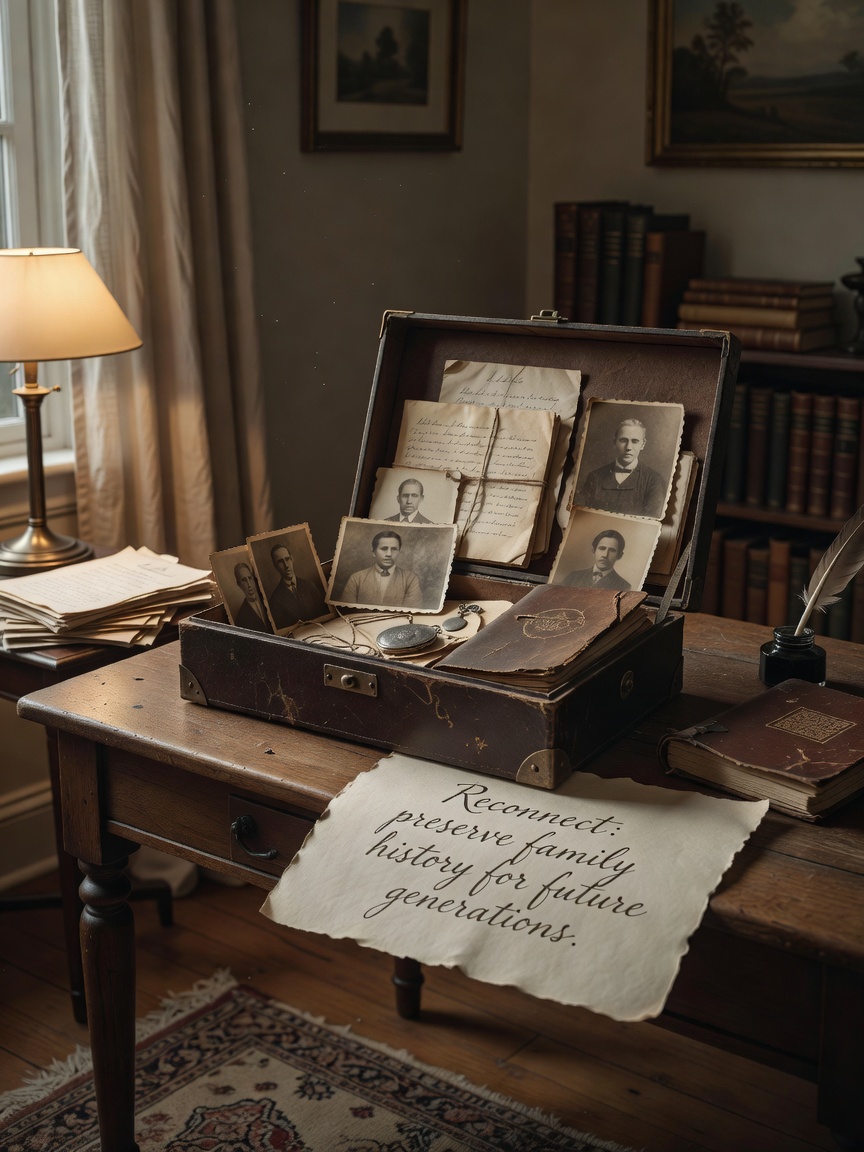
Preserving family history for future generations involves capturing not just genealogical data but the intangible legacy of values, stories, and life lessons. This process creates a 'living legacy' that strengthens family identity and resilience, best managed in a private, permanent digital space like Kinnect where stories can be securely shared and enriched over time.
Preserving family history for future generations is the process of collecting, documenting, and safeguarding familial information, stories, and artifacts to ensure they are accessible to descendants. This practice goes beyond simple genealogy by aiming to capture the cultural, emotional, and personal context that defines a family's unique legacy and identity.
Kinnect is now LIVE! Start your private family group today.
👉 Try Kinnect on the Web
👉 Download the iOS App
I still think about the questions I never asked my grandfather. It’s not the big things, like where he was born or what he did for a living—I have those facts written down. It’s the small stuff. I want to know why he always hummed a certain tune when he was fixing things, or what it felt like the first time he held my dad. Those are the things a family tree can’t tell you. Those are the details that transform a name on a chart into a person your great-grandchild can actually know.
We’re often told to preserve our family history by building a timeline of facts. But a legacy isn’t a list of dates and locations; it's a collection of stories. It’s the wisdom, the laughter, the resilience, and the love that you want to pass down. It's about creating a bridge so that a child born 50 years from now can feel the warmth of a person they never got to meet. This isn't about creating a museum of the past; it's about building a foundation for the future.
From Family Tree to Family Treasury: Capturing What Truly Matters
The goal is to create a living legacy, not a static archive. A treasury of moments, voices, and values that will resonate for generations. This requires a shift in focus from collecting data to curating meaning. This isn't just nostalgia; it's a foundation for the future. A landmark study by Emory University found that children with a deep knowledge of their family's stories show up to 3x higher resilience and self-esteem. Your story is a gift of strength.
Start with a 'Legacy Interview,' Not a Questionnaire
Instead of asking for dates and names, ask questions that unlock stories. Sit down with a loved one, hit record on your phone, and ask things that get to the heart of who they are. Try questions like: “What’s the bravest thing you’ve ever done?” or “Tell me about a time you failed and what you learned,” or “What do you think is our family’s greatest strength?” These conversations are where the real treasure is buried.
The Hidden Variable: The Power of 'Unimportant' Memories
Conventional wisdom focuses on preserving major life events: weddings, births, graduations. But the moments that truly define a person and a family are often the small, recurring, seemingly unimportant ones. The way your grandmother kneaded dough, the specific scent of your dad's aftershave, the silly bedtime story that was told for thirty years. These sensory details and minor traditions are the fabric of a family's culture. They are what future generations will latch onto because they reveal character and love in a way a wedding photo never can. Don't just document the milestones; document the daily magic.
Curate, Don't Just Collect
The urgency to save these moments is real. Our own research at Kinnect revealed a painful truth: 85% of Gen X adults report they wish they had recorded their parents' voices before they passed, yet only 12% have a system for doing so. Start today, but don't feel pressured to capture everything. Think of it as creating a “Family’s Greatest Hits” album. Identify the 5-10 core stories, values, or lessons that define your family and focus on preserving those first. Quality and meaning will always matter more than quantity.
Building this treasury requires a special kind of space—one that’s private, permanent, and designed for stories, not just data. It needs to be a place where a great-grandchild can not only see a photo but hear the voice of the person in it, telling their own story. This is the heart of why we built Kinnect, to give families a single, safe home for their living legacy, forever.
What is the best way to preserve a family legacy?
The best way is to create a multi-format digital archive that includes recorded audio stories, scanned photos with written captions, and videos. This captures not just facts but personality, voice, and emotion, making the legacy more engaging for future generations.
How many family stories should I record first?
Start with three to five foundational stories. Focus on key life lessons, pivotal moments, or beloved family anecdotes. Getting a few meaningful stories fully captured is more impactful than having dozens of incomplete notes.
Should family legacy preservation be digital or physical?
A hybrid approach is ideal, but a secure digital format is essential for longevity and accessibility. Physical items like photos and letters degrade over time, whereas a private, backed-up digital space ensures the legacy can be easily shared and preserved across generations and geography.
How can relatives collaborate without creating confusion?
Use a single, dedicated platform where everyone can contribute. Assign a 'family historian' or moderator to guide the process and prevent duplicate entries. A centralized space like a private family network avoids the chaos of scattered emails and text threads.
Learn more at Kinnect.
