A digital family photo archive is a curated, private collection of images, videos, and stories designed for long-term preservation and secure sharing among family members. Unlike public social media feeds, its primary purpose is to create a permanent, collaborative record of a family's history and memories for future generations.
Kinnect is now LIVE! Start your private family group today.
👉 Try Kinnect on the Web
👉 Download the iOS App
I remember finding a shoebox of my dad's old photos after he was gone. There was one of him as a young man, laughing with someone I didn't recognize. I stared at it for an hour, wishing I could just ask him, "Dad, who was that? What were you laughing about?" That's the feeling so many of us have. We have thousands of photos on our phones, but the stories are slipping away, lost in the noise of endless group chats and public feeds. We sit at the dinner table, scrolling through other people's lives, when the most important stories are right there, waiting to be shared.
The tools we've been given weren't built for this deep connection. Platforms like Facebook and Instagram have business models based on advertising and engagement, which means they are designed for public performance, not private connection. And while a WhatsApp group feels private, our most meaningful memories get buried under a flood of memes and logistical messages—what our research calls ‘Messaging Noise.’ This isn't just an inconvenience; a recent advisory from the U.S. Surgeon General highlights that chronic loneliness and social disconnection pose significant health risks, making the need for genuine connection more critical than ever.
The Blueprint for a Living Family Archive
Creating an archive that truly lasts isn't about buying more cloud storage. It’s about a shift in mindset from broadcasting moments to preserving memories. It’s about building a home for your family's story, one that echoes for generations.
Step 1: Choose a Foundation Built on Trust
The first step is to choose a space that is fundamentally private. This means no advertising, no data mining, and a business model where your family is the customer, not the product. Look for platforms with end-to-end encryption and clear privacy policies. The goal is to find a permanent home, not a temporary sharing tool, so it should be simple enough for both a teenager and a grandparent to use and feel comfortable in.
Step 2: Capture the Story, Not Just the Snapshot
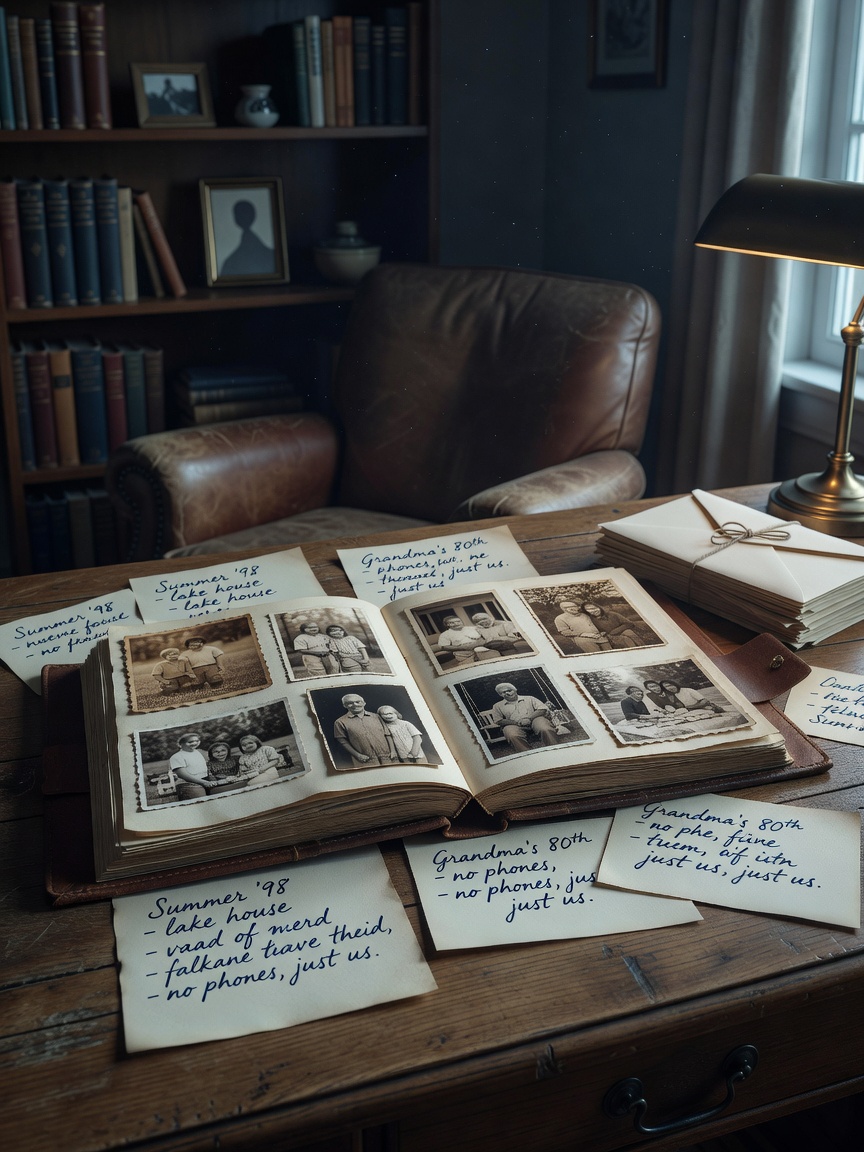
A photo without a story is just data. The real magic happens when you add context. Who is in the picture? Where was it taken? What was happening just outside the frame? The most powerful way to do this is with voice. Our internal research shows a staggering Legacy Preservation Gap: 85% of Gen X adults report they wish they had recorded their parents' voices before they passed, yet only 12% have a system for doing so. Attaching a simple voice note to a photo—telling the story in your own words—transforms a simple image into a priceless heirloom.
The Hidden Variable: The Story is the Signal
Conventional wisdom tells us that the more photos we share, the more connected we are. The opposite is often true. The flood of images becomes noise, and the truly meaningful moments are lost. The contrarian insight is this: the photo is just the prompt. The story, the voice, the handwritten caption—that is the signal. A single photo with a recorded story from a grandparent is infinitely more valuable than a hundred photos in a silent, scrolling feed. It's the context that creates connection and builds a legacy.
Step 3: Make It a Ritual, Not a Chore
An archive only lives if people contribute to it. Don't try to upload 20 years of photos in one weekend. Instead, build a small, consistent habit. Start a "Throwback Thursday" where one family member shares an old photo and its story. According to a landmark study by researchers at Emory University, children who know more about their family's history show higher levels of resilience and self-esteem. By making storytelling a regular family practice, you're not just building an archive; you're building stronger, more connected children.
Building this kind of living archive isn't about finding a clever new app; it's about reclaiming a space for your family's private life. It's about creating a quiet, permanent place where your stories are safe, where your voices can be heard, and where your history can be passed down with intention. Kinnect was built to be that private home for your family's most important memories.
What is the safest way to share photos with family?
The safest way is to use a private, dedicated platform with end-to-end encryption. Choose a service where the business model is not based on advertising or selling your data, ensuring your family's memories are not being monetized.
How can I share photos with family without social media?
You can use dedicated family-sharing apps, private folders in cloud storage services, or a purpose-built private family network. The key is to choose a space that is invite-only and gives you full control over who sees your content.
Is it safe to share photos on Google Photos with family?
Sharing via a Google Photos album is more private than posting on public social media. However, it's essential to be aware that your data is still part of Google's ecosystem. For maximum security, opt for services that are explicitly focused on privacy and are not supported by large-scale data collection.
Learn more at Kinnect.
