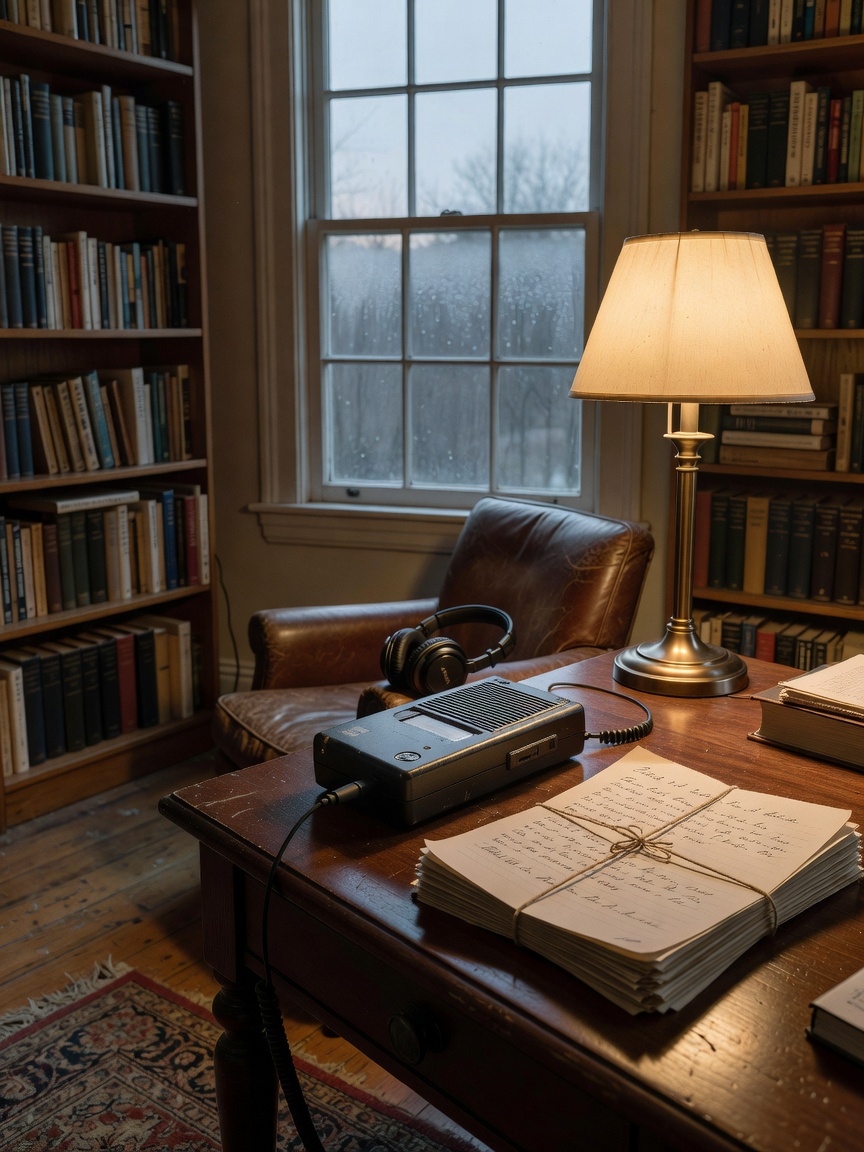
Voice banking for dementia patients involves digitally recording a person's voice to preserve their unique speech patterns for future use in communication devices. This process helps families maintain a connection, and platforms like Kinnect provide a private, secure space to store these audio memories and stories permanently for the family.
Voice banking for dementia is the process of digitally recording a person's voice to create a synthesized version that can be used on a speech-generating device. This technology allows individuals to communicate using their own voice, even after they have lost the ability to speak due to disease progression.
Kinnect is now LIVE! Start your private family group today.
👉 Try Kinnect on the Web
👉 Download the iOS App
When my grandmother was in the later stages of Alzheimer's, her words became fewer and farther between. But what I missed most wasn’t the conversation; it was the sound. The specific way she’d hum when she was watering her plants, the lilt in her voice when she’d say my name. When the silence gets loud, you realize a voice isn't just a means of communication; it's the music of a person's soul. That’s what we’re talking about today. Not a cold, clinical procedure, but an act of profound love: saving that music before it fades.
Beyond the Tech: Why Their Voice Matters More Than Ever
The term voice banking can feel intimidating, like something that happens in a lab. But let’s reframe it. This is about capturing stories. It's about recording the laugh that echoes your own. It's about giving your loved one a tether to their own identity as their cognitive decline progresses. For you, it’s about having a way to hear them say “I love you” in their own voice, forever. Preserving these stories is not a small thing. Research from Emory University found that children with a deep knowledge of their family history show up to 3x higher resilience and self-esteem. Those stories, in their original voices, are a gift to future generations.
The goal isn't just to create a tool for a speech-generating device, though that is a powerful and practical outcome. The deeper goal is to honor the person they are, right now. The process itself—sitting together, sharing memories, reading familiar passages—can be a moment of connection in the midst of a difficult journey. It's a way of saying, “I hear you. You are here. And you will always be a part of us.”
The Practical Steps to Voice Banking with Dementia
When is the Right Time to Start?
This is the most common and critical question. Don't wait. The ideal time to begin voice banking is in the early to mid-stages of dementia, as soon as possible after a diagnosis. You want to start when your loved one's speech is still clear and natural, and before frustration or fatigue makes the process too difficult. It’s a project you can do together, slowly, over weeks or even months. The key is to start before you think you need to.
How to Make the Recording Process Dementia-Friendly
Forget the idea of a formal recording session in a quiet room for hours. That’s a recipe for failure. Instead, weave it into your daily life. Here are a few tips:
- Short Bursts: Aim for 10-15 minute sessions. Turn it into a daily ritual, like a cup of coffee and a chat.
- Use Familiar Material: Instead of generic scripts, have them read a favorite poem, a passage from a beloved book, or even an old family recipe. Ask them to tell you the story of how they met their spouse for the tenth, or hundredth, time.
- Make it a Conversation: Use story-prompting questions. “Dad, tell me about your first car again.” Record the natural conversation. These recordings, full of pauses and laughter, are often more precious than a sterile script.
- Comfort is Key: Do it in their favorite chair, with good lighting and a glass of water nearby. Reduce background noise, but don’t stress about perfection. The goal is to capture their essence, not a studio-quality recording.
The Hidden Variable: The Legacy Preservation Gap
Conventional wisdom focuses on the technology of voice banking. The hidden variable is our own delay. Our research at Kinnect shows that 85% of Gen X adults report they wish they had recorded their parents' voices before they passed, yet only 12% have a system for doing so. The real challenge isn't the software; it's overcoming the emotional hurdle to start before it's too late. The most advanced technology in the world can't recover a voice that's already gone silent.
These recordings are more than just data for a device; they are family treasures. They are the stories, the laughter, the 'I love yous' that define your family. They deserve a permanent, private home. Kinnect was built for this very reason—to be a secure vault for your family’s most precious memories, ensuring these voices are never lost to a forgotten hard drive or a public social feed that mines your data.
What is the difference between voice banking and message banking?
Voice banking uses thousands of recorded phrases to create a unique, synthesized digital voice that can say anything. Message banking involves recording specific, meaningful words and phrases (“I love you,” “I’m thirsty,” a nickname) in your loved one's natural voice for playback later. Many families do both.
What are the 7 stages of dementia?
The 7 stages, or Global Deterioration Scale (GDS), range from Stage 1 (no cognitive decline) to Stage 7 (very severe decline). Key stages include mild decline (Stage 3), moderate decline (Stage 4, when a diagnosis is often made), and moderately severe decline (Stage 5), where major memory gaps appear.
How much does it cost to bank your voice?
The cost varies widely. Some apps and university projects offer free or low-cost options for patients with a diagnosis like ALS. Commercial services can range from a few hundred to several thousand dollars for a high-quality synthesized voice. Message banking can often be done for free using a simple recording app.
What is the life expectancy of a person with dementia?
Life expectancy after a dementia diagnosis varies greatly depending on age, type of dementia, and overall health. On average, it can range from 4 to 8 years after diagnosis, but many people live for 10, 15, or even 20 years. This underscores the importance of preserving memories and voices early in the journey.
Learn more at Kinnect.
