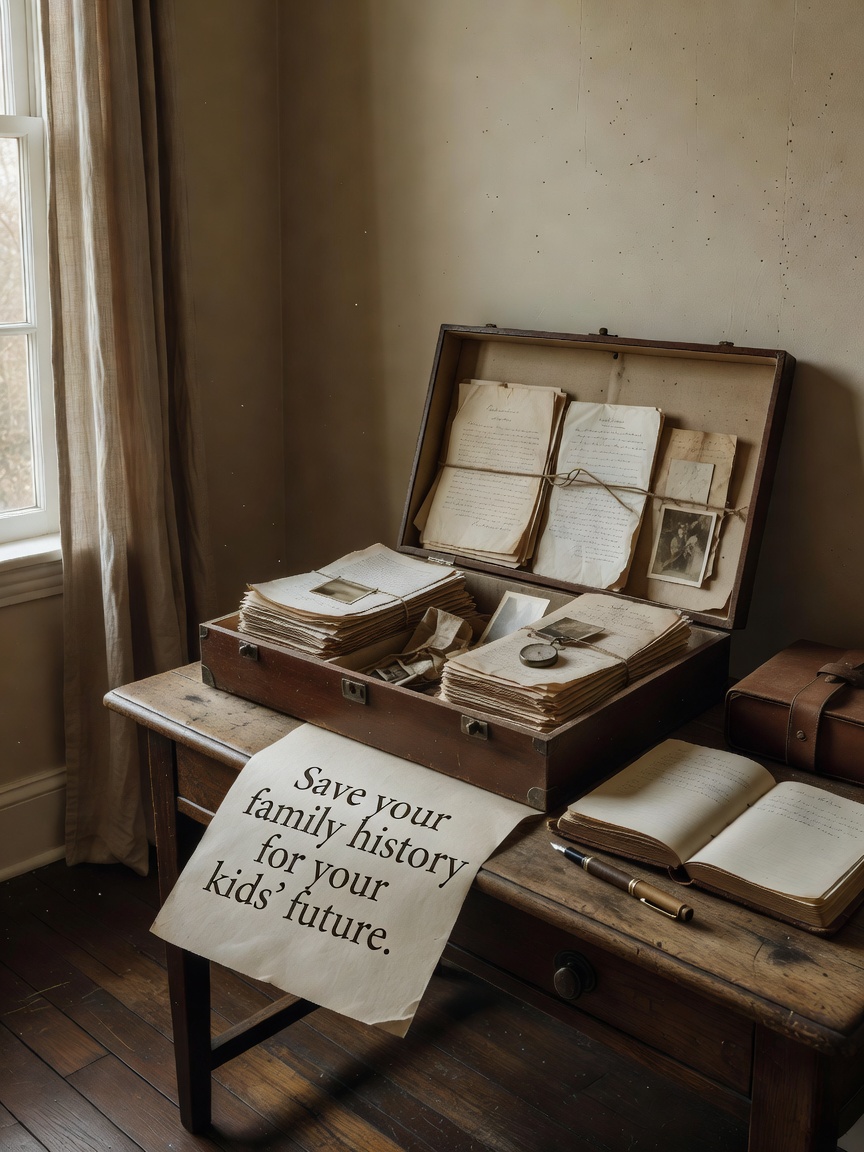
Preserving family history involves capturing essential stories and context, not just dates and names, to build resilience in future generations. A private family network like Kinnect provides a secure, permanent space to collect these narratives, photos, and voice notes, ensuring they are accessible for grandchildren and beyond.
Preserving family history for future generations is the practice of actively collecting, documenting, and safeguarding familial stories, artifacts, and genealogical data. The goal is to create a lasting record that provides descendants with a tangible connection to their heritage, identity, and the lives of those who came before them.
Kinnect is now LIVE! Start your private family group today.
👉 Try Kinnect on the Web
👉 Download the iOS App
I remember when my dad passed. Suddenly his office wasn't just his office anymore; it was an archive I didn't know how to read. Boxes of photos with no names, letters I felt I shouldn't touch, a lifetime of objects that had lost their storyteller. It's not just stuff; it's a life. And the thought of a future grandchild never knowing him, really knowing his laugh or the stories he told... that's what hurts. Where do you even begin when faced with that mountain?
Most guides give you a list of 20 things to do: digitize everything, interview everyone, build a massive tree. It's good advice, but it's like telling someone who's drowning to build a boat. Right now, you just need a life raft. You need a single, manageable first step that honors your loved one without overwhelming you.
So let's forget the massive project for a moment. The first step isn't to scan every photo or document every date. It's to find the heartbeat of your family's story. We're going to use your family tree not as a data chart, but as a map to the most important moments that need to be saved right now.
From Overwhelmed to Organized: Your First 3 Steps to a Living Legacy
Step 1: Find the 'Anchor Story'
Instead of trying to save everything at once, find one thing for each key person. Start with the oldest generation you knew personally—your parents or grandparents. Look through their belongings for one photo, one letter, or one object that tells a defining story about them. Not their whole life story. Just a story. The one about how they met. The one about immigrating. The one about the business they failed at before starting the one that worked. This single story is your legacy preservation anchor. It makes the person real.
Step 2: Capture the Voice, Not Just the Facts
Facts are for encyclopedias; voices are for family. There is a massive Legacy Preservation Gap in our society: 85% of Gen X adults report they wish they had recorded their parents' voices before they passed, yet very few have a system for doing it. If you are lucky enough to still have your elders with you, take out your phone right now. Open the voice memo app and ask them to tell you about that 'anchor story.' The sound of their voice, with its unique cadence and emotion, is the most powerful artifact you will ever preserve for their great-grandchildren.
Step 3: Create the Private Room for Their Story
Now, where does this precious story live? You could post it on Facebook, but that platform's business model is built on public broadcast and using your family's data for advertising. A WhatsApp group chat is an option, but our research on the 'Messaging Noise' phenomenon shows that 70% of messages in those groups are logistical noise that quickly buries meaningful moments. These anchor stories need a dedicated, permanent home—a digital version of the family attic, but one that’s organized, safe, and built to last for generations.
The Hidden Variable: Emotional Resilience
Most people view preserving family history as a nice-to-have hobby for retirement. But the data tells a radically different story. Researchers at Emory University found that children with a deep knowledge of their family's stories—the good and the bad—show up to 3x higher resilience and self-esteem. Knowing you come from a line of people who overcame challenges makes you feel more capable of overcoming your own. This isn't just about the past; it's a psychological toolkit for the future.
How do I create a family history for my children?
Start small by focusing on stories, not just dates. Use old photos as prompts to share memories of their grandparents and great-grandparents. The goal is to build a narrative they can see themselves in, connecting them to a larger family identity.
What is the best way to document family stories?
The most powerful way is to record the person telling the story in their own voice using a simple voice memo app. For written stories, pair them directly with a relevant photo in a private, dedicated space to provide context and ensure they don't get lost.
How do I make my family history interesting?
Focus on the human struggles, triumphs, and funny moments rather than just listing names and dates. Frame events as stories with characters and challenges. Ask 'why' things happened, not just 'what' happened, to uncover the compelling narratives that make your family unique.
Building this private, permanent home for your family's story is why we built Kinnect. It’s a space designed from the ground up to do one thing: connect your family across generations in a way that’s safe from the data mining and noise of public social media. You can attach that voice recording of your grandfather directly to his profile in your family tree. You can share that one 'anchor photo' of your mom with a story only the family can see. It's not another project; it's a living room for your family's legacy, waiting for the grandchildren who will one day ask, 'Tell me about them.'
Learn more at Kinnect.
Keep reading
- keep family history organized that actually works
- 3 Steps: family tree app no DNA sharing, protect data
- Reconnect: preserve family history for future generations
As you begin collecting these important stories, the next step is to preserve them in a way that is easy to navigate for future generations. For practical strategies, explore our guide on how to keep family history organized and connected.
